Download
1 / 7
70 likes | 200 Vues
Near Field Communication (NFC) is revolutionizing short-range wireless communication, enabling devices to interact when within 4 centimeters. This technology utilizes active devices such as key fobs and smartphones, enhancing the convenience of daily tasks like payments. In the U.S., services like "Speedpay" and mobile tap transactions are gaining traction, while Google’s partnerships with Citigroup and Mastercard aim to incorporate NFC into smartphones. Although this presents exciting opportunities, concerns about data security and potential piracy arise. By 2016, NFC billing could reach an astounding $618 billion.

E N D
Cate Zimmerman Near Field Communications
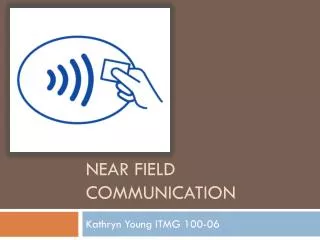
Near Field Communication • Short-range wireless technologies, less than 4 centimeters away • Involves an initiator and a target • Relies on an active device such as a key fob or phone • Brings new conveniences to everyday chores
Present Examples of NFC • United States- “Speedpay” and tap purchases • Asia and parts of Europe – Steadily been using mobile phones as means of purchases
Google • Recently partnered with largest credit card corporations;(1) Citigroup (2) Mastercard • Together they will form a mobile phone with NFC capabilities • Normal credit card fees will apply
Google’s Incentives • Not getting any cut from credit card fees • (1) Makes an attractive selling point for Google smartphones • (2) Can track purchases and target advertising accordingly
Down Side • More information will be stored with potential compromise • Piracy
Future Impact • As phone manufactures conform to NFC, mobile phones will become the primary form of credit purchases • By 2016, NFC billing is expected to reach $618 billion dollars