Understanding the Digestive System: The Journey of Food in Your Body
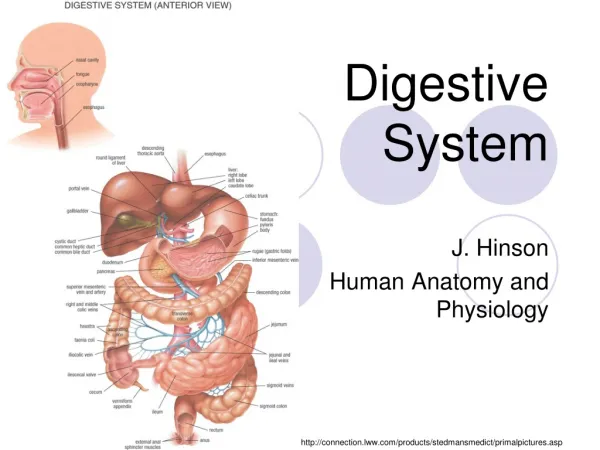
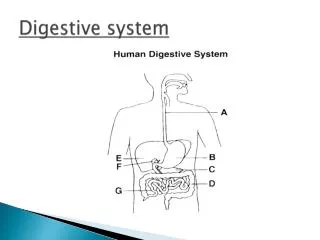
The digestive system transforms food into liquids for absorption through a complex process. It begins in the mouth, where teeth and saliva break down food physically and chemically. Peristalsis moves the food down the esophagus to the stomach, where it is mixed with hydrochloric acid. The liver creates bile, stored in the gallbladder, which aids in fat digestion. The pancreas adds enzymes in the small intestine for further breakdown, while the large intestine absorbs water, eliminating waste through the rectum.

Understanding the Digestive System: The Journey of Food in Your Body
E N D
Presentation Transcript
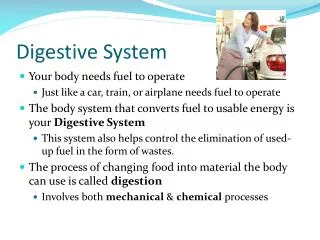
Digestion The process of changing food into liquids to be absorbed by the body.
Peristalsis-The action of food being pushed along the digestive tract
Peristalsis-The action of food being pushed along the digestive tract 2 types of digestion: Physical=chewing Chemical = uses enzymes (chemicals)
Peristalsis-The action of food being pushed along the digestive tract 2 types of digestion: Physical=chewing Chemical = uses enzymes (chemicals) Mouth- The teeth physically break down food while the tongue mixes food with saliva.
Peristalsis-The action of food being pushed along the digestive tract 2 types of digestion: Physical=chewing Chemical = uses enzymes (chemicals) Salivary Glands- Saliva begins to chemically break down food in your mouth. Mouth- The teeth physically break down food while the tongue mixes food with saliva.
Peristalsis-The action of food being pushed along the digestive tract 2 types of digestion: Physical=chewing Chemical = uses enzymes (chemicals) Salivary Glands- Saliva begins to chemically break down food in your mouth. Mouth- The teeth physically break down food while the tongue mixes food with saliva. Esophagus-The “food tube”-muscles in its walls push food into the stomach.
Peristalsis-The action of food being pushed along the digestive tract 2 types of digestion: Physical=chewing Chemical = uses enzymes (chemicals) Salivary Glands- Saliva begins to chemically break down food in your mouth. Mouth- The teeth physically break down food while the tongue mixes food with saliva. Esophagus-The “food tube”-muscles in its walls push food into the stomach. Stomach-This organ churns the food and mixes it with hydrochloric acid to help break food down chemically.
Peristalsis-The action of food being pushed along the digestive tract 2 types of digestion: Physical=chewing Chemical = uses enzymes (chemicals) Salivary Glands- Saliva begins to chemically break down food in your mouth. Mouth- The teeth physically break down food while the tongue mixes food with saliva. Esophagus-The “food tube”-muscles in its walls push food into the stomach. Chyme- Watery, partially broken-down food that is mixed with stomach acids and enzymes Liver-Creates bile, which breaks down large fats particles in the chyme . Stomach-This organ churns the food and mixes it with hydrochloric acid to help break food down chemically.
Liver-Creates bile, which breaks down large fats particles in the chyme . Stomach-This organ churns the food and mixes it with hydrochloric acid to help break food down chemically. Gall Bladder- stores bile
Liver-Creates bile, which breaks down large fats particles in the chyme . Stomach-This organ churns the food and mixes it with hydrochloric acid to help break food down chemically. Gall Bladder- stores bile Pancreas-An organ that adds enzymes to food to help break it down in the small intestine.
Liver-Creates bile, which breaks down large fats particles in the chyme . Stomach-This organ churns the food and mixes it with hydrochloric acid to help break food down chemically. Gall Bladder- stores bile Pancreas-An organ that adds enzymes to food to help break it down in the small intestine. Small Intestine- Food (chyme) is further broken down with bile and enzymes and is absorbed.
Liver-Creates bile, which breaks down large fats particles in the chyme . Stomach-This organ churns the food and mixes it with hydrochloric acid to help break food down chemically. Gall Bladder- stores bile Pancreas-An organ that adds enzymes to food to help break it down in the small intestine. Large Intestine-The muscular walls of this organ absorb water from undigested food and push the remaining wastes out of your body. Small Intestine- Food (chyme) is further broken down with bile and enzymes and is absorbed.
Liver-Creates bile, which breaks down large fats particles in the chyme . Stomach-This organ churns the food and mixes it with hydrochloric acid to help break food down chemically. Gall Bladder- stores bile Pancreas-An organ that adds enzymes to food to help break it down in the small intestine. Large Intestine-The muscular walls of this organ absorb water from undigested food and push the remaining wastes out of your body. Small Intestine- Food (chyme) is further broken down with bile and enzymes and is absorbed. Rectum- The last 6 to 8 inches of the large intestine which stores solid waste until it leaves the body.
Liver-Creates bile, which breaks down large fats particles in the chyme . Stomach-This organ churns the food and mixes it with hydrochloric acid to help break food down chemically. Gall Bladder- stores bile Pancreas-An organ that adds enzymes to food to help break it down in the small intestine. Large Intestine-The muscular walls of this organ absorb water from undigested food and push the remaining wastes out of your body. Small Intestine- Food (chyme) is further broken down with bile and enzymes and is absorbed. Rectum- The last 6 to 8 inches of the large intestine which stores solid waste until it leaves the body. Anus- opening through which solid waste leaves the body.
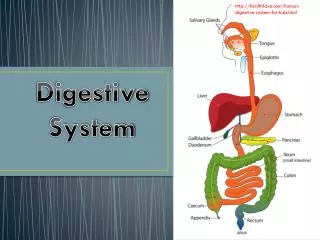
Liver-Creates bile, which breaks down large fats particles in the chyme . Stomach-This organ churns the food and mixes it with hydrochloric acid to help break food down chemically. Gall Bladder- stores bile Pancreas-An organ that adds enzymes to food to help break it down in the small intestine. Large Intestine-The muscular walls of this organ absorb water from undigested food and push the remaining wastes out of your body. Small Intestine- Food (chyme) is further broken down with bile and enzymes and is absorbed. Rectum- The last 6 to 8 inches of the large intestine which stores solid waste until it leaves the body. Anus- opening through which solid waste leaves the body.