Download
1 / 7
70 likes | 201 Vues
Explore the diverse countries of the Caribbean, including Cuba, Dominican Republic, Puerto Rico, El Salvador, and Guatemala. This summary highlights key details such as population, language, religion, government type, imports and exports, and geographical features. Cuba is noted for its communist government and agricultural exports, while the Dominican Republic showcases a democratic republic with rich natural resources. Puerto Rico, as a U.S. Commonwealth, enjoys a unique cultural blend. El Salvador and Guatemala represent Central America's diversity. Gain insights into these vibrant Caribbean nations.

E N D
Countries of the Caribbean By Taylor
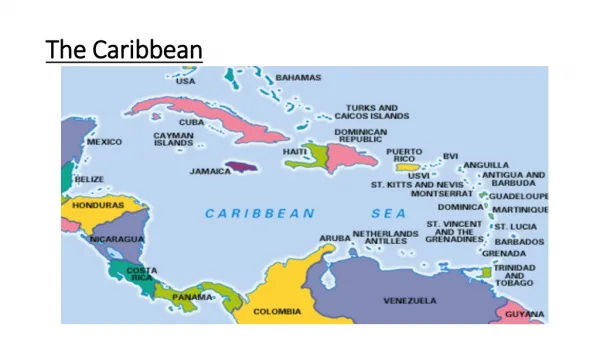
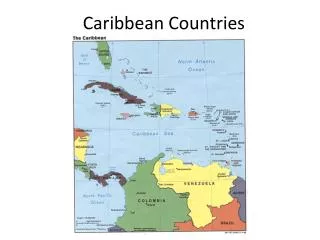
Cuba • Population:11,477,459 • Language: Spanish • Primary religion: 85% Roman Catholic • Government type: Communist state • Imports/exports: Imports-sugar, tobacco, citrus, coffee, rice, potatoes, beans; livestock. • Exports-sugar, nickel, tobacco, fish, medical products, citrus, coffee. • Geographical features- • Location: Caribbean, island between the Caribbean Sea and the North Atlantic Ocean, 150 km south of Key West, Florida. • Area: slightly smaller than Pennsylvania.
Dominican Republic • Population: 9,650,054 • Language: Spanish • Religion : 95% Roman Catholic • Government: Democratic Republic • Imports/Exports: Exports- • ferronickel, sugar, gold, silver, coffee, cocoa, tobacco, meats, consumer goods. • Imports- petroleum, cotton and fabrics, chemicals and pharmaceuticals • Location: Caribbean, eastern two-thirds of the island of Hispaniola, between the Caribbean Sea and the North Atlantic Ocean, east of Haiti.
Puerto Rico • Population: 3,966,213 • Language(s): Spanish, English • Religions: Roman Catholic 85%, Protestant and other 15% • Government Type: Commonwealth • Import: chemicals, machinery and equipment, clothing, food, fish, petroleum products • Export: chemicals, electronics, apparel, canned tuna, rum, beverage concentrates, medical equipment • Geographical Features: important location along the Mona Passage - a key shipping lane to the Panama Canal; San Juan is one of the biggest and best natural harbors in the Caribbean; many small rivers and high central mountains ensure land is well watered; south coast relatively dry; fertile coastal plain belt in
Mexico • Population: 111,211,789 • Language(s): Spanish, Mayan, Nahunta, and other languages • Religions: Roman Catholic 76.5%, Protestant 6.3% (Pentecostal 1.4%, Jehovah's Witnesses 1.1%, other 3.8%), other 0.3%, unspecified 13.8%, none 3.1% • Government Type: Federal Republic • Import: metalworking machines, steel mill products, agricultural machinery, electrical equipment, car parts for assembly, repair parts for motor vehicles, aircraft, and aircraft parts • Export: manufactured goods, oil and oil products, silver, fruits, vegetables, coffee, cotton • Geographical Features: strategic location on southern border of US; corn (maize), one of the world's major grain crops, is thought to have originated in Mexico
El Salvador • Population: 7,185,218 • Language(s): Spanish, Nihau • Religion: Roman Catholic 57.1%, Protestant 21.2%, Jehovah's Witnesses 1.9%, Mormon 0.7%, other religions 2.3%, none 16.8% • Government Type: Republic • Import: raw materials, consumer goods, capital goods, fuels, foodstuffs, petroleum, electricity • Export: offshore assembly exports, coffee, sugar, textiles and apparel, gold, ethanol, chemicals, electricity, iron and steel manufactures • Geographical Features: smallest Central American country and only one without a coastline on Caribbean Sea
Guatemala • Population: 13,276,517 • Language(s): Spanish 60%, Amerindian languages 40% • Religion: Roman Catholic, Protestant, indigenous Mayan beliefs • Government: Constitutional Democratic Republic • Import: fuels, machinery and transport equipment, construction materials, grain, fertilizers, electricity • Export: coffee, sugar, petroleum, apparel, bananas, fruits and vegetables, cardamom • Geographical Features: no natural harbors on west coast