Download
1 / 17
270 likes | 506 Vues
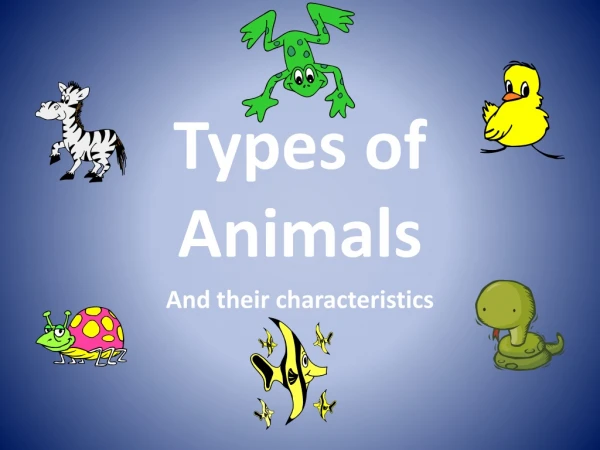
This guide covers various types of animals, including mammals, amphibians, reptiles, birds, fish, and insects. Each category is defined by unique characteristics, such as hair or fur in mammals, gills in fish, and feathers in birds. The life cycles of frogs and insects are highlighted to illustrate their reproductive processes. Understanding these animal groups helps appreciate the diversity of life on Earth, including their adaptations to different environments and ways of living.

E N D
Types of Animals And their characteristics
Mammals Have hair or fur Have lungs to breathe Babies are born alive Drink milk from their mothers
Amphibians Babies live in water Lay jelly like eggs Moist skin covered in mucus Cold blooded Have gills as babies and lungs as adults Can live on land and in water
Life Cycle of a Frog
Reptiles Have scales Tough shells, leather-like Don’t need to live in water Use lungs to breathe Some have claws Cold-blooded
Birds Have feathers Warm blooded Lay hard shelled eggs Skeletons are hollow Have lungs to breath Have bills (beaks) Have tails Have wings Most can fly
Fish Live in water Have gills to breathe Cold blooded Most lay eggs Have scales Have fins Move their tails back and forth to swim
Insects Have three body parts Head Thorax Abdomen Have an exoskeleton Lay eggs Have six legs Most have antennae Some have wings
Life Cycle of an Insect