Understanding Military Ranks and Procedures in Cadet Training
This guide provides an overview of various military ranks and the appropriate procedures for addressing them as you transition from recruits to cadets. Following your Bivouac, you will assume roles as Non-Commissioned Officers (NCOs), such as Lance Corporals and Corporals. You’ll learn to address ranks like Sergeant, Staff Sergeant, Warrant Officers, and higher officers with respect and in the correct manner. Proper saluting protocols are highlighted, especially on the parade ground. Get equipped to navigate military hierarchy with confidence.


Understanding Military Ranks and Procedures in Cadet Training
E N D
Presentation Transcript
Introduction • Many different ranks • Many different procedures when encountering different ranks • You guys are currently Recruits • After Bivouac you will become Cadets
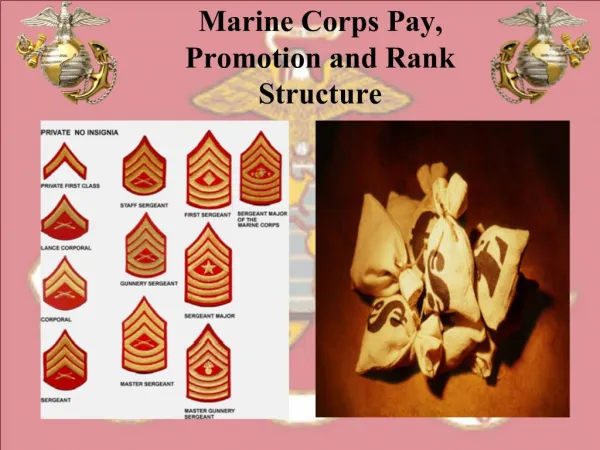
Lance Corporal • Address as: • “Lance Corporal Brown” • Do not salute • Some Year 9’s may get promoted to this after Bivouac Chevron
Corporal • Address as: • “Corporal Brown” • Do not Salute
Sergeant • Address as: • Sergeant Brown • Do not salute
Staff Sergeant • Address as: • “Staff Sergeant Brown” • Do not Salute
Warrant Officer Class 2 • Address as: • Warrant Officer • Sir • CSM • Do not salute
Warrent Officer Class 1/RSM (Regimental Sergeant Major) • Only one in SCU • Address as: • RSM • Sir • Do not Salute
CUO (Cadet Under Officer) • Address as: • Sir • Salute on parade ground
2nd Lieutenant/Lieutenant • Pronounced “Leftenant” in Australian Army • Address as: • Sir/Ma’am • Salute
Captain/Major • Address as: • Sir/Ma’am • Salute
Lieutenant Colonel/Colonel • Address as: • Sir/Ma’am • Salute
Test Sergeant