Composition and Functions of the Red Blood Cell Membrane
240 likes | 399 Vues
The red blood cell (RBC) membrane is a complex structure made up of approximately 50% proteins, 43% lipids, and 7% carbohydrates. Key membrane proteins facilitate blood group antigen expression, including Rhesus, Duffy, Kidd, as well as carbohydrates like ABO and Lewis antigens. The lipid bilayer consists mainly of phospholipids, cholesterol, and sphingolipids, providing structural integrity. Peripheral proteins form a supportive cytoskeleton, while integral proteins enable nutrient transport. Membrane defects can lead to disorders such as hereditary spherocytosis and elliptocytosis.


Composition and Functions of the Red Blood Cell Membrane
E N D
Presentation Transcript
Red cell membrane • The red cell membrane consists of: Proteins~50% Lipids~43% Carbohydrates~7%
Certain blood group Ags are associated with specific membrane structures • Many Ags are proteins • Rhesus, Duffy, Kidd • Others are carbohydrates • ABO, Lewis, P • Others are a combination of glyolipids & proteins • M,N
Composition of the red cell membrane Carbohydrates • They occur only on the external surface of the red cell. • They are composed of glycoproteins and glycolipids.
Majority of monosaccharides on red cell membrane are six carbon sugar • In solution the six carbon atoms form a ring • The carbons are numbered around the ring from 1 - 6
Seven different monosaccharides are present on the RBC membrane external surface • N-acetylneuraminic acid • Fucose • Glucose • Galactose • Mannose • N-acetylglucosamine • N-acetylgalactosamine (-ve charge)
Monosaccharides linkage • Monosaccharides are linked together by specific enzymes – glycosyltransferases • Each transferase catalyses the transfer of one sugar onto acceptor sugar • The enzyme is named according to the sugar that it transfers
Composition of the RBC memb. (cont.) Lipids • Lipid components of the red cell membrane are: • 60% Phospholipids • 30% cholesterol. • 10% sphingolipids.
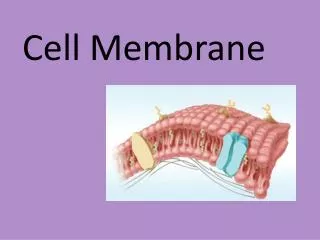
Phospholipids Phosphate • Fatty acid tails • hydrophobic • Phosphate group head • hydrophilic • Arranged as a bilayer Fatty acid
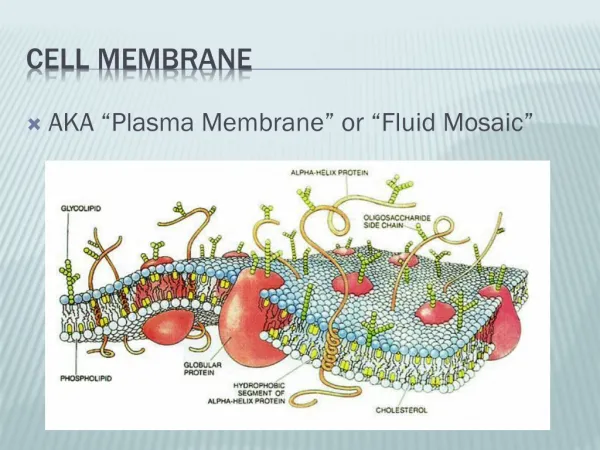
Composition of the red cell membrane Proteins • These are either: • Peripheral (can be removed without disturbing the membrane) • Integral, penetrating the lipid bilayer (removed if lipid bilayer is disturbed)-
Peripheral Proteins • The red cell peripheral proteins interact to form a cytoskeleton. • The cytoskeleton acts as a tough supporting framework for the lipid bilayer. • Four peripheral proteins play a key role in the structure of the red cell cytoskeleton, these are : • Spectrin, which is the most abundant • Ankyrin • Protein 4.1 and • Actin
Spectrin • is the most abundant, consists of two chains, a and b, wound around each other • Spectrin gives the cell membrane its flexibility & strength • If denatured, red cell takes spherical shape and loses flexibility
Integral Proteins • These penetrate the lipid bilayer and are firmly anchored within it via interactions with the core. • Band 3 (acts as anion transport channel). • Glycophorins A, B, and C. • Na+/K+ ATPase. • glucose transport protein. • surface receptors. (the most important is the transferrin receptors).
Blood group antigens • Blood group antigens: are antigens found on the red cell membrane, they are responsible for the determination of the blood group of the individual. • Blood group antigens are found on both the protein and the carbohydrate components of the membrane glycoproteins and the glycolipids.
Defects of the red cell membrane • Defects of the proteins may explain some of the abnormalities of the shape of the red cell membrane, e.g. hereditary spherocytosis and elliptocytosis. • While alterations in lipid composition because of congenital or acquired abnormalities in plasma cholesterol or phospholipids may be associated with other membrane abnormalities, e.g. target cells and acanthocytes.