Understanding Social Development in 3 to 4-Year-Olds
120 likes | 244 Vues
Discover the key social development milestones for children aged 3 to 4 years. At age 3, children start to show fewer temper tantrums, are eager to help adults, and demonstrate cooperation and concern for others. Their play is often parallel and unstructured, with sharing being more common but not always preferred. By age 4, companionship becomes essential, leading to preferences for same-sex friends and an increase in cooperative play. Understanding these changes can help caregivers foster a supportive and engaging environment for young children.


Understanding Social Development in 3 to 4-Year-Olds
E N D
Presentation Transcript
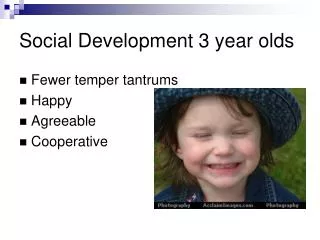
Social Development 3 year olds • Fewer temper tantrums • Happy • Agreeable • Cooperative
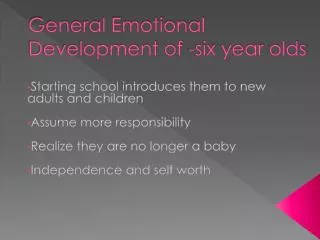
They crave praise and affection • Eager to help adults
Cooperative play begins Play is unorganized Most 3 year olds play parallel
It is important to learn how to treat the opposite sex with respect.
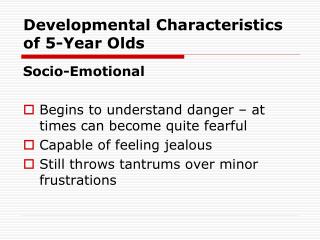
Social Development- 4 years • Companionship is important! • Same sex friends are preferred • Best friend is chosen, but it changes often
Children play more with other children • Cooperative play increases • Children need adult supervision to play games • They realize that rules are necessary for games to run smoothly • Play has no goal or theme