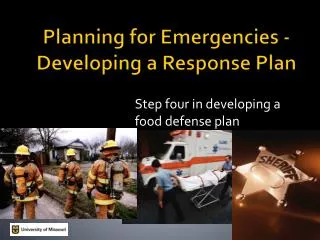
Planning for Emergencies - Developing a Response Plan
A well-structured food defense plan is essential for minimizing the risks of intentional contamination. While it can't prevent incidents, a solid response plan can significantly reduce their impact. This guide provides steps for developing a response plan, including handling contaminated livestock and food products. It emphasizes the importance of emergency planning, facility mapping, maintaining emergency contact lists, and preparing for disposal procedures. Ensure your organization is prepared for emergencies by assessing vulnerabilities and managing your food defense strategies effectively.
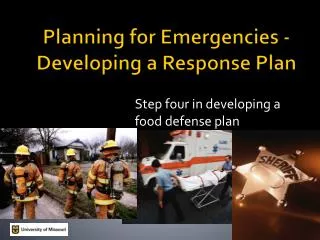

Planning for Emergencies - Developing a Response Plan
E N D
Presentation Transcript
Step four in developing a food defense plan Planning for Emergencies - Developing a Response Plan
Be Prepared • Having a food defense plan reduces the risk of intentional contamination, but cannot prevent it. • Having a response plan can minimize the effects of an intentional contamination.
Develop a Response Plan • Plan for handling of contaminated product or animals • Emergency Planning • Facility Map • Emergency Contact Phone List • Supplier/Customer Contacts • Employee Emergency Information
Handling of Contaminated Livestock • Animals must be quarantined until definitive diagnosis is made • Animals must be cared for during this time • Animals may need to be euthanized • Carcass disposal may need to occur • Decontamination of facility may need to occur
Handling of Contaminated Food Products • Retained or recalled product will need to be stored prior to disposal • Storage will need to be separate from non contaminated product • Prepare a plan for disposal, to be reviewed by FDA or FSIS and state authorities • FDA or FSIS will witness the execution of the plan
Containment and Disposal • Consider your operation and indicate where you plan to contain contaminated food products or livestock • Develop a recall plan in case food products are shipped before a contamination is discovered • Predetermine an area where livestock can be euthanized and carcasses disposed of
Emergency Planning • Gather these things together • Facility map • Emergency phone list • Supplier and customer contacts • Employee emergency contact information
Facility Map • Name, address, and phone of owner/proprietor • Relationship of the facility to adjacent properties and/or structures. • Road access including transportation routes • Perimeter boundaries, include fences, and gates (with dimensions)
Facility Map (continued) • Buildings, outbuildings, doors, windows, AC/heating, ventilation • Utilities (water, gas, electric, phones) location and shutoff • Septic System and drainage areas with direction of flow • Web sites such as Google Earth www.earth.google.com
Emergency Contact Phone List • Local emergency responders • Utilities • Health care • Regulatory groups • State and national emergency agencies
Steps in Defending the Food Supply • Assess vulnerabilities • Write your food defense plan • Prepare a response plan • Manage your food defense plan