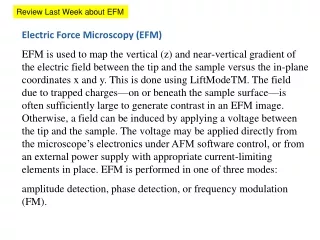
Enhancing EFM-CU-MIB: Analyzing SHDSL/VDSL Integration and Configuration Options
This document explores the complexities and considerations surrounding the EFM-CU-MIB, particularly in relation to SHDSL/VDSL integrations. It examines the functionality of the ifStackTable and efmCuAvailableStackTable, addressing their roles in parameter configuration and cross-connect capabilities. Notifications such as LineDefect and SNR margin crossing are discussed, alongside potential new metrics. The paper also evaluates the implications of maintaining a single profile configuration versus individual parameters, and presents options for keeping compatibility within the current framework.

Enhancing EFM-CU-MIB: Analyzing SHDSL/VDSL Integration and Configuration Options
E N D
Presentation Transcript
EFM-CU-MIB Issues
Issues • ifStackTable/efmCuAvailableStackTable • Reference to SHDSL/VDSL MIBs • Notifications • MAU-MIB • Single Profile/Parametric Configuration • TC/PME layer
ifStackTable/efmCuAvailableStackTable • ifStackTable – describes/configures actual PCS/PMEs cross-connect • efmCuAvailableStackTable – describes cross-connect capability (read only) • Alternative: reverse Is it the right choice?
SHDSL/VDSL MIBs • SHDSL/VDSL versions described in HDSL2-SHDSL-LINE-MIB/VDSL-LINE-MIB differs from EFM. • Simplicity and Name Consistency • Current EFM-CU-MIB defines everything inside. Is it the right choice?
Notifications • Currently defined: • LineDefect • LineAtnCrossing (Local/Remote) • SnrMgnCrossing (Local/Remote) • Possible additions: • ES, SES, CRCanomalies, LOSWS, UAS, DeviceFault, PowerLoss…
MAU-MIB • New values for ifMauType: • dot3MauType2BaseTL • dot3MauType10PassTS Should we add –O/-R subtype?
Single Profile/Parametric Configuration • 2BaseTL profile consists of: DataRate, Region, PSD, Constellation • Possible configurations: • Single Profile (pre-configured set of params) • Individual Parameters • Precedence if both are used? Should we have both possibilities?
TC/PME layer • D3.1 defines new TC layer Options: • Keep it under current efmCuPmeEntry Sequence • Add a new entry