
SlideServe
Menu
Préférences
© SlideServe · v2026

Eggs

rafer avatar
16 diapositives · 553 Views · Jul 11, 2012

Eggs. Structure. Nutrients:. Yolk: Vitamin A Vitamin D B Vitamins Carbohydrate Complete Protein Iron Phosphorous Small amount of Calcium Fat. Nutrients. Albumin: Water Riboflavin Protein 80 calories per egg. Buying Eggs. Buying Eggs: Grade AA eggs Grade A
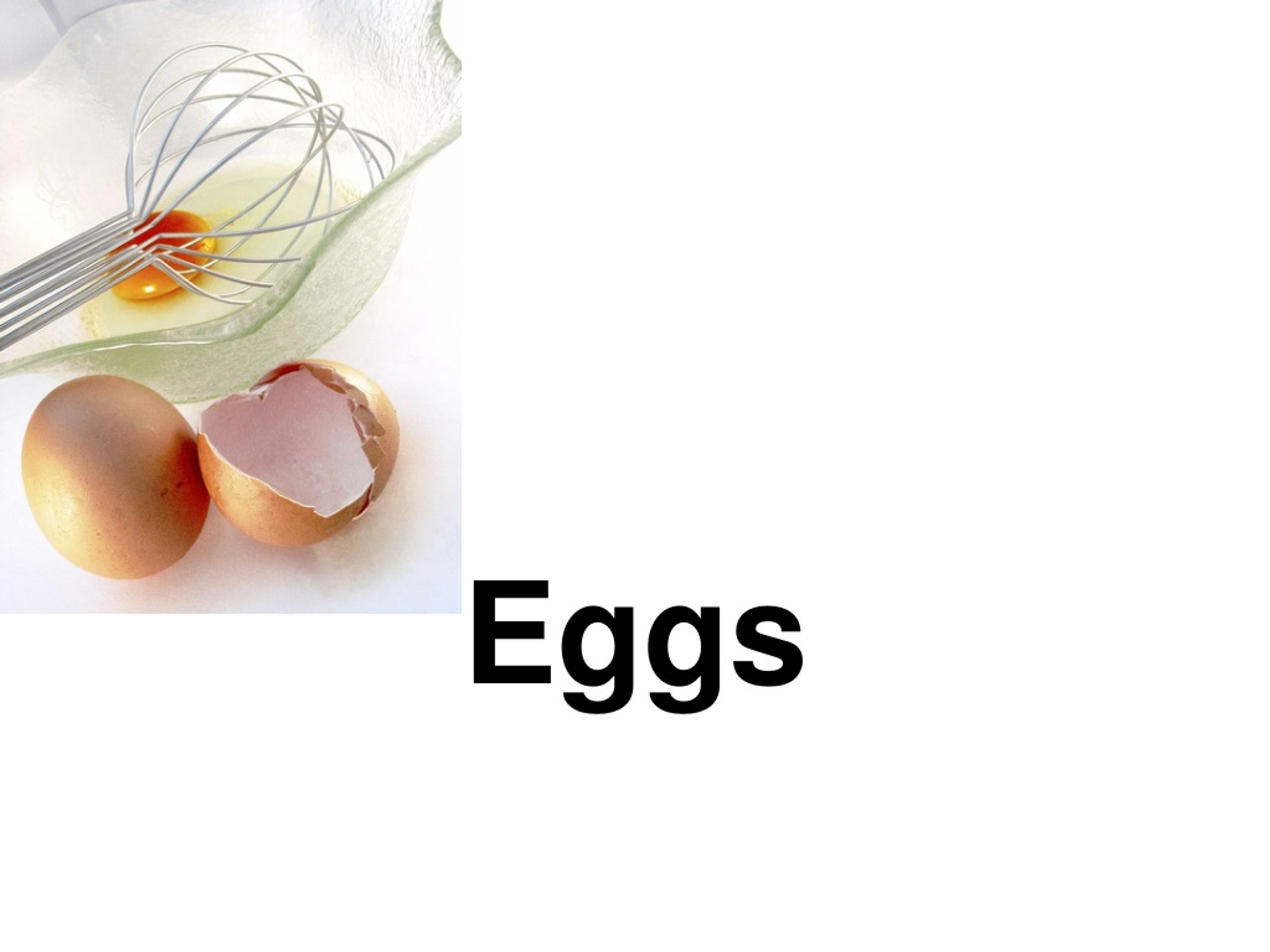
Eggs - slide 1
01 / 16Eggs
1 / 17

Télécharger la présentation

Eggs
Une image / un lien ci-dessous est fourni (tel quel) pour télécharger la présentation

Politique de téléchargement : le contenu du site vous est fourni TEL QUEL pour votre information et votre usage personnel ; il ne peut être vendu, concédé sous licence ni partagé sur d’autres sites sans l’accord de son auteur.Le contenu vous est fourni TEL QUEL, pour votre information et votre usage personnel uniquement. Téléchargez la présentation en cliquant sur ce lien. Lors du téléchargement, si vous ne parvenez pas à télécharger une présentation, l’éditeur a peut-être supprimé le fichier de son serveur.Pendant le téléchargement, si vous ne parvenez pas à obtenir une présentation, le fichier a peut-être été supprimé par l’éditeur.

F I N

Plus de contenu associé

Transcription de la présentation
  1. Eggs

  2. Structure

  3. Nutrients: • Yolk: • Vitamin A • Vitamin D • B Vitamins • Carbohydrate • Complete Protein • Iron • Phosphorous • Small amount of Calcium • Fat

  4. Nutrients • Albumin: • Water • Riboflavin • Protein • 80 calories per egg

  5. Buying Eggs • Buying Eggs: • Grade AA eggs • Grade A • Grade B

  6. Grading Eggs • Grade is determined by inner and outer qualities at the time it is packaged: • Size of albumin • Small air cell • Candling

  7. Size of Eggs • Minimum weight per dozen • Most recipes based on large sized eggs • Jumbo • Extra Large • Large • Medium • Small • Price of eggs depends on the size of eggs

  8. Egg Storage • Storage • Highly perishable • Refrigerate promptly • Store wide end up original carton • Don’t wash eggs

  9. How Food Science Applies to Eggs • Coagulation: • Protein in eggs unwinds when exposed to heat • The protein thickens • The egg thickens and changes from liquid to semi or solid state

  10. Properties of Eggs • Coagulation: • Allows eggs to bind ingredients together (meatloaf) (baking) • Allows eggs to thicken mixtures (custards)

  11. Properties of Eggs • Emulsifier: • Hold together two liquids that normally won’t stay mixed • Protein in yolk allows this to happen

  12. Properties of Eggs • Foams: • Foam forms when beating egg whites • Protein molecules break down and the foam gains strength • Foam guidelines: For ease in separating eggs they should be cold when separated Foam forms best when egg whites are allowed to sit at room temperature for about 30 minutes

  13. Separating Eggs • Beating Egg Whites: • No trace of yolk • No trace of any fat • Separate best when cold • No plastic bowls • Produce greatest volume at room temperature • Stabilizer (acidic ingredient) often added • Cream of tartar • Vinegar • Lemon juice

  14. Cooking Eggs • Cooked in the shell • Poached Eggs • Fried Eggs • Scrambled Eggs • Baked Eggs (Shirred Eggs) • Omelet • Microwave • Custard • Meringue

  15. Egg Safety • Eggs should be cooked until the whites and yolks are firm or, for dishes containing eggs, until an internal temperature of 160 degrees Fahrenheit is reached because Salmonella is destroyed by the heat of cooking. • Clean your hands, as well as the surfaces and utensils that come into contact with raw eggs – an important step for avoiding cross-contamination. • Separate eggs from other foods in your grocery cart, grocery bags and in the refrigerator to prevent cross-contamination. • Keep eggs in the main section of the refrigerator at a temperature between 33 and 40 degrees Fahrenheit – eggs accidentally left at room temperature should be discarded after two hours, or one hour in warm weather.