Exploring the Path to Becoming a Java Full Stack Developer: Courses and Training
Explore our expert density courses and training designed to guide you on the road to become a Java Full Stack developer. Now start the journey to succeed. A Java full-Stack developer specializes in handling both front-end and back-end development work, making them invaluable assets for any technical team. If you are considering a career in this field, there are many courses and training programs available to guide the trip.<br>


Exploring the Path to Becoming a Java Full Stack Developer: Courses and Training
E N D
Presentation Transcript
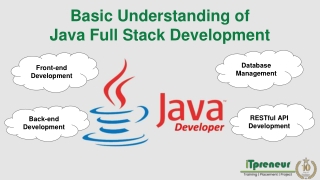
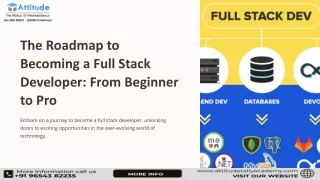
What is Full Stack Developer? And What are the responsibilities of a Full Stack Developer? Context: What is Full Stack Developer? And What are the responsibilities of a Full Stack Developer? What are the fundamental skills for a Full-Stack Developer? How Does Full-Stack Development Differ From Front-End and Back-End Development? What are the Advantages of Being a Full-Stack Developer? sWhat is the easiest way to become a self-taught full-stack developer? In the fast-paced digital era, full-stack development has evolved to represent the all-encompassing process of creating websites and applications.Thismultidimensionalstrategy,combiningfront- endaswell asback-end development, hasbecomethefocus of greater attentionas technologyisevolvingwithan unprecedentedvelocity.Inthis guide, we willdiscussthe followingkeysubjects: A full stack developer is ageneral-purposesoftware engineerskilledin both front-end and back-end technologies. Thisincludesavarietyof skillsallowingthem tohandlethe entire application stack, from the user interface to theserversanddatabases. Responsibilities: The responsibilities of a full stack developer based on the project and organization size, but they generally include: Front-end Development: Designinggreat-lookinguser interfaceswithtechnologiessuchasHTML, CSS, and JavaScript frameworks such as React or Angular. Back-end Development: Programmingserver-side logicwithlanguagessuchasPython, Java, or Node.js, andhandlingdatabases. Database Management: Databasedesignandmaintenance,beitrelational like MySQL or non-relational like MongoDB. API Development: Developingand consuming APIsforfacilitatingcommunication between the front-end and back-endelements. Version Control: UsingplatformssuchasGit formanagingcodechangesandinteractingwith other developers.
Deployment and Maintenance: Deploying applications on server environments and keeping them running smoothly after launch. Being a full stack developerentailshaving awiderange ofunderstanding and thecapacitytoswitchbetweendifferenttechnologies andtaskseffectively.
What are theCoreSkills for a Full-Stack Developer? Ittakesacombinationof technicalproficiency, problem-solvingskills, andtheabilityto learnon an ongoing basis to build a successful career as a full stack developer.Theseare thecoreskills: HTML/CSS: The foundations of web development, used to create responsive layouts and user interfaces. JavaScript: Afundamentallanguagetoprovideinteractivity to webappsandcrucialforfront-end and back-end development. Frameworks: Knowledgeoffront-end frameworkssuchasReact, Vue.js, or Angular,alongwithback- endframeworkssuchasNode.js or Express. Database Management: Knowledge of SQL for databases such as PostgreSQL or MySQL, as well as NoSQL databases such as MongoDB. Version Control Systems: KnowledgeofGit forefficientprojectmaintenanceandteamwork. FoundationDevOps Practices: Understandingof deployment, CI/CDworkflow, andintegrationwith cloudplatformssuchasAWS or Azure. Proficiencyinthese skillslaysagoodfoundation todevelopupon as technologyadvances.
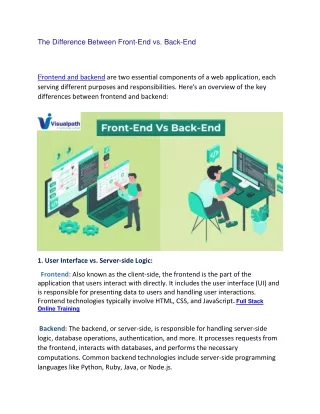
How Does Full-Stack Development Differ From Front-End and Back-End Development? The difference between full-stack, front-end, and back-end development involves the extent of work and tech emphasis. Front-End Development: Thisisajobdedicatedtothe client side of an application. Front-end developersconvertdesignideasintoworkinguser interfaces andmakesurethat usersinteractwith applicationswithout any hitch. Front-end Back-End Development: Back-end developers,ontheother hand, work on theserver side,andtheirareas of interest includelogic, databasecommunication, user authentication, and server configuration. Theireffortsareimportanttokeepapplicationfunctionalityintactbehind the scenes. Back- end Full-Stack Development: Full-stack developerscombineboth roles,abletotackleproblemsoneitherside, which makes themparticularlyvaluable insmallteams or startups. Theyareableto handlethe entire development process,simplifyingcommunication andminimizingsilos. Full stack
What are theBenefitsof Being a Full-Stack Developer? Optingfora full-stack developmentcareerhasnumerousadvantages: Flexibility: Full stack developers are able to do both front-end and back-end, hence they are flexible to work on different projects and teams. GreaterDemand: Businessestendtopreferrecruitingfull stack developers for theircapabilitytobuildtheconnectionbetween user experience and server-side logic,thusuppingtheir marketdemand. Streamlined Communication: Since they have an in-depth understanding of both ends of development, full stack developers are able to communicate well with front-end and back-end teams, which helps improve collaboration. Career Flexibility: Full stack developersusuallyhave theflexibilityto specialize in aspecificarea later in their careers,allowingthem the freedom toventureintovarious careerpaths within the techsector. Adopting the full stack approach equips developers with a well-rounded skill set and the ability to take on diverse roles. What is the Easiest Way to Become a Self-Taught Full- Stack Developer? Becoming a self-taught full stack developer is an achievable goal with the right approach and dedication. Here’s a simple roadmap to start your journey: 1. EstablishClearObjectives: Determinewhat youwishtoaccomplishand theexacttechnologies youwishto learn. 2. UtilizeOnline Resources: There areseveralfree orlow-costsitessuchasCodecademy, freeCodeCamp, or Coursera thatprovidestructured coursesinboth front-end and back-end development. 3. PracticeConsistently:
Developsmallprojects toimplementwhat you've learned.Beginsmall,likebuildinga personal portfoliositeor a to-do listapplication. 4. BecomePart ofDeveloper Communities: Getinvolvedincommunities onwebsitessuchasGitHub, Stack Overflow, or Reddit, where youbothcanask questions andcontributeknowledge. Networkingmayeventuallyresultinmentorship opportunities. 5.ParticipateinOpen Source Projects: This cangiveyouhands-onexperience andaddstrength toyour resume,demonstratingtopotential employers your commitmentaswellaslevelof skill. 6. Keep Learning: Technologyevolvesconstantly.Asa habit,keepyourselfintouchwithcurrenttrends, tools, and best practices in web development. Conclusion: This self-learningpathdemandsdiscipline, but thefeelingofachievementwhen youcreateyour first full stack application issimplysatisfying. Finally,becomingafull stack developercareeropensthedoortoanexcellent combination ofcreativityandtechnicalskill.Ifyou'rebeginningfromgroundzeroorwishingtoadddepth toyourexperience, this roadmap cantakeyou towhereyouwant tobe.Goaheadandjumpin—youhavenoideawhere itwilltakeyou! Information: Institute name : Skyappz academy Website name : https://skyappzacademy.com/fullstackdevelopment/ Mobile number : 9600222284 Email id: mailto:info@skyappzsoftware.in Address : No.1209/2, Sai Imperia Grand, Mettupalayam Rd, Nesavaalar Colony, Saibaba Colony, Coimbatore, Tamil Nadu 641011