Graphic Designing Article
Learn Graphic Designing Course in Chandigarh at Excellence Technology. graphic designing is a highly valued skill in many industries and is considered to be an in-demand profession. With the growing importance of digital media, graphic designing has become an increasingly important aspect of marketing, branding, and advertising, making it a field with good job prospects for those after completing the Graphic Designing Course in Chandigarh.

Graphic Designing Article
E N D
Presentation Transcript
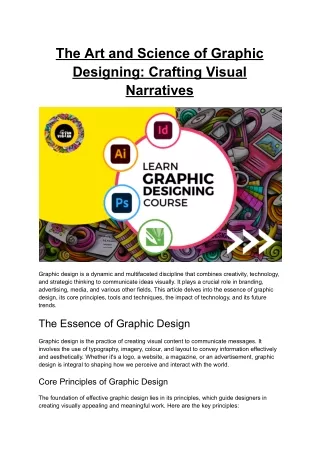
The Art and Science of Graphic Designing: Crafting Visual Narratives Graphic design is a dynamic and multifaceted discipline that combines creativity, technology, and strategic thinking to communicate ideas visually. It plays a crucial role in branding, advertising, media, and various other fields. This article delves into the essence of graphic design, its core principles, tools and techniques, the impact of technology, and its future trends. The Essence of Graphic Design Graphic design is the practice of creating visual content to communicate messages. It involves the use of typography, imagery, colour, and layout to convey information effectively and aesthetically. Whether it's a logo, a website, a magazine, or an advertisement, graphic design is integral to shaping how we perceive and interact with the world. Core Principles of Graphic Design The foundation of effective graphic design lies in its principles, which guide designers in creating visually appealing and meaningful work. Here are the key principles:
1. Balance Balance refers to the distribution of visual weight within a design. It can be symmetrical (evenly balanced) or asymmetrical (balanced through contrast). 2. Contrast Contrast involves using differences in colour, size, shape, and other elements to create visual interest and draw attention to key areas. 3. Emphasis Emphasis is about highlighting the most important elements in a design, ensuring they stand out and capture the viewer's focus. 4. Movement Movement guides the viewer's eye through the design, creating a sense of flow and leading them to important information. 5. Rhythm Rhythm creates a sense of organised movement by repeating elements, patterns, and motifs in a cohesive manner. 6. Unity Unity ensures all elements of a design work together harmoniously, creating a cohesive and consistent visual message. 7. Proportion Proportion relates to the size and scale of elements in relation to each other, ensuring they are balanced and visually pleasing. Tools and Techniques Graphic designers use a variety of tools and techniques to bring their visions to life. Here are some of the most commonly used: 1. Software Adobe Creative Suite (including Photoshop, Illustrator, and InDesign) is the industry standard for graphic design. Other tools like CorelDRAW, Sketch, and Affinity Designer are also popular.
2. Typography The art of selecting and arranging typefaces is crucial in graphic design. Typography sets the tone and enhances readability and aesthetics. 3. Colour Theory Understanding colour theory helps designers choose colour schemes that evoke the desired emotions and create visual harmony. 4. Layout and Composition Effective layout and composition involve arranging elements in a way that is visually appealing and guides the viewer's eye. 5. Image Editing Manipulating and enhancing images is a key skill, allowing designers to create impactful visuals. 6. Illustration Creating original illustrations can add a unique and personal touch to designs, making them stand out. The Impact of Technology Technology has revolutionised graphic design, offering new possibilities and transforming the way designers work. Here are some significant impacts: 1. Digital Tools Advanced software and digital tools have expanded the creative capabilities of designers, allowing for more complex and precise designs. 2. Web and Mobile Design The rise of the internet and mobile devices has created a demand for responsive and user-friendly web and mobile designs. UX/UI design has become a critical aspect of graphic design. 3. Animation and Motion Graphics With tools like Adobe After Effects, designers can create animations and motion graphics, adding a dynamic dimension to their work.
4. 3D Design Software like Blender and Cinema 4D enable designers to create stunning 3D graphics and visualisations. 5. Collaboration Tools Cloud-based platforms like Adobe Creative Cloud and Figma facilitate collaboration, allowing designers to work seamlessly with clients and teams. Applications of Graphic Design Graphic design is ubiquitous, influencing various aspects of our lives. Here are some key applications: 1. Branding and Identity Graphic design is essential in creating logos, business cards, packaging, and other elements that define a brand's identity. 2. Advertising and Marketing From print ads to digital campaigns, graphic design plays a pivotal role in capturing attention and conveying marketing messages. 3. Web and App Design Designing visually appealing and user-friendly websites and applications is a critical aspect of modern graphic design. 4. Publication Design Magazines, newspapers, and books rely on graphic design for layouts, cover designs, and illustrations. 5. Environmental Design This includes signage, wayfinding systems, and displays in public spaces, helping people navigate and interact with their surroundings. 6. Social Media Graphic design is vital for creating engaging social media content, including posts, stories, and advertisements. Future Trends in Graphic Design
As technology and society continue to evolve, graphic design will also undergo significant changes. Here are some emerging trends: 1. Augmented Reality (AR) and Virtual Reality (VR) AR and VR are opening new dimensions for immersive and interactive design experiences. 2. Artificial Intelligence (AI) AI-powered design tools can automate repetitive tasks, provide design suggestions, and enhance creativity. 3. Sustainability Eco-friendly design practices and sustainable materials are becoming more important as businesses and consumers prioritize environmental responsibility. 4. Minimalism Minimalist design, with its focus on simplicity and clarity, continues to be popular, especially in digital interfaces. 5. Bold Typography Experimenting with large, expressive typography can create impactful and memorable designs. 6. 3D and Isometric Design 3D graphics and isometric illustrations add depth and realism, making designs more engaging. 7. Custom Illustrations Unique, hand-drawn illustrations are gaining popularity for their personal and authentic touch. Conclusion Graphic design is a vital and ever-evolving field that shapes how we perceive and interact with the world. By combining artistry with technology and strategic thinking, graphic designers create compelling visual narratives that inform, inspire, and engage audiences. As new technologies and trends emerge, the possibilities for innovation in graphic design are limitless, promising an exciting future for this dynamic discipline.