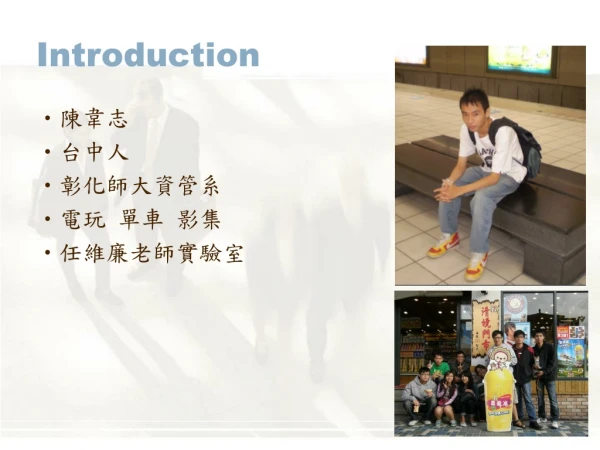

Introduction
E N D
Presentation Transcript
AN OVERVIEW OF THE CRIME STATISTICSMINISTER OF POLICE NKOSINATHI NHLEKOCape Town 29 September 2015
Introduction • Crime statistics are not only about numbers and the performance of the police: they reflect the society at large • When reflecting on the figures, please remember that victims of crime are not just ink on paper but human beings – real people with wants, needs, desires and families • The figures being presented today should make us all resolved to fight crime in the way that we can without taking the law into our hands
Introduction • The South African Police Services is responsible for close to 54 million people and has a footprint of 1138 police stations • It has a personnel strength of 194 852, and the police vs population distribution ratio is 1:358 (UN standard is 1:460)
Integrity • We continue to improve integrity of our statistics. That is why SAPS and StatsSA signed an MOU this year for: • Provision of technical support to SAPS in its production of policing data • Supporting SAPS in consolidating crime statistical definitions and counting rules to produce data for quality statistics • Forming a Joint Working Party to inmplements projects for collaboration in the production of identified data • Supporting SAPS to monitor and forecast trends in the country’s crime statistics StatsSA have assessed our statistics against: • Methodological Soundness, Accuracy, Comparability and Coherence and Integrity and Timeliness,
10 year longitudinal view • Over a period of ten years, we have successfully decreased the following categories of crimes: • Contact crimes (17.8%) • Contact-related crimes (15.6%) • Other serious crimes (7.6%) • Property-related crimes (2.3%)
Anatomy of Serious Crime • The report focuses on 17 community reported serious crimes and three police-detected serious crimes • 17 Community-reported Serious Crime (83.4 percent) • Contact crime(34.4% = 0.9% increase) - Murder, attempted murder, sexual offences, assault GBH, common assault, robber aggravating and common robbery • Contact related crime (7% = 1.9% increase)- Arson, malicious damage to property
Anatomy Cont… • Property related crime (30.8% = - 0.8%)- Housebreaking residential, housebreaking other premises, theft of motor vehicle/ cycle, theft out of and from motor vehicle and stock theft • Other serious crime (27.8% = -2.2%)- Ordinary theft (other theft), fraud related (commercial crime) and shop-lifting • 3 Police-detected Serious Crime (16.6%) • Unlawful possession of firearm/ ammunition • Driving under the influence (drugs and alcohol) • Unlawful possession of and dealing in drugs
Performance Outlook • 83.4 percent of the community reported serious crimes lead to the arrests and charging of 1 795 947 persons • 4808 arrested by DPCI • Secured 1043 life sentences imposed on 739 suspects, 680 life sentences against women and children (FCS unit) • 686 police arrested for various types of crimes in 2014/15 • Recovered 36186 reported lost/robbed vehicles • Police detected crime has increased by 16.6 percent in the reporting period which resulted in 350 579 arrests
What Do The Statistics Suggest? • We continue to have violence as a feature of our social outlook as the South African society • In essence, the issue of contact crimes is a social phenomena and is a matter that needs to be dealt with at a multi-disciplinary level across society • The causal link between the commission of crime and drug/alcohol abuse continues to be a standing features of driving up levels of crime despite closing down 37 979 unlicensed/illegal liquor premises and confiscating 1.7 billion litres of alcohol
What do statistics suggest • It is also encouraging to note that the levels of police detection compared to last year is on the increase • There has been an increase in social unrest year-on-year which suggest other pressure points and required action
Observations • The trends for the past ten and five years have shown a decrease whilst in the year under review there has been an increase in certain categories of crime such as: • Contact crimes – 0.9% increase • Contact related crimes – 1.9% increase • Property related crime – 0.8% decrease • Other serious crime – 2.2% decrease • Continued overall decrease in crimes against women and children
Observations • There are still high levels of violence and aggression in our society and this is a serious concern • Socio-economic inequality is also contributing to the levels of crime • Prevalence of firearms even with thousands being destroyed every year • Influx of undocumented immigrants • Resurgence of taxi-related violence • Thriving market for second-hand goods
What needs to done • The National Development Plan places emphasis on the creation of partnerships in creating conditions of safety and security • In this regard, we will continue to work and harness efforts and remain committed to building partnerships with business and communities in fighting crime and eradication of criminality from our society