Exploring Ecology: Relationships Between Organisms and Their Environment
This chapter provides an introduction to ecology, highlighting the interplay between living (biotic) and nonliving (abiotic) factors that shape ecosystems. It discusses various levels of ecological organization, including populations, communities, and biomes. The text explores how factors like temperature and water availability influence different biomes such as tundra, taiga, and tropical rainforests. The chapter also covers climate-related concepts, including the rainshadow effect and the impact of ocean currents on regional climates.


Exploring Ecology: Relationships Between Organisms and Their Environment
E N D
Presentation Transcript
Chapter 50 Intro to Ecology
Ecology – study of the relationship between organisms and their living and nonliving environment • Biotic factors – living factors • Predators, prey, competitors, parasites, mutualism, etc • Abiotic factors – nonliving factors • Precipitation, soil type/rocks, temperature, wind, sunlight, altitude
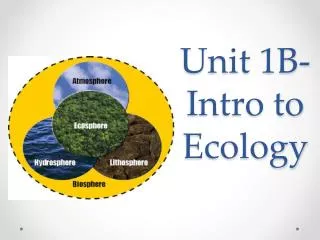
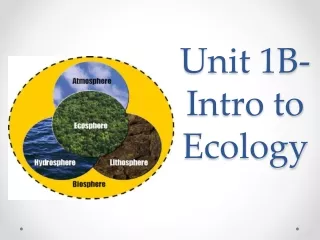
Levels of Ecological Organization • Population • Community • Ecosystem • Biosphere • Atmosphere • Ecosphere • Hydrosphere • Lithosphere
Biomes • Large areas (ecosystems) of the earth with typical types of organisms • They are determined primarily by temp & water availability
Ocean currents can make areas near them warmer or colder than other parts of the world at same latitude • Rainshadow effect • Moist air from ocean rises up the mountains and cools – rain falls • Drier air then passes over the mountains and warms as it falls – absorbing moisture • Areas inland from the mountains are drier – (rainshadow) – lack of rain
Biomes • Tundra • Taiga • Temperature Deciduous Forest • Grassland • Desert • Chaparral • Tropical Rainforest • Estuary • Coral Reef