Download
1 / 17
180 likes | 303 Vues
Explore the rich beginnings of Greek and Roman drama, rooted in ancient festivals honoring Dionysus, the god of wine and fertility. Discover how playwrights like Aeschylus, Sophocles, Euripides, and Aristophanes shaped drama through complex narratives and innovative structures. From tragic themes and human relationships to satirical comedies, each playwright contributed unique elements that influenced theater. The transition to Roman theater brought new styles and entertainment forms, including gladiatorial contests and circuses, but also faced decline due to societal changes and the rise of Christianity.

E N D
GREEK AND ROMAN DRAMA
BEGINNINGS • Festival to honor Dionysus • God of Wine and Fertility • Hope for blessing for • Children • Fertile, rich lands • Good Crops
ARISTOTLE • A play is “an imitation of an action, and not the action itself.”
Fifth century B.C. Contests held at festivals during year. Playwright Aeschylus 525-456 B.C. 80-90 plays 7 survive Themes cosmic chorus reduced to 12 Second actor added ORESTEIA Plays Began
SOPHOCLES • 495-406 B.C. • 90 plays 7 survive • Won 18 prizes-1st/2nd • Complexities of human relationships • Third actor introduced • Oedipus, Antigone
EURIPIDES • 484-406 B.C. • 90 plays 18 survive • Won 5 contests • Appreciated later generations • No chorus • More realistic • Medea, Hippolytus
ARISTOPHANES • 448-380 B.C. • 40 plays 11 survive • Comedies • Themes satirized politics and social customs • Used chorus
COSTUMES • Masks • High heeled boots • Elaborate robes
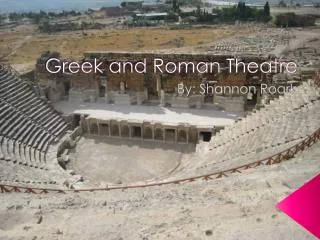
STRUCTURE • Hillside • Orchestra • Later a back building • Machinery--crane moved actors to heaven, wheeled platform to show prearranged set, machinery to sounds such as thunder • Later a raised stage with two story building
ROMAN THEATRE • Plays Comedy and Tragedy • No chorus • Entertainment not just plays
Platus 12 plays survive Slapstick, mistaken identity, witty jokes, recognizable Roman life The Menaechmi Shakespeare-Comedy of Errors Terence 6 plays survive Seneca tragedies were written to be read and not presented on stage ROMAN PLAYWRIGHTS
THEATRE STRUCTURE • Flat ground • Masonry walled building • Highly decorated and elaborated • High stage with roof • Cut orchestra area • Two stories
OTHER ENTERTAINMENT • Circus Maximus--chariot races, circus games, horse races, prize fights • Amphitheatres--gladiatorial contests, wild animal fights, sea battles • Mimes • Pantomimes
FALL OF THEATRE AND OTHER ENTERTAINMENT • Violence and deaths on stage and in other entertainment • Growth of Christianity • Church outlawed all entertainment