Dialectical Journal
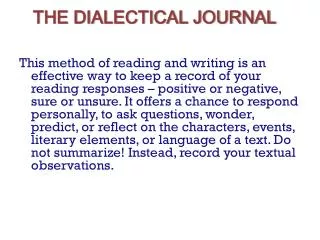
In this dialectical journal, we explore how F. Scott Fitzgerald employs various motifs and symbols to enhance the themes of his novel. Key elements to consider include geography, weather, color names, significant dates, and the ages of characters. We also discuss the concept of verisimilitude — the quality that makes the fictional narrative feel real and believable. By highlighting relatable scenarios, such as a character's injury, Fitzgerald authenticates his narrative, allowing readers to suspend disbelief even within fantastical elements.


Dialectical Journal
E N D
Presentation Transcript
Dialectical Journal Points to Consider
Motifs and Symbols • Fitzgerald uses motifs and symbols throughout the novel that are significant to the development of his themes. Pay close attention to : • Geography • Weather • Color
Names • Dates • Age
VERISIMILITUDE: • The sense that what one reads is "real," or at least realistic and believable. For instance, the reader possesses a sense of verisimilitude when reading a story in which a character cuts his finger, and the finger bleeds. If the character's cut finger had produced sparks of fire rather than blood, the story would not possess verisimilitude. Note that even fantasy novels and science fiction stories that discuss impossible events can have verisimilitude if the reader is able to read them with suspended disbelief.