Download
1 / 12
120 likes | 282 Vues
This guide delves into using red cabbage as a natural pH indicator, clearly explaining the pH scale from 1 to 14. Low pH indicates high hydrogen ion concentration (acidic), while high pH suggests low hydrogen ion concentration (basic). The procedural section outlines materials and steps for effective experimentation, allowing the user to test various substances like vinegar, baking soda, and fruits for their acidity or basicity using red cabbage extract. This hands-on experience not only reinforces concepts of chemistry but also engages in practical applications.

E N D
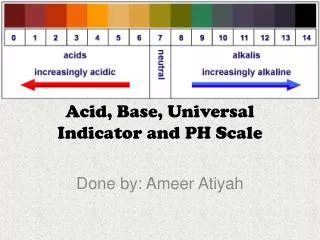
I N T R O D U C T I O N The concentration of hydrogen ions is called the pH scale. Low pH corresponds to high hydrogen ion concentration and vice versa. An acid is a substance that when added to water increases the concentration of hydrogen ions (lowers the pH). A substance that reduces the concentration of hydrogen ions (raises the pH) is called a base.
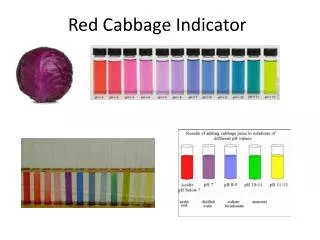
T H Ep H S C A L E The pH scale measures from pH 1 to pH 14. If a substance has a pH of 1-5, it is an acid. If a substance has a pH of 6-7, it is neutral. And finally, if a substance has a pH of 8-14, it is a base. A pH of 1-3 or 12-14 is considered to be a strong acid or base.
M A T E R I A L S • Two heads of red cabbage • A blender, chopper, or grater. • At least 7 beakers (w/ measurements on the side) • Medicine droppers • Medicine cups (or small container w/ metric measurements) • An orange, sparkling water, shampoo, vinegar( optional-you can use vinegar that has been dissolved in distilled water), baking soda, laundry detergent ( preferably powder), aspirin (100mg tablets), red grapes, blueberries, blackberries, carrots, bar soap, red onions, • An unlimited supply of water
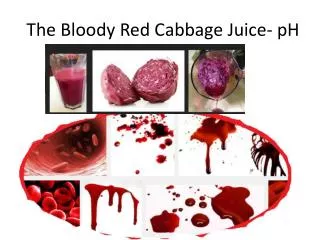
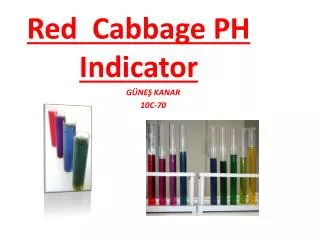
R E D C A B B A G E C O L O R S C A L E(By: B. Jackson and K. Glenn)



![Why use [CII] as a SFR indicator?](https://cdn2.slideserve.com/3620152/why-use-cii-as-a-sfr-indicator-dt.jpg)