Download
1 / 39
390 likes | 511 Vues
This text explores the significant foreign policy decisions of President Jimmy Carter's administration from 1975 to 1979. It covers critical events, including U.S. responses to Soviet aggression in Africa and the Middle East, the Camp David Accords, the Iran Hostage Crisis, and the implementation of the Carter Doctrine regarding Afghanistan and the Persian Gulf. The document highlights the complexities of arms control efforts, such as SALT II, and the geopolitical dynamics involving China, Latin America, and military interventions, assessing their long-term implications on U.S. foreign policy.

E N D
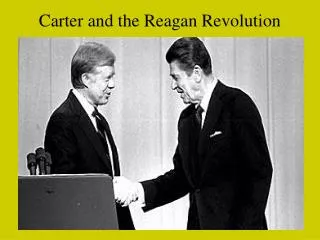
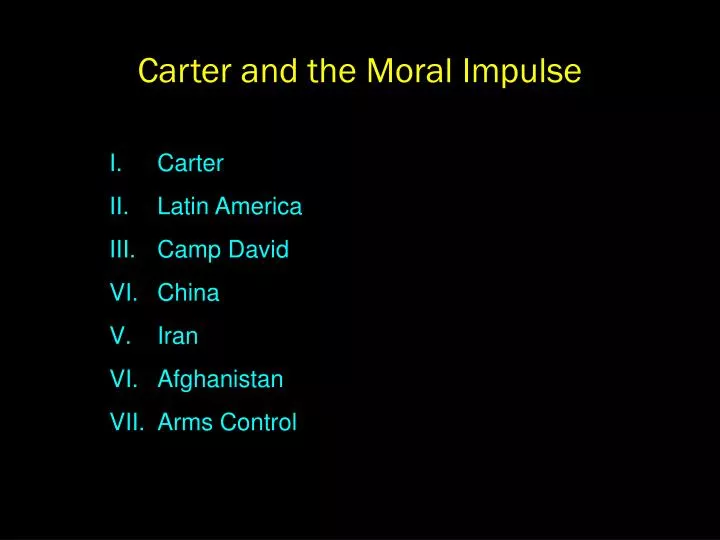
Carter and the Moral Impulse • I. Carter • II. Latin America • III. Camp David • VI. China • Iran • Afghanistan • Arms Control
Soviet or Soviet-sponsored direct or indirect aggression, 1975-1979 - Angola (through Cuba), 1975-76 - Ethiopia, 1977-78 - South Yemen, 1978 - North Yemen (supported by South), 1979 - Afghanistan (local Communist coup), 1978 - Cambodia (Vietnamese invasion), 1978 - Afghanistan, 1979
Zbigniew Brzezinski Cyrus Vance
“The Carter Doctrine” “. . . an attempt by any outside force to gain control of the Persian Gulf region will be regarded as an assault on the vital interests of the United States of America, and such an assault will be repelled by any means necessary, including military force.”
Post-Afghanistan Measures • tabling of Salt II • creation of Rapid Deployment Force • re-institution of the draft • sharp increase in defense spending • increase in aid to Pakistan • series of sanctions • boycott of Moscow Olympics • cancellation of exchange programs