Exploring the World of Frogs: Insights from the Ribbit Program
The Ribbit (Reaching Interests Beyond Boundaries Inquiry Trips) program at Washington Elementary engages 4th-grade students in learning about frogs and their habitats. Throughout the program, we conduct research on various frog species, including Mink Frogs, Green Frogs, American Bullfrogs, and Red-Eyed Tree Frogs, among others. Our findings are shared through National Geographic FieldScope, highlighting the diverse characteristics and diets of these amphibians. Join us as we discover the fascinating lives of frogs and their importance in our ecosystem!

Exploring the World of Frogs: Insights from the Ribbit Program
E N D
Presentation Transcript
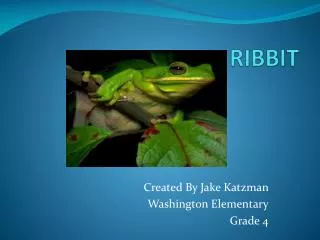
RIBBIT Created By Jake Katzman Washington Elementary Grade 4
What It’s All About Ribbit (Reaching Interests Beyond Boundaries Inquiry Trips) is a program in the Whitewater School District that teaches elementary students – including myself - about frogs. We are studying how they live and sharing the information on National Geographic FieldScope. Here are some of the frogs I researched throughout the program:
Mink Frog • Mink Frogs live near ponds, swamps and streams. • They are greenish brown and have bright green lips. • Their skin produces a musky odor, similar to the scent of a mink. • They eat bugs and leaves.
Green Frog • Green Frogs live in moist, cool places, near lakes and streams. • They are green/bronze/brown in color, and the male has a bright yellow throat. • They eat insects. • They sound like a banjo.
Pickerel Frog • Pickerel Frogs live in cool, moist areas, near streams and ponds. • They are tan in color with rows of spots. • They eat ants, beetles and spiders.
American Bullfrog • The American Bullfrog is the largest frog found in North America. They live near large permanent bodies of water. • They are usually green or brown with brown eyes. • They eat small bugs and flies. • Their deep call can be heard up to a ¼ mile away!
Red-Eyed Tree Frog • Red-Eyed Tree Frogs live in tropical lowlands. • They are usually green with red eyes. • They eat flies, crickets and other small bugs. • When disturbed, they flash their bulging red eyes and reveal their huge, webbed orange feet.
African Bullfrog • African Bullfrogs are some of the largest frogs in Africa. Males can grow up to nine inches long. • They are usually light green or yellowish. • They eat flies and small bugs.
Spring Peeper • Spring Peepers are small frogs that live by lakes and streams. They are rarely seen but often heard. • They can be tan, gray or dark brown. They have an X on their back. • They eat beetles and other insects. • They make a high-pitched whistle sound.
Northern Leopard Frog • Northern Leopard Frogs live in ponds and swamps. • They eat insects, worms and spiders. • Their voices sound like snoring, followed by a clucking noise.
Poison Dart Frog • Poison Dart Frogs live in rain forests. • They can be yellow, gold, copper, red, green, blue or black in color. • They are highly toxic. One two-inch-long frog has enough venom to kill 10 grown men! • They eat small insects.
Glass Frog • Glass Frogs live in Central and South America. • They have transparent skin, allowing you to see inside its body. • They eat insects.
Resources • National Geographic www.nationalgeographic.com • Wisconsin Department of Natural Resources http://dnr.wi.gov • eNature www.eNature.com