
Understanding Mendelian Genetics: Principles of Heredity and Dominance
E N D
Presentation Transcript
Genetics • The study of heredity
Heredity • Transmission of traits • One generation to another • Inherited features are the building blocks of evolution
Historically • Blending of parental contributions • Example: • Tall parent + short parent • Medium child
Problem • No outside genes • All parents traits blended • Over time all members of the species will look the same.
Variation • Differences in offspring
Vocabulary • Character: • Inheritable feature • Ex: color • Trait: • Alternate forms of the character • Purple or white
Vocabulary • True-breeding: • Produced same variety as the parent • P generation • Parental generation
Vocabulary • First filial generation (F1) • Offspring from the first cross • Second filial generation (F2) • Offspring from the second cross
Vocabulary • Alleles: • Alternate versions of the gene • Dominant: • Trait that is expressed • Recessive: • Trait that is not expressed or hidden
Vocabulary • Homozygous: • Pair of the same alleles • Heterozygous: • Pair of different alleles • Genotype: • Genetic make-up • Phenotype: • Appearance of organism
Vocabulary • Hybridization: • Crossing of parents that are not alike • Hybrids: • Offspring with two alleles for trait • Testcross: • Cross with a homozygous recessive individual • Determines genotype of an individual.
Vocabulary • Self-fertilization: • Fertilization can take place in plant if undisturbed. • Cross-fertilization: • Remove the male parts • Introduce pollen from another strain • Different traits
Vocabulary • Punnett square: • Diagram • Displays allele possibilities of fertilizations
Vocabulary • Monohybrid: • Individuals are heterozygous for one trait • Aa • Tt • Dihybrid: • Individuals are heterozygous for two traits • AaTt
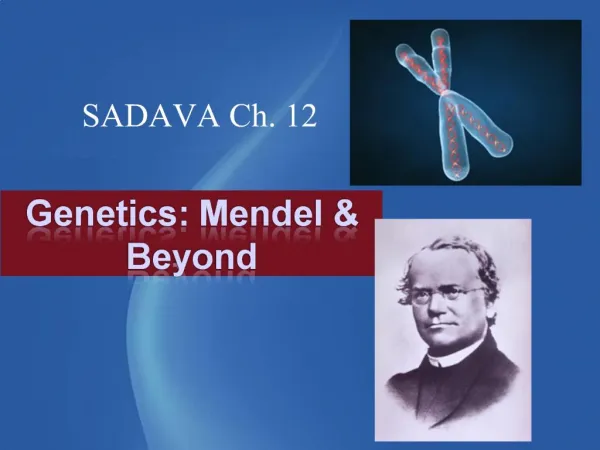
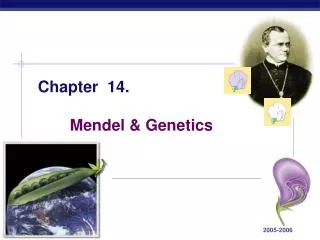
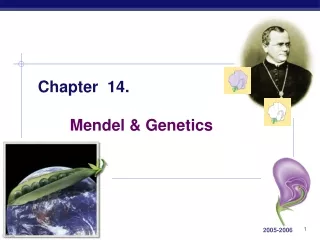
Gregor Mendel • Austrian monk • Studied math & science • University of Vienna • Studied pea plants at the monastery
Why the pea?? • 1. Has been studied • Able to produce hybrid peas • 2. Variety with 7 simple & easy to see traits • Purple vs white flower • 3. Small, easy to grow • Short generation time
Mendel • Chose comparable traits • 1. Flower color (white vs purple) • 2. Seed color (yellow vs green) • 3. Shape of seed (smooth vs wrinkled) • 4. Pod color (green vs yellow) • 5. Pod shape (inflated vs constricted) • 6. Flower location (axial vs terminal) • 7. Plant size (tall vs. short)
Mendel’s experiments • Allowed the peas to self-fertilize • Used true-breeding or pure-breeding plants
Mendel’s experiment • Crossed plants with alternate forms of characteristics • Example: • Tall plants with short plants
Mendel’s experiment • Parental generation • Pure white flowered plants X pure purple flowered plants • F1 always revealed purple flowered plants • Crossed the hybrid offspring • F2 filial generation • Some were purple • Some were white
Mendel’s experiment • F1 trait was hidden • F2 trait reappeared • Ratio in the F2 generation • 3:1 dominant:recessive • 3:1 purple:white • All traits revealed this ratio
Mendel’s experiments • F2 generation self-fertilized • White flowers always produce white flowers • Purple flowers • 1/3 produced only purple flowers • 2/3 produced dominant & recessive flowers in a 3:1 ratio
Mendel’s experiment • Concluded that the F2 generation was really 1:2:1 • ¼ pure-breeding dominant individuals • ½ non-pure breeding • ¼ pure-breeding recessive individuals
Mendel’s model • 1. Plants did not produce intermediate offspring. • 2. Alternate trait was there only not expressed
Mendel’s model • 3. Alternate traits segregated in the offspring • 4. Mendelian ratio: • 3:1 in the F2 generation • ¾ dominant • ¼ recessive
Mendel’s model • Alleles remain discrete • Do not influence the other • Do not blend • Are passed on in the gametes
Mendel’s first law of heredity • Law of Segregation: • Alternate alleles of a character • Segregate (separate) from each other & remain distinct. • Seen in meiosis when the homologous chromosomes separate • Form gametes
Mendel’s experiment • Crossed dihybrids • F1 generation demonstrated dominant phenotype for both traits • F2 generation showed a 9:3:3:1 phenotype (16 gamete combinations) • Each trait showed a 3:1 ratio similar to a monohybrid cross
Mendel’s second law of heredity • Law of Independent Assortment: • Genes located on different chromosomes • Assort independently • Assuming the genes are on separate chromosomes
Mendel • Phenotypes may be influenced by many factors • Many different genes • Environment
Incomplete dominance • Not all chromosomes are dominant or recessive • Heterozygous genotype can cause an intermediate between the parents
Codominance • Effect of both alleles can be seen • MN blood groups • Molecules on surface of RBC • MM, NN or MN • MN see affects of both
Codominance • Tay-Sachs disease (homozygous recessive) • Brain cells unable to break down lipids • Lacking enzyme build up lipids • Retardation & early death • Heterozygous • 50% the normal enzyme levels • Survive
Tay Sachs • 1 in 300,000 births in the US • 1 in 3500 births in Ashkenazi Jews • 1 in 28 are carriers in this population
Multiple alleles • ABO blood type • Gene codes an enzyme • Adds a sugar to lipids • Located on the surface of the RBC • Sugars act as recognition markers for the immune system
ABO • 3 gene alleles • 4 different blood types • I is the enzyme • IA (allele) adds galactose • IB (allele) adds galactosamine • i (allele) has no sugar
ABO • Type A IAIA Homozygous • Type A IAi Heterozygous • Type B IBIB Homozygous • Type B IBi Heterozygous • Type AB IAIB Heterozygous • Type O ii Homozygous
Rh blood group • Cell surface marker on the RBC • 85% have the marker • Rh + • Rh - does not have the marker • If a Rh- person gets blood that is Rh + • Develops antibodies against Rh+ blood.
ABO • Problem • Rh- mother gives birth to a child that is Rh + (Rh+ dad) • She has built up antibodies • They could cross into the babies blood. • Erythroblastosis fetalis: • Babies blood clumps due to antibodies against it’s Rh factor • RhoGam
Pleiotropic • Allele has more than one effect on the phenotype • One gene has many effects • Peas: gene for flower color • Codes for seed cover color • Yellow mice • Gene for yellow fur • Same for lethal developmental defect • So homozygous dominant would die
Pleiotropic • Inherited diseases that one gene produces many symptoms • Sickle cell anemia • Anemia • Joint pain/swelling • Heart failure • Splenomegaly • Renal failure
Sickle cell • Single aa change in beta-globin of hemoglobin • Causes hemoglobin to be sticky • Sickle cell shape • Higher incidence to people of African decent 1/500 • Heterozygous for the disease • Have greater resistance to malaria