Logic Models: What, Why, and How in Research & Evaluation Division Strategic Planning and Implementation
Learn about logic models, their definition, purposes, uses, and types. Discover how they can facilitate program planning, implementation, and evaluation. Understand the importance of measurable outcomes.

Logic Models: What, Why, and How in Research & Evaluation Division Strategic Planning and Implementation
E N D
Presentation Transcript
Program Logic Models:What, why, and how Research & Evaluation Division Strategic Planning and Implementation Kamehameha Schools Nolan Malone, Summer Keli‘ipio, & Wendy Kekahio 17 April 2007
Icebreaker Use one word or phrase to express how you feel about logic models
Today’s Schedule • Logic Models 101: The “what” & “why” • Definition and purposes • Uses (and abuses) • Types • Content • Group Activity: The “how” • Questions
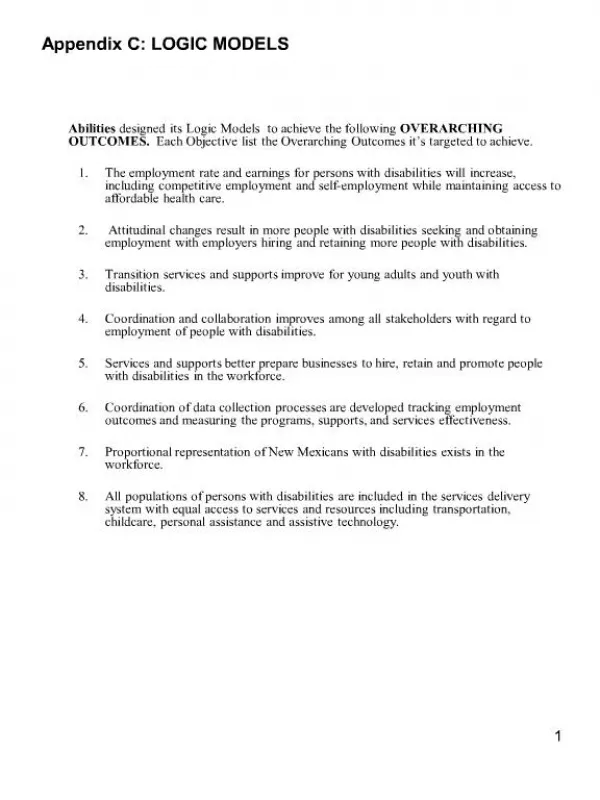
Logic Models 101: Definition* • What? • A picture of how your program works • Links activities with outcomes • Facilitates planning, implementation, and evaluation *From the Kellogg Foundation
Theory of change Logic Models 101: Purposes • Why create a logic model? • To visually describe the sequence of change you hope to see in participants • To learn continually about and improve your program • To facilitate sharing what works in your program and why • Bottom line: What do you do? and What are the consequences? Activities Outcomes
Logic Models 101: Uses First, some Abuses… • Logic models SHOULD NOT be used for: • Tormenting staff • Creating a doorstop/office decoration • Auditing program operations • Making a judgment of your work
Logic Models 101: Uses Phase of program can dictate uses: These activities can occur at any phase
Logic Models 101: Types Generally, logic models are flow charts • They may look different • They may contain different information • At minimum they include activities and outcomes
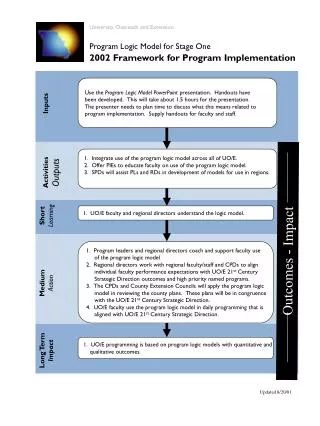
Program elements Activities Short-term outcomes Intermediate Outcomes Program Outcomes Long-term outcomes Logic Models 101: Types Simple logic models take the following format: Organization/program vision, mission, values, and goals
Family Materials Teacher Materials Learner Materials Activities Activities Activities Short-term outcomes Short-term outcomes Short-term outcomes Intermediate Outcomes Intermediate Outcomes Intermediate Outcomes Program Outcomes Program Outcomes Program Outcomes Logic Models 101: Content LIS-Curriculum & Instructional Materials • 3 program elements:
Weekly hour-long meetings • Structured activities • Counseling and support Building strong Pöki‘i Intermediate Outcomes Program Outcomes Short-term outcomes Logic Models 101: Content Mälama I Nä Pöki‘i Involving Adults Short-term outcomes Intermediate Outcomes Program Outcomes • Weeky hour-long meetings • Attend school activities • Training/ support
Program elements Activities Short-term outcomes Intermediate Outcomes Program Outcomes Guidance Counseling Parent/ scholar group guidance sessions Increased awareness of college or career planning Parents & Scholars develop strategies to support student’s Pathway Plan and update plan annually Scholars prepare themselves to be applicants for post-secondary opportunities Logic Models 101: Content Kamehameha Scholars
Today’s Schedule • Logic Models 101 • Definitions and purposes • Uses (and abuses) • Types Restroom, coffee, and snack break • Group Activity: The “how” • Questions
Four Groups: Mentoring Literacy Enrichment Post-high At least one staff member representing that particular group Everyone else will help generate ideas Group Activity: The “how”
Group Activity: The “how” • Explain your program elements • Clarify, ask questions, & nail down some language • Explain your program activities • Group activities under program elements • Nail down language • Talk about outcomes that relate to each activity • Group outcomes by activity and time • ARE THE OUTCOMES MEASUREABLE?
Wrap Up Now… use one word or phrase to express how you feel about logic models
Today’s Schedule • Logic Models 101 • Definitions and purposes • Uses (and abuses) • Types • The “how”: Group Activity • Questions
Mahalo a nui loa Additional questions? Nolan Malone Summer Keli‘ipio Wendy Kekahio 534-3849 534-3964 523-6373 nomalone@ksbe.edu sukeliip@ksbe.edu wekekahi@ksbe.edu