Understanding Cloud Computing: Benefits, Risks, and IT Infrastructure Evolution
This comprehensive overview of cloud computing addresses critical challenges faced by modern IT departments, outlining the key characteristics and advantages of cloud solutions. It explores various cloud types—public, private, hybrid, and vertical—and the operational models of IaaS, PaaS, and SaaS. The document highlights major benefits of cloud computing for individuals and organizations, while also discussing notable risks, including privacy and security concerns. Additionally, it examines the role of web services in enhancing IT applications, providing an insightful roadmap for leveraging cloud technology.

Understanding Cloud Computing: Benefits, Risks, and IT Infrastructure Evolution
E N D
Presentation Transcript
3 Cloud Computing
Describe the problems that modern information technology departments face. • Describe the key characteristics and advantages of cloud computing. • Identify a use-case-scenario for each of the four types of clouds. • Explain the operational model of each of the three types of cloud services.
Identify the key benefits of cloud computing. • Discuss the concerns and risks associated with cloud computing. • Explain the role of Web services in building a firm’s IT applications, providing examples.
Introduction • What Is Cloud Computing? • Different Types of Clouds • Cloud Computing Services • The Benefits of Cloud Computing • Concerns and Risks with Cloud Computing • Web Services and Service-Oriented Architecture
TG 3.1 IT Infrastructure Evolution of the Modern IT Infrastructure Introduction
IT Infrastructure • IT Components • Hardware • Software • Networks • Databases • IT Services • (Developing Information Systems, Managing Security and Risk, and Managing Data)
Evolution of the Modern IT Infrastructure • Stand-alone Mainframes • Mainframe and Dumb Terminals • Stand-alone Personal Computers • Local Area Networks (Client/Server Computing) • Enterprise Computing • Cloud Computing and Mobile Computing
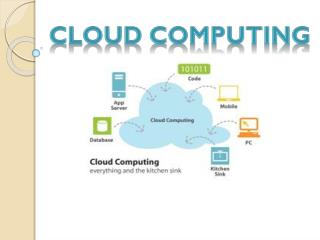
TG 3.2 Cloud Computing Characteristics What is Cloud Computing?
Cloud Computing Characteristics • Cloud Computing Provides On-Demand Self-Service • Cloud Computing Encompasses the Characteristics of Grid Computing • Grid Computing enables organizations to utilize resources more efficiently • Grid Computing provides fault tolerance and redundancy • Grid Computing makes it easy to scale up • Grad Computing makes it easy to scale down
Cloud Computing Characteristics (Continued) • Cloud Computing Encompasses the Characteristics of Utility Computing • Cloud Computing Utilizes Broad Network Access • Cloud Computing Pools Computing Resources • Cloud Computing Often Occurs on Virtualized Servers • Server Farms • Server Virtualization
TG 3.3 Public Cloud Private Cloud (or Corporate Cloud) Hybrid Cloud Vertical Clouds Different Types of Clouds
TG 3.4 Infrastructure-as-a-Service (IaaS) Platform-as-a-Service (PaaS) Software-as-a-Service (SaaS) Cloud Computing Services
Platform-as-a-Service (PaaS) • PaaS offers several advantages to customers: • Application developers can develop and run their software solutions on a cloud platform without the cost of buying and managing the underlying hardware and software layers • Underlying computing and storage resources automatically scale to match application demand • Operating system features can be upgraded frequently
Platform-as-a-Service (PaaS) (Con’t) • PaaS offers several advantages to customers (Con’t): • Geographically distributed development teams can work together on software development projects • PaaS services can be provided by diverse sources located throughout the world • Initial and ongoing costs can be reduced by the use of infrastructure services from a single vendor
TG 3.5 Seven Major Benefits to Individuals and Organizations The Benefits of Cloud Computing
Seven Major Benefits of Cloud Computing to Individuals & Organizations • Benefit 1: Making Individuals More Productive • Benefit 2: Facilitating Collaboration • Benefit 3: Mining Insights from Data • Benefit 4: Reduce Costs
Seven Major Benefits of Cloud Computing to Individuals & Organizations (Con’t) • Benefit 5: Expand the Scope of Business Operations • Benefit 6: Respond Quickly to Market Changes • Benefit 7: Customize Products and Services
TG 3.6 Five Categories of Concerns Concerns and Risks with Cloud Computing
Five Categories of Cloud Computing Concerns • Concern 1: Legacy IT Systems • Concern 2: Reliability • Example: Amazon Web Services • Concern 3: Privacy • Concern 4: Security • Concern 5: The Regulatory and Legal Environment
TG 3.7 Benefits Provided to Organizations by Web Services Service-Oriented Architecture Web Services are based on Four Key Protocols Web Services and Service-Oriented Architecture
Benefits Provided to Organizations by Web Services • The organization can utilize the existing Internet infrastructure without having to implement any new technologies • Organizational personnel can access remote or local data without having to understand the complexities of the process • The organization can create new applications quickly and easily
Web Services are based on four key protocols: • Extensible Markup Language (XML) • Simple Object Access Protocol (SOAP) • Web Services Description Language (WSDL) • Universal Description, Discovery, and Integration (UDDI)