Download
1 / 1

E N D
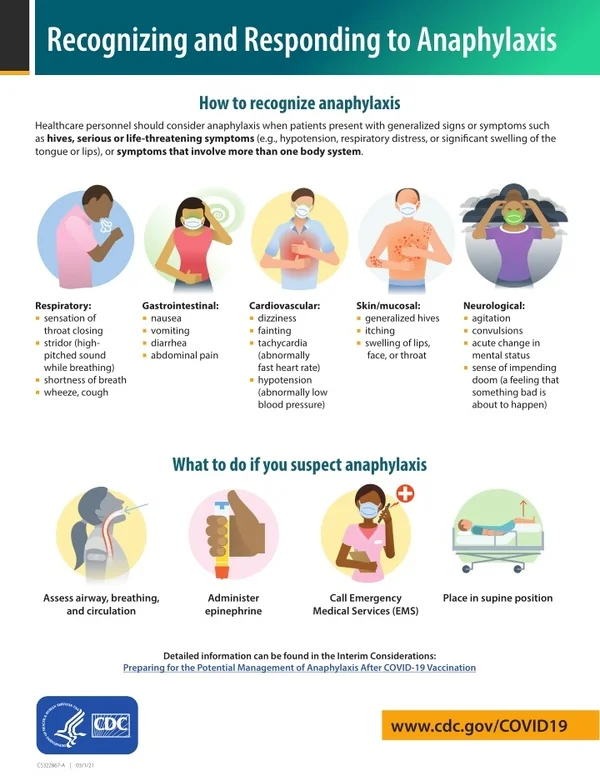
Recognizing and Responding to Anaphylaxis How to recognize anaphylaxis Healthcare personnel should consider anaphylaxis when patients present with generalized signs or symptoms such as hives, serious or life-threatening symptoms (e.g., hypotension, respiratory distress, or significant swelling of the tongue or lips), or symptoms that involve more than one body system. Respiratory: sensation of throat closing stridor (high- pitched sound while breathing) shortness of breath wheeze, cough Gastrointestinal: nausea vomiting diarrhea abdominal pain Cardiovascular: dizziness fainting tachycardia (abnormally fast heart rate) hypotension (abnormally low blood pressure) Skin/mucosal: generalized hives itching swelling of lips, face, or throat Neurological: agitation convulsions acute change in mental status sense of impending doom (a feeling that something bad is about to happen) What to do if you suspect anaphylaxis Assess airway, breathing, and circulation Administer epinephrine Call Emergency Medical Services (EMS) Place in supine position Detailed information can be found in the Interim Considerations: Preparing for the Potential Management of Anaphylaxis After COVID-19 Vaccination www.cdc.gov/COVID19 CS322867-A | 03/1/21