Understanding Personal Pronouns: Definitions and Examples
This guide delves into personal pronouns, which replace nouns in sentences to enhance clarity and avoid repetition. It covers first, second, and third-person pronouns, such as "I," "you," and "they." Through practical examples like "Stan bought a suit," the usage of these pronouns is demonstrated, making it easy to grasp how they function in various contexts. The concept of antecedents is also introduced to show how pronouns refer back to specific nouns in sentences, facilitating better comprehension of their roles in language.

Understanding Personal Pronouns: Definitions and Examples
E N D
Presentation Transcript
Pronouns Word that is used in place of one or more nouns or pronouns
Stan bought a suit and an overcoat. He will wear them tomorrow. • Several of the horses have gone into the stable because they are hungry. Examples: I, you, we, them, us, they, she, he…
The tour guide showed the students where they could see Mayan pottery. • Why did Oscar give his camera to the film school? • Darius scored a field goal. It was his first of the season. Antecedent: word that a pronoun stands for or refers to.
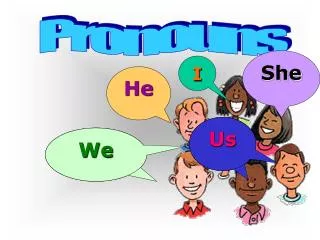
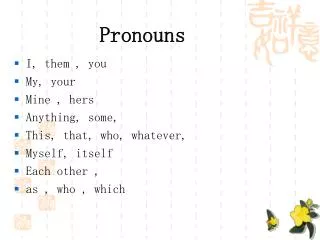
1st person: I, me, my, mine, we, us, our, ours • 2nd: you, your, yours • 3rd: he, him, his, she, her, hers, it, its, they, them, their, theirs Personal Pronouns: refers to the one speaking