Download
1 / 15
160 likes | 289 Vues
The UPOV system requires new plant varieties to be distinct, uniform, and stable for a minimum of 20 years of protection. Currently, 72,000 varieties are protected under this framework. Despite providing exceptions for private acts and experimental purposes, critiques highlight its limitations, particularly for LDCs, including the focus on major crops, decreased seed saving, and potential monoculture effects. Benefits of Plant Variety Protection (PVP) include economic gains, improved health through better nutritional content, and enhanced environmental resilience, but concerns about ownership concentration and biodiversity loss persist.

E N D
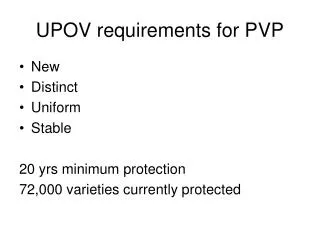
UPOV requirements for PVP • New • Distinct • Uniform • Stable 20 yrs minimum protection 72,000 varieties currently protected
UPOV’s exceptions to breeders’ rights • Acts done privately and for non-commercial purposes (Farmers’ privilege) • Experimental pursoses (breeders’ exemption)
Benefits of PVP (acc. to UPOV) • Economic: varieties with improved yield leading to reductions in the price of end-products for consumers, or improved quality, leading to higher value products with increased marketability; • Health: varieties with improved nutritional content; • Environmental: varieties with improved disease resistance or stress tolerance; • Pure pleasure: for example with ornamental plants.
Tweet DmanRocks IPE Children! You’ve been deceived! Do you like pirates? @patentsavvy @upovsucks ##http://bit.ly/pirate 8 minutes ago
Dutfield’s critiques • Non-adapted for many LDCs • Focus on a few big crops • Less seed saving • Need to use fertilizers and pesticides • Monoculture/ loss of plant genetic deiversity • Concentration of ownership • Conflict with CBD’s ABS principles