Download
1 / 17
170 likes | 294 Vues
This document outlines the pressing issues facing GLBT elders in Maine, as highlighted in a 2012 AARP report. With an anticipated population of over 4 million GLBT seniors by 2030, there is an urgent need to integrate their unique needs into aging policies and practices. Common concerns include lack of culturally competent care, discrimination, isolation, and the impact of demographics on health services. This report emphasizes the importance of community engagement, innovative solutions, and addressing systemic barriers to ensure successful aging for GLBT individuals.

E N D
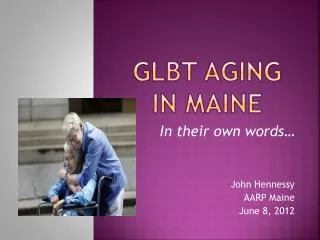
GLBT Aging in MAine In their own words… John Hennessy AARP Maine June 8, 2012
Glbt aging in a changing world • “Harold” • “Mary & Jean” • Understanding and meeting the needs of GLBT elders in Maine • Policy makers and researchers have largely ignored issues of aging in the GLBT community, whose members are expected to exceed 4 million by 2030. • How to integrate GLBT Older Mainers into Aging Policy and Practice
Glbt aging in a changing world • “Noncategoricals” vs “”Uncategorized” • Gray, Gay and Worried (NYT 9/30/10) • Aging and Gay, and Facing Prejudice in Twilight (NYT 10/9/07 • For Many Older Gays, a Toll of Time and Isolation (NYT 9/12/11) • Positive vision for successful aging for GLBT elders in Maine • The urgency of this movement has never been greater
GLBT DemograPhics • The Graying of America 2000 – 35m 65+ (12% US pop.) +8% 1950 2030 – 70m 65+ (20% US pop.) +100% 2000 • The “Gaying” of America According to the LGBT Aging Project: 10,000 people turning 65 each week.
Project Overview • Transform the landscape on GLBT Aging in Maine • Statewide Community Needs Assessment • Community Focus Groups (Portland, Lewiston and Bangor) • Report • Network Readiness Survey • Health Care Practitioners • Service Providers
Partners • Maine Association of Area Agencies on Aging • Frannie Peabody Center • ME Gerontological Society • Maine Transnet • Long Term Care Ombudsman Program • UNE College of Osteopathic Medicine • UNECOM Q Med Club • Vogel & Dubois • Equality Maine • Martin’s Point • Doug Kimmel, PhD
Community needs assessment • Health Care Access • Legal Services • Long Term Care • Violence, Victimization and Criminal Justice • Interpersonal Violence • Service Needs and Use • Social and Mental Health • Spirituality • Community Issues • Demographics
What we heard • GLBT Boomers are much like the rest of the population • Concerned about aging, unable to care for themselves, becoming sick or disabled, outliving their income and being discriminated against because of their sexual orientation or gender identity. • GLBT is a benefit. • Provider does not “approve” of my lifestyle.
What we heard • The presumption of heterosexuality. • Personal experience. • It is critical that my PCP is gay positive, beyond gay friendly! • Geographic isolation is a significant barrier to health care.
What we heard • Transgender and gender non-conforming folks are more likely to experience barriers to health care. • Many GLBT seniors in Maine are tough while others are at risk. • There is a sense of a lack of culturally competent providers. • Being long term HIV+ has it’s own rewards and challenges. • My doctor is straight, but flawless.
GLBT aging challenges • All people are vulnerable as they age – GLBT folks face the additional stigma of homophobia/transphobia. • Many are no longer partnered, without children, estranged from family supports. • Mainstream research ignores GLBT seniors. • Families not recognized under law. • Faith & Religion
Glbt aging challenges • Specific services or outreach. • We need programs to keep GLBT folks involved in their communities. • Health Disparities – tobacco, alcohol, disabilities, cardiovascular disease, HIV • Not being out.
Long term care • Most haven’t thought about or planned for. • Many staff in LTC are GLBT. • My biggest worry – LTC and sexuality. • Can’t imagine LTC as a trans person. • Never planned to got old re: HIV+ • The prospect of going back in the closet is making me ill.
Next steps • Network Readiness Survey • Staff training is essential. • People who fear discrimination need reassurance before they access services in order to make it through the agency door. • When clients reveal GLBT identity, address the whole person and their situation. Do not assume that being GLBT is a problem in itself. • Start a SAGE chapter in Maine.
Where we’ve been • LGBTQ Symposium 2007: Strengthening Community, Building Alliances (Create new models of living communities for GLBTQ people as the age.) • 5th Annual University of Maine Geriatric Colloquium – April 2010 Sexuality and Aging: Dispelling the Myths
Thank you Edie & Thea