
Exploring the Enlightenment: Key Thinkers and Their Impact on Modern Thought

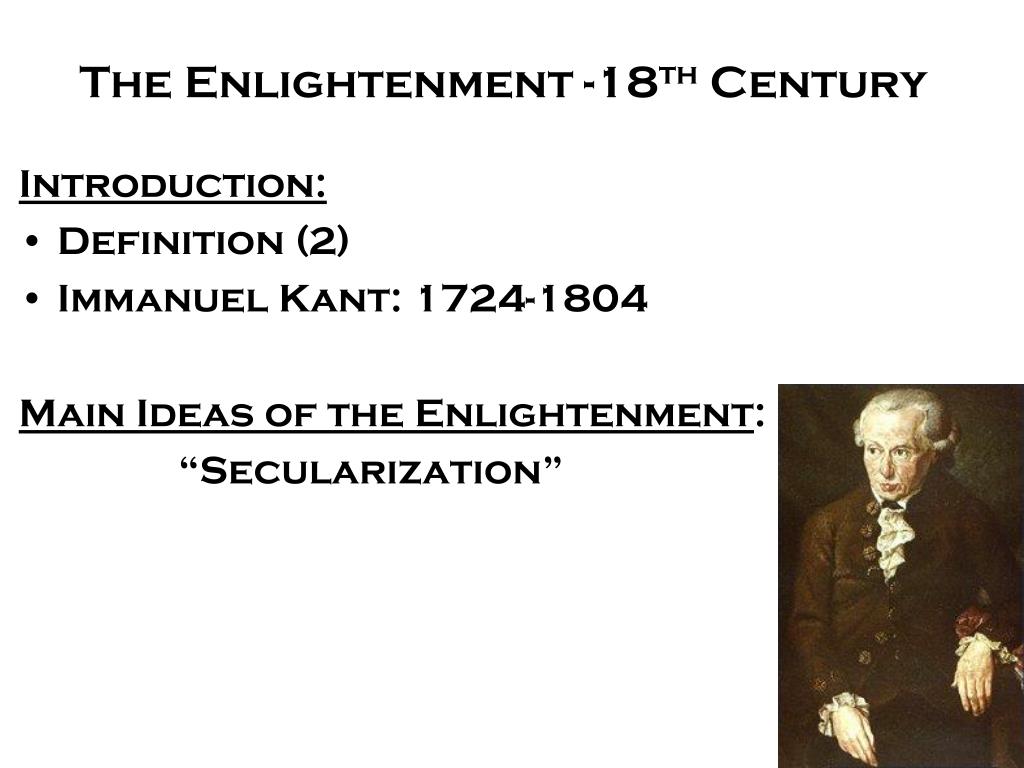
This introduction to the Enlightenment delves into its defining features and key figures, such as Immanuel Kant, who emphasized secularization and rational thought. We explore the contributions of influential philosophers like Montesquieu, Locke, Voltaire, and Diderot, each shaping modern political philosophy and human rights. From Montesquieu's "The Spirit of the Laws" to Diderot's "Encyclopedie," this period marked a profound transformation in ideas. The Enlightenment set the stage for contemporary discussions on governance, freedom, and toleration.
Télécharger la présentation 
Politique de téléchargement : le contenu du site vous est fourni TEL QUEL pour votre information et votre usage personnel ; il ne peut être vendu, concédé sous licence ni partagé sur d’autres sites sans l’accord de son auteur.Le contenu vous est fourni TEL QUEL, pour votre information et votre usage personnel uniquement. Téléchargez la présentation en cliquant sur ce lien. Lors du téléchargement, si vous ne parvenez pas à télécharger une présentation, l’éditeur a peut-être supprimé le fichier de son serveur.Pendant le téléchargement, si vous ne parvenez pas à obtenir une présentation, le fichier a peut-être été supprimé par l’éditeur.
F I N