Download
1 / 14
140 likes | 247 Vues
The D.O. Difference, prepared by the American Osteopathic Association, highlights the unique aspects of osteopathic medicine. D.O.s are fully licensed physicians dedicated to a whole-person approach to health care, emphasizing preventative care and utilizing Osteopathic Manipulative Treatment (OMT). With a rich history dating back over a century, D.O.s offer comparable medical education and capabilities to M.D.s, ensuring quality care across all specialties. Learn about the D.O. journey, the philosophy behind osteopathy, and the commitment to treating the whole person.

E N D
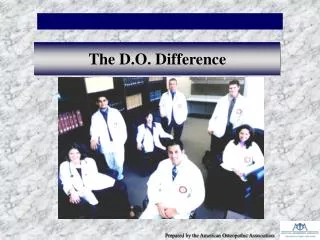
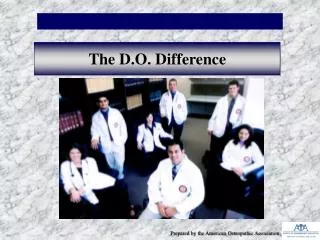
The D.O. Difference Prepared by the American Osteopathic Association
What Is a D.O.? • D.O.s are fully licensed physicians who: • Prescribe medicine. • Focus on preventative health care. • Practice a "whole person" approach to medicine.
Why Become a D.O.? • History of the profession. • Osteopathic medicine today. • Similarities between D.O.s and M.Ds. • The D.O. Difference.
History of the Profession • Andrew Taylor Still, M.D., D.O. • Founder of Osteopathic Medicine.
First Osteopathic Medical School, Kirksville College of Osteopathic Medicine
D.O.s Have Been Making a Difference for More Than a Century Col. Ronald A. Maul, D.O., M.C., U.S.A. Barbara Ross-Lee, D.O.
Similarities Between D.O.s and M.Ds. • Fully licensed physicians. • Four years of medical education. • Choose any specialty area.
Pass state licensing exams. Prescribe medication and perform surgery. Covered by major insurance plans. Practice in fully accredited and licensed facilities. The Similarities Continue…
The D.O. Difference • D.O.s practice a whole person approach to care. • D.O.s utilize Osteopathic Manipulative Treatment (OMT).
Osteopathic Manipulative Treatment (OMT) • Requires hands-on approach. • Enables D.O.s to treat and diagnose injuries or illnesses.
D.O.s Treat the Whole Person • D.O.s believe a person is more than just the sum of their parts.
Osteopathic Medicine Today • 20 osteopathic medical schools in 22 locations. • Over 54,000 D.O.s in the U.S.
Requirements The average osteopathic medical school applicant meets the following requirements:
Contact Information American Osteopathic Association 142 E. Ontario St. Chicago, IL 60611 (800) 621-1773 www.osteopathic.org or www.aacom.org