Comprehensive Mouse Quarantine Procedures (January - August 2004)
This document outlines the standard operating procedures for mouse quarantine from January to August 2004. Each group of mice is treated weekly with mite spray and provided fenbendazole-medicated feed during the second, fourth, and sixth weeks. Sentinel mice are monitored, moved weekly, and upon completion of diagnostic testing (serology and parasitology), results are obtained from Charles River Laboratories. Mice are subsequently released from quarantine and prepared for transfer to the colony. Detailed SOPs provide additional guidance on protocols.


Comprehensive Mouse Quarantine Procedures (January - August 2004)
E N D
Presentation Transcript
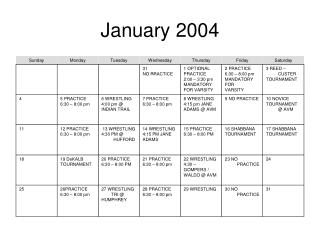
Group 1-January (to arrive 1/6-1/14) Mite spray= treat all mice (see SOP) with mite spray weekly Med feed= use fenbendazole-medicated feed (usually weeks 2,4 and 6) Contacts= contact sentinel mice; moved to new cage once weekly, first 2 weeks, then separated into individual cages and used as a standard (bedding) sentinel Testing= diagnostic lab testing (serology, parasitology) Results= serology results (from Charles River Laboratories) Release= mice released from quarantine; mice ready for transfer to colony See Mouse Quarantine-Tech SOP for more detailed information on standard operating procedures for mouse quarantine January 2004
Group 2-February (to arrive 2/3-2/12) Mite spray= treat all mice (see SOP) with mite spray weekly Med feed= use fenbendazole-medicated feed (usually weeks 2,4 and 6) Contacts= contact sentinel mice; moved to new cage once weekly, first 2 weeks, then separated into individual cages and used as a standard (bedding) sentinel Testing= diagnostic lab testing (serology, parasitology) Results= serology results (from Charles River Laboratories) Release= mice released from quarantine; mice ready for transfer to colony See Mouse Quarantine-Tech SOP for more detailed information on standard operating procedures for mouse quarantine February 2004
Group 3-March (to arrive 3/2-3/11) Mite spray= treat all mice (see SOP) with mite spray weekly Med feed= use fenbendazole-medicated feed (usually weeks 2,4 and 6) Contacts= contact sentinel mice; moved to new cage once weekly, first 2 weeks, then separated into individual cages and used as a standard (bedding) sentinel Testing= diagnostic lab testing (serology, parasitology) Results= serology results (from Charles River Laboratories) Release= mice released from quarantine; mice ready for transfer to colony See Mouse Quarantine-Tech SOP for more detailed information on standard operating procedures for mouse quarantine March 2004
Group 4-April (to arrive 4/6-4/15) Mite spray= treat all mice (see SOP) with mite spray weekly Med feed= use fenbendazole-medicated feed (usually weeks 2,4 and 6) Contacts= contact sentinel mice; moved to new cage once weekly, first 2 weeks, then separated into individual cages and used as a standard (bedding) sentinel Testing= diagnostic lab testing (serology, parasitology) Results= serology results (from Charles River Laboratories) Release= mice released from quarantine; mice ready for transfer to colony See Mouse Quarantine-Tech SOP for more detailed information on standard operating procedures for mouse quarantine April 2004
Group 5-May (to arrive 5/4-5/13) Mite spray= treat all mice (see SOP) with mite spray weekly Med feed= use fenbendazole-medicated feed (usually weeks 2,4 and 6) Contacts= contact sentinel mice; moved to new cage once weekly, first 2 weeks, then separated into individual cages and used as a standard (bedding) sentinel Testing= diagnostic lab testing (serology, parasitology) Results= serology results (from Charles River Laboratories) Release= mice released from quarantine; mice ready for transfer to colony See Mouse Quarantine-Tech SOP for more detailed information on standard operating procedures for mouse quarantine May 2004
Group 6-June (to arrive 6/1-6/10) Mite spray= treat all mice (see SOP) with mite spray weekly Med feed= use fenbendazole-medicated feed (usually weeks 2,4 and 6) Contacts= contact sentinel mice; moved to new cage once weekly, first 2 weeks, then separated into individual cages and used as a standard (bedding) sentinel Testing= diagnostic lab testing (serology, parasitology) Results= serology results (from Charles River Laboratories) Release= mice released from quarantine; mice ready for transfer to colony See Mouse Quarantine-Tech SOP for more detailed information on standard operating procedures for mouse quarantine June 2004
Group 7-July (to arrive 7/6-7/15) Mite spray= treat all mice (see SOP) with mite spray weekly Med feed= use fenbendazole-medicated feed (usually weeks 2,4 and 6) Contacts= contact sentinel mice; moved to new cage once weekly, first 2 weeks, then separated into individual cages and used as a standard (bedding) sentinel Testing= diagnostic lab testing (serology, parasitology) Results= serology results (from Charles River Laboratories) Release= mice released from quarantine; mice ready for transfer to colony See Mouse Quarantine-Tech SOP for more detailed information on standard operating procedures for mouse quarantine July 2004
Group 8-August (to arrive 8/3-8/12) Mite spray= treat all mice (see SOP) with mite spray weekly Med feed= use fenbendazole-medicated feed (usually weeks 2,4 and 6) Contacts= contact sentinel mice; moved to new cage once weekly, first 2 weeks, then separated into individual cages and used as a standard (bedding) sentinel Testing= diagnostic lab testing (serology, parasitology) Results= serology results (from Charles River Laboratories) Release= mice released from quarantine; mice ready for transfer to colony See Mouse Quarantine-Tech SOP for more detailed information on standard operating procedures for mouse quarantine August 2004
Group 9-September(to arrive 9/7-9/16) Mite spray= treat all mice (see SOP) with mite spray weekly Med feed= use fenbendazole-medicated feed (usually weeks 2,4 and 6) Contacts= contact sentinel mice; moved to new cage once weekly, first 2 weeks, then separated into individual cages and used as a standard (bedding) sentinel Testing= diagnostic lab testing (serology, parasitology) Results= serology results (from Charles River Laboratories) Release= mice released from quarantine; mice ready for transfer to colony See Mouse Quarantine-Tech SOP for more detailed information on standard operating procedures for mouse quarantine September 2004
Group 10-October (to arrive 10/5-10/14) Mite spray= treat all mice (see SOP) with mite spray weekly Med feed= use fenbendazole-medicated feed (usually weeks 2,4 and 6) Contacts= contact sentinel mice; moved to new cage once weekly, first 2 weeks, then separated into individual cages and used as a standard (bedding) sentinel Testing= diagnostic lab testing (serology, parasitology) Results= serology results (from Charles River Laboratories) Release= mice released from quarantine; mice ready for transfer to colony See Mouse Quarantine-Tech SOP for more detailed information on standard operating procedures for mouse quarantine October 2004
Group 11-November (to arrive 11/2-11/11) Mite spray= treat all mice (see SOP) with mite spray weekly Med feed= use fenbendazole-medicated feed (usually weeks 2,4 and 6) Contacts= contact sentinel mice; moved to new cage once weekly, first 2 weeks, then separated into individual cages and used as a standard (bedding) sentinel Testing= diagnostic lab testing (serology, parasitology) Results= serology results (from Charles River Laboratories) Release= mice released from quarantine; mice ready for transfer to colony See Mouse Quarantine-Tech SOP for more detailed information on standard operating procedures for mouse quarantine November 2004
Group 12-December (to arrive 12/7-12/16) Mite spray= treat all mice (see SOP) with mite spray weekly Med feed= use fenbendazole-medicated feed (usually weeks 2,4 and 6) Contacts= contact sentinel mice; moved to new cage once weekly, first 2 weeks, then separated into individual cages and used as a standard (bedding) sentinel Testing= diagnostic lab testing (serology, parasitology) Results= serology results (from Charles River Laboratories) Release= mice released from quarantine; mice ready for transfer to colony See Mouse Quarantine-Tech SOP for more detailed information on standard operating procedures for mouse quarantine December 2004