
Understanding Story Structure: The Elements of Plot Dynamics
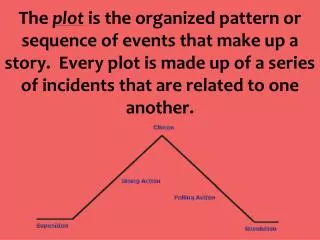
The plot is the organized sequence of events that form a story. It consists of interconnected incidents, beginning with exposition, which provides essential background, setting, and character introductions without action. The narrative hook marks the shift to active conflict. Rising action intensifies the story through character conflicts leading to the climax – a critical turning point that defines the plot. The falling action follows, presenting the consequences of the climax, and concludes with the resolution, where tensions are unraveled and characters face the aftermath.

Understanding Story Structure: The Elements of Plot Dynamics
E N D
Presentation Transcript
The plot is the organized pattern or sequence of events that make up a story. Every plot is made up of a series of incidents that are related to one another.
Exposition: is the information needed to understand a story. It is an introduction that includes the setting—time and place; introduces main characters; provides background information; sets the scene; establishes potential for conflict. (no action)
Narrative Hook:is the point at which the exposition ends and the first action begins; it is the catalyst that begins the major conflict.
Rising action: is a series of events that lead to the climax. Characters engage in conflicts; antagonism is heightened.
Climax: is the defining moment of the plot: the major turning point. It can be obvious, like a fight, or subtle, like a dawning truth or realization. Just remember that it doesn’t have to be exciting, but crucial to the plot.
Falling Action:is theset of events that bring the story to a close; the immediate consequences of the crisis.
Resolution/Denouement:is the conclusion that includes unraveling of tensions; most questions answered; characters left to deal with consequences of conflicts. It is what happens at the end / closure. (no action)
