Download
1 / 13
130 likes | 267 Vues
This document delves into the principles of electric fields and voltage distribution, specifically in the context of charged plates and the effects of introducing a third plate. It also addresses the sensitivity and construction of Brüel & Kjær systems, as well as the behavior of external loads under varying frequencies. Additionally, it examines electret microphones, their energy-harvesting capabilities, and key characteristics such as diaphragm stiffness and operational principles. The document is a valuable resource for understanding electrostatic devices and their applications.

E N D
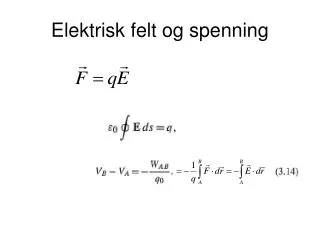
s1 Charged plates ----------------------------------------------------------------- +++++++++++++++++++++++++++++++++++++ Fraden section 3.1 and 3.2
Adding a third plate ----------------------------------------------------------------- + + + + + + + + + + + + + + + + + + + + + s s1 ++ ++ ++ ++ ++ ++ ++ ++ ++ ++ ++ ++ ++ ++ ++ +++++++++++++++++++++++++++++++++++++
(12.2) V ++ ++ ++ ++ ++ ++ ++ ++ ++ ++ ++ ++ ++ ++ ++ Disconnecting and moving the plate ----------------------------------------------------------------- + + + + + + + + + + + + + + + + + + + + + s s1
Feeding a load V f
Construction Brüel og Kjær
Sensitivity Membrane tension Compression of air T V0=A s0
Frequency response Low tension only log V log f
Transfer functions log V = log s * V log f log f f Pressure Displacement Displacement Voltage Pressure Voltage
Response examples http://www.bksv.com/pdf/Bp0100.pdf
Electret microphones • Are passive • Can harvest energy • No DC response (S(f=0)=0) • Two main variants: • Electret diaphragm • Cheap • Stiffness dominated by back volume • Electret backplate • Stable • Stiffness dominated by membrane tension • Can be used in reverse -> Electrostatic loudspeakers Are linear (p~V)
dB scale 2 bar 2 Pa 20 µPa 20 µPa