Understanding Viruses: Structure, Replication & Impact
Learn about viruses, infectious particles with genetic material in protein coats. Explore viral replication, structure, and impact on host cells. Discover types of viral infections and treatments.

Understanding Viruses: Structure, Replication & Impact
E N D
Presentation Transcript
Essential Knowledge • 3.a.1 – DNA, and in some cases RNA, is the primary source of heritable information (19.2). • 3.c.3 – Viral replication results in genetic variation, and viral infection can introduce genetic variation into the hosts (19.1 & 19.2).
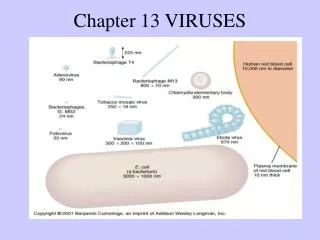
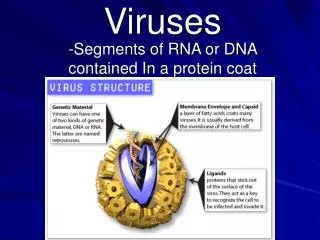
What is a virus? • An infectious particle consisting of nucleic acid enclosed in a protein coat • Characteristics: 1. Small size • Large - barely visible with the light microscope • Small - down to 20nm • Much smaller than cells (including bacteria) 2. Infectious 3. Reproduction 4. Alcohol resistance • Not immediately killed by alcohol (like your cells)
Infection and Reproduction • Infection: • Viruses cause many diseases • They can be spread from one organism to another • Reproduction: • Can not reproduce without a host • Viruses are obligate parasites – must have host to survive
Viral Structure 1. Genome - the genetic information 2. Capsids and Envelopes - the outer covering
Capsid • Protein shell that encloses the viral genome • Made from a large number of protein subunits • Number of kinds of subunits usually small • Often geometric in shape
Envelopes • Membranes cloaking the capsids of some viruses • Made from host membrane, but may have virus-originated glycoproteinsadded
General Steps for Viral Replication 1. Cell Entry 2. Genome Replication 3. Capsid Protein formation 4. Self-assembly of offspring 5. Exit from Host
Cell Entry • Locate host by "Lock-and-Key” fit between virus proteins and cell receptor molecules • Infection - Begins when viral genome enters the cell • Some viruses can enter many hosts • Ex: West Nile – mosquitoes, birds and humans
Genome Replication • This step begins the actual viral infection • Host cell is reprogrammed to copy virus genome • Use host DNA polymerase • Use virus enzymes to copy RNA to DNA • Use host's resources to make copies of viral proteins
Capsid Protein Formation • Host's protein synthesis machinery used to make virus proteins
Self-Assembly of Offspring • genome + capsid virus • Particles usually assemble spontaneously
Exit From Host • Host cell may burst or lyse, releasing the virus • May "bud-off" host membrane, forming envelopes around the capsids
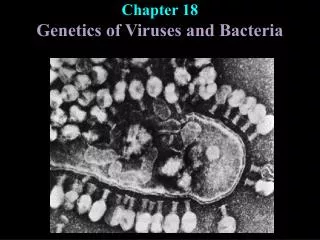
Bacterial Viruses • Best understood of all viruses • Called phages • May show two types of virus life cycles: • Lytic Cycle • Lysogenic Cycle
Lytic Cycle • Virus reproductive cycle that kills the host cell • Note - the previously described virus life cycle was a LyticCycle
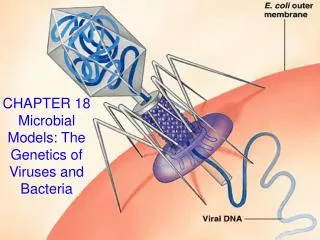
Ex: T4 Virus on E. coli • Uses LyticCycle • Example of an Virulent Virus (a virus that only uses the lytic cycle) • Has about 100 genes • Completes cycle in 20-30 minutes
Lysogenic Cycle • Virus reproduction that doesn't immediately kill the host cell • Usually doesn’t kill the host AT ALL • Viral DNA is inserted into the host DNA, but not expressed
Animal Viruses • Belong to several viral classes • Specific Interests: 1. Viruses with envelopes 2. RNA viruses • Ex. of Infections caused by animal viruses: Cold sores/canker sores, influenza, common cold
Herpes Viruses • Use nuclear membrane • Causes: cold sores, shingles, chicken pox, mononucleosis • Viral DNA integrated into Host DNA as a provirus • Shows both lytic and lysogenic life cycles
RNA Viruses • Classes III – VI • Ex: yellow fever, rubella, common cold, SARS, ebola • Class VI - Retrovirus - use Reverse Transcriptase to make DNA from an RNA template.
Human Immunodeficiency Virus • HIV - causes AIDS • Retrovirus from chimps • Destroys the body’s immune system, allowing other diseases to kill
Other Viral Diseases • Measles • Polio • Smallpox • Influenza
Treatments for Viruses • Vaccines (preventative) • Some Drugs • Ex: Ara-A Acyclovin(Herpes treatment) • Ex: AZT – HIVirus • Comment - some treatments are working on the reverse transcriptase • Problems: • Since viruses work within a host cell, they are very difficult to treat • Best Treatment – prevention • Can also cause cancer
Viroids • Infectious particles of naked RNA • Affect plants • Similar to viruses, but lack a capsid • Ex: • Coconut Blight • Chrysanthemum Wilt
Prions • Infectious protein particles • Affect animals • Cause “mad-cow” and Creutzfeldt-Jakob disease • Transmitted in food • Slow-acting • Virtually indestructible • Protein folding problem?
Bacteria Genomes • DNA circle (Chromosome) • Plasmids - Small circle of DNA that is independent of the chromosome • Carries a small number of traits
Bacterial Genetic Recombinations • Transformation • Conjugation • Plasmids • This is how bacteria mix genetic material into new combos
Transformation • Alteration of a cell's DNA by the uptake of foreign DNA • Ex: Griffith's experiment
Conjugation • Direct transfer of genetic material between two bacterial cells • Bacterial "sex” • Used to map genetic sequences in bacteria
Plasmids • Small circular piece of DNA • Carry many important traits • Ex: Fertility Factor Antibiotic Resistance (R Plasmids) • Virus movie • http://www.youtube.com/watch?v=Rpj0emEGShQ