Download
1 / 8
80 likes | 197 Vues
The workshop on April 20, 2006, focused on developing a map of investment needs for the commune of Kashar. This visual tool showcases the condition of public facilities and services, highlighting community investment priorities. It aims to engage stakeholders, foster discussion, and track the use of public funds. Limitations such as scarce resources and the complexity of social conditions were acknowledged, leading to a simplified methodology focused on prioritizing community-wide needs rather than isolated zones. The approach is designed for better understanding and direct representation of socio-economic conditions.

E N D
Using Maps for Means Allocation Commune KasharApril 20, 2006 Workshop
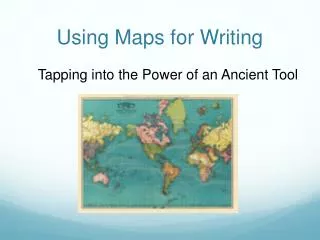
Map of investment needs The map of investment needs is the visual presentation of the: • Public facilities condition, • Social economical and public services condition, • Needs for investment in a given area.
What is the map for? • Identifies the needs and defines the priorities, • Stirs up the participation • Promotes a concrete and focused debate • Displays and evidences the development, progress and effectiveness of the use of public funds • Is a snap shot of the situation at a given period in time.
What was to be considered before working on the mapping methodology? • Public funds devoted to public investments are very limited and can address only very few needs, • the distribution of funds would be based on the prioritisation of single projects that serve the whole community rather than single zones, • The initial idea of representing investments needs through gradient shading by calculating a poverty index for each zone was abandoned.
Difficulties to designing the map according to calculation of different social economical situation between the zones. The methodology would require much time, effort, knowledge and means not available at this stage in local government level or the local community.
Strengths of the mapping methodology by prioritization of needs • Takes considerably less time, means and knowledge to prepare, • Is more easily understood and direct in displaying the investment needs that would also help concretise and focus the debate, • More directly and emphatically represents the social and economical condition as it is in the terrain and facilitate the identification and distribution of problems throughout the commune.