The Principle Behind Colorimetric Analysis
Colorimeters operate according to the Beer-Lambert Law, which states that the absorbance of light emerging from a solution is directly proportional to the solute's concentration. By calculating the intensity of light as it passes into and exits a sample, the colorimeter machine can calculate the analyte's concentration. This simple principle provides the basis for many diagnostic tests and sample analysis, and can be used when analyzing samples of many different compounds with greater precision of measurement.
Modern color measuring instruments include advanced optical sensors, microprocessor-based control systems, and digital displays to provide for optimal performance and reliability. The ability to work at multiple wavelengths also makes the instrument highly versatile, with the possibility of accurate color measurement over a wide variety of substances.
The Role of Colorimeters in Medical Diagnostics
Colorimeters have transformed the medical laboratory testing process to enable the efficient and accurate analysis of biological samples. They are common in clinical chemistry to determine concentrations of medically important markers, such as hemoglobin, glucose, cholesterol, bilirubin, urea, and proteins. Colorimetric assays provide quantitative information about a sample by observing slight color changes and quantifying them numerically, allowing for objective and consistent diagnostic interpretations. As an example of the functionality of a colorimeter with blood glucose testing, the intensity of the color created by a chemical reaction on a test strip is clearly related to the concentration of glucose present. For clinicians, knowing the glucose concentration is necessary for the diagnosis and management of diabetes, and a colorimeter provides a reliable and reproducible measure of this concentration. Furthermore, laboratory colorimeters can be used to determine enzyme activities relating to liver and kidney tests through changes in the concentration of metabolites, as directed by the installation of the chemical reaction process. The accuracy and precision of colorimeters improve clinical diagnostic trust and allow early detection of conditions. The advantage of using colorimeters extends to the conduct of research laboratories as well, since many use this process to study reaction kinetics, enzyme activities, and drug development.
Colorimeters in Laboratory Applications
Lab colorimeters are not only useful for clinical assessment but also essential to numerous other laboratory functions. Colorimeters have applications in biochemical research, pharmaceutical formulation, and quality control testing, where consistency and order compliance are of utmost importance. Colorimeters provide quantitative concurrent data based on the color intensity of a sample and can be used to monitor chemical reactions, assess compound stability, or verify the concentration of a solution. In addition, colorimeters are used for environmental testing and food analysis in laboratories to test water quality, concentrations of contaminants, and nutritional values. Colorimeters are precise instruments and, therefore, can be used for repetitive analysis without compromising reliability.
Advancements in Colorimeter Technology
Technological advancements have greatly improved the design and functions of the color measuring devices available today. Many newer systems have digital calibration systems, automatic wavelength selection, and integrated storage of data, making complex analyses easier without sacrificing measurement quality. Built-in calibration functionality means accuracy over time, less drift, and decreased need for intervention. Moreover, the invention of spectral colorimeters has further refined colorimetric accuracy. Spectral colorimeters measure reflected or transmitted light across the entire visible range and provide a complete color profile for samples. The high-resolution spectral colorimeters have the precision, resolution, and repeatability needed for research and individual diagnoses requiring strict accuracy. Additionally, portable colorimeters have become increasingly popular. Portable colorimeters are compact, lightweight, and allow for field analysis and point-of-care diagnostics anywhere while still concentrating on accuracy. Their battery operation, quick-use function, and simple design make them applicable in situations with strict guidelines and conditions like laboratories, as well as having the ability to be used remotely for testing. Many include precision tubes that help in easy and accurate sample analysis in various environments.
Advantages of Using Colorimeters in Diagnostic and Laboratory Settings
The use of colorimeters in laboratory and clinical settings offers a variety of benefits. High Accuracy and Replicability — Colorimeters provide consistency in measurements as a result of optical stability and calibration. Speed and Efficiency — Colorimeters allow for fast analysis and have an easy sample turnaround. Ease of Use — Colorimeters have user-friendly interfaces and are programmed to reduce operator error, which improves workflow efficiency. Flexibility — They can analyze multiple wavelengths; therefore, they can accommodate more reagents, samples, and testing protocols. Durable and Compact Design — Modern colorimeters are designed to withstand rigorous institutional use, providing trustworthy quality control. For these reasons, colorimeters are crucial in providing the quality and reliability needed, whether the setting is laboratory or clinical.
Conclusion
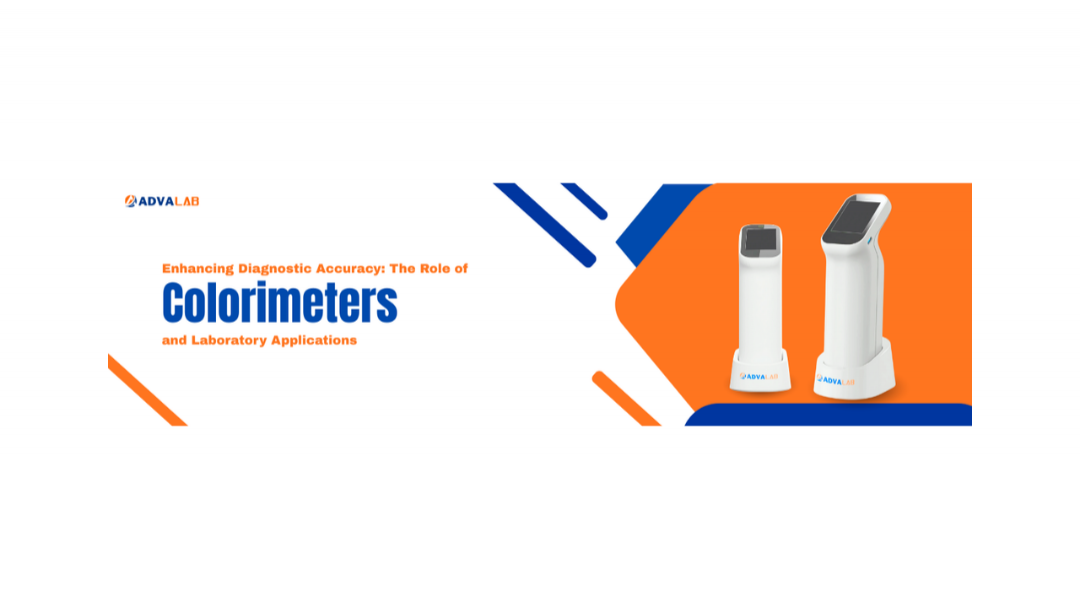
In a world of precision in medicine and laboratory settings, colorimeters are vital to all accuracy and consistency in measurements. Colorimeters convert color change to numerical data, which contributes to quality diagnostics, high-quality scientific research, and precise formulations. As technology continues to advance, devices from companies such as Advalab can continue to facilitate advancements in scientific research and diagnostic accuracy. Advalab offers a comprehensive range of spectral colorimeters—from models ADSCM-501 to ADSCM-505—each engineered for high precision and reliability across diverse applications. Designed with D/8 geometry and exceptional repeatability (up to ΔE*ab≤0.03), these instruments ensure consistent and accurate color measurement. Their compact form, high display resolution, and multiple measuring apertures provide versatility for analyzing samples of varying sizes and textures. Whether used in laboratories, pharmaceuticals, food quality testing, or field analysis, Advalab’s Spectral Colorimeters deliver dependable performance and simplified operation for superior color evaluation.
For more information, click here or contact us
Email:info@advalab.com