Introduction
Scaling operations, achieving strategic goals, and expanding service portfolios are top priorities for most organizations. However, hiring skilled talent is only the starting point. Effective resource utilization is what drives business value. When work is assigned without considering skills, capacity, and current workloads, it leads to resource over- or under-utilization. Subsequently, this results in employee burnout, disengagement, and unplanned attrition. As a result, optimizing how resources are deployed becomes just as important as building the workforce itself. This guide outlines how leaders can manage resource utilization effectively, supporting growth without exhausting teams, while improving business productivity and boosting ROI.
What is Resource Utilization?
Resource utilization is the metric that measures how effectively available resources, such as people, skills, equipment, or tools, are used over a specific period. It compares actual productive work against total available capacity, helping organizations optimize workforce efficiency, balance workloads, and reduce resource wastage. By tracking this metric, firms can identify team members who are overextended, at risk of burnout, and underutilized. These insights enable managers to optimize workload distribution, improve productive utilization, and maintain a healthy resource health index. Explore this eBook to learn how a 5th gen resource management helps firms optimize resource utilization and improve delivery performance across projects.
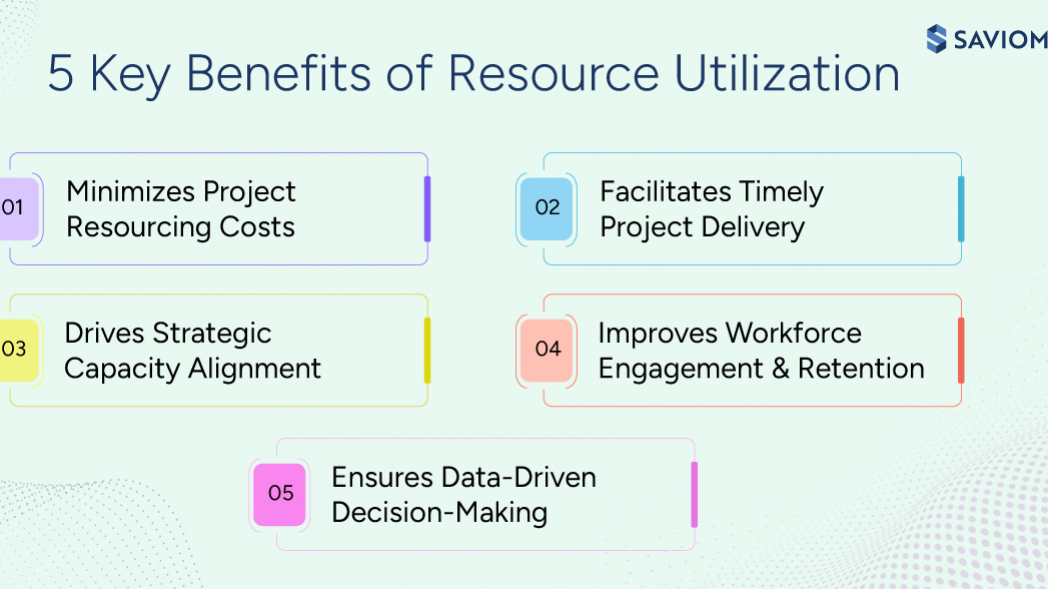
Now that the definition of resource utilization is clear, let us look at the benefits of optimizing it.
Why Resource Utilization Directly Impacts Cost, Delivery & Profitability
Resource utilization is an incumbent metric in the project management landscape that facilitates managers to enhance productivity, avoid project delays, and optimize the resource health index to ensure consistent quality outcomes.