Development of a Non-Invasive Pulse Oximeter for Accurate Blood Oxygen Measurement
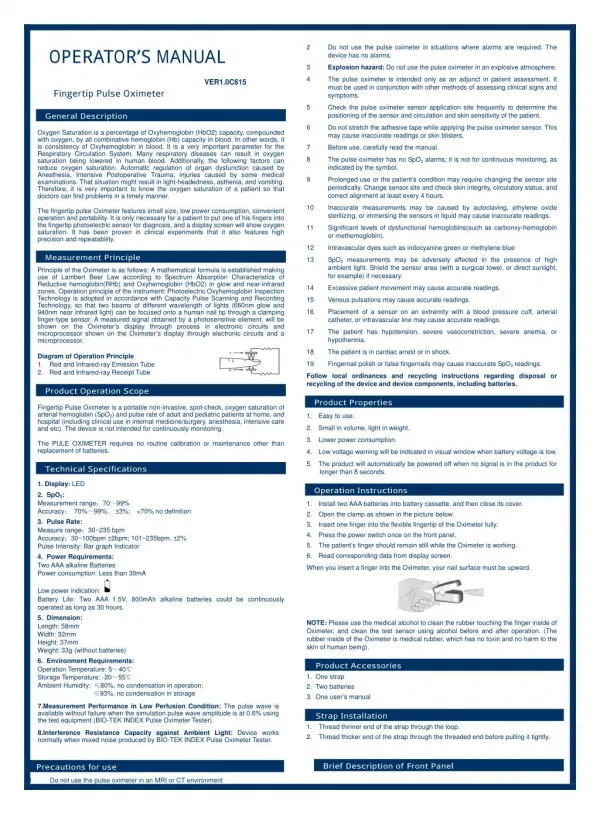
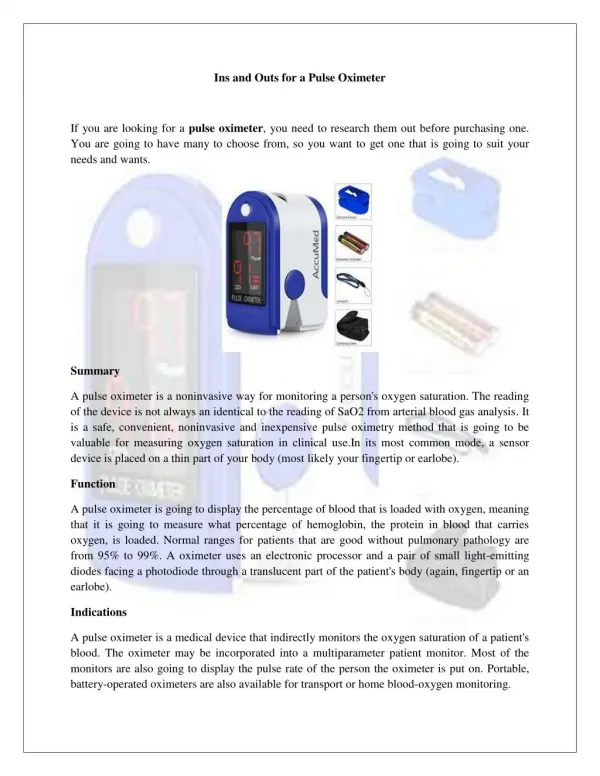
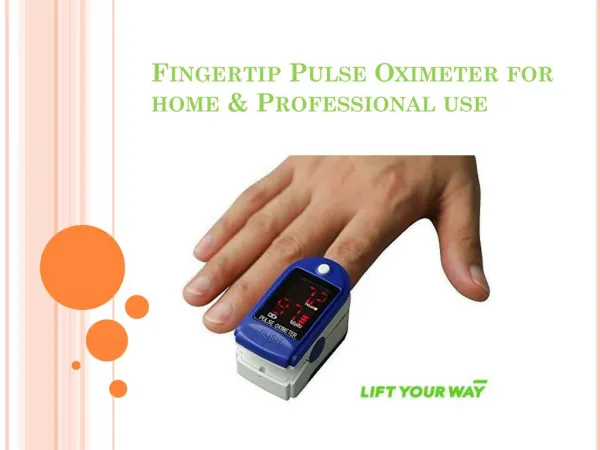
This project focuses on the design and construction of a pulse oximeter that measures blood oxygen saturation (SpO2%) through light absorption methods. Utilizing the Beer-Lambert law, the oximeter employs red (660 nm) and infrared (920 nm) lights to detect pulse amplitude in arterial blood. Key medical applications include use in anesthesia, surgery, intensive care, elderly care, and sports training. While the device is safe and non-invasive, challenges include sensitivity to movement and testing difficulties. Current progress includes LED drive, signal processing, and data display integration.

Development of a Non-Invasive Pulse Oximeter for Accurate Blood Oxygen Measurement
E N D
Presentation Transcript
Pulse Oximeter Luz Adriana Osorio Phong Nguyen Supervisor: Professor N. Tait
Product Information • Function: Measures Blood Oxygen Saturation levels SpO2% by light absorption. • Medical uses: Anesthesia/Surgery/Intensive care Elderly Care Sports training Pilots • Advantages: Safe Optical Source Non Invasive • Objective: To design and build a pulse oximeter To provide optical measurement of pulse and blood Oxygen. Provide Accurate SpO2% measurement range [80 – 100]% Product Information
Design Concept • Beer-Lambert law of light absorptionUses Red (660nm) and Infrared (920nm) lights • Arterial blood (Pulse Amplitude) detection • Limitations:Sensitive to movement. Difficult to test. Theoretical Model Design Concept
Block Diagram Luz’s work Phong’s work Altera DE2 Board Block Diagram
Progress to date and Remaining Work Progress: Design implementation and testing of: • LED drive and timing • Signal separation / Automatic Gain Control • Demodulation/ Amplification / Filtering • Analog to Digital data conversion • Amplitude and pulse calculation • Data display: Oxygen Saturation (SpO2) and Pulse • Full design integration (only implementation) Remaining • Digital signal refinement • Further testing Progress to date and remaining work
Pulse Oximeter Circuit Altera DE2 Board Patient Pulse (Circuit output) Pictures