Understanding Corporations: Purpose, Advantages, Integration, and Antitrust Laws
80 likes | 216 Vues
This review provides a comprehensive overview of corporations, including their main purpose and advantages. It explores essential concepts like pooling and trusts, along with significant legislation such as the Sherman Antitrust Act. The term "Robber Baron" is discussed in relation to business practices and Social Darwinism, highlighting the unethical actions of powerful industrialists. Competitive strategies like vertical and horizontal integration are explained, emphasizing their impact on the economy. Understanding these concepts is vital for grasping the dynamics of modern business practices.


Understanding Corporations: Purpose, Advantages, Integration, and Antitrust Laws
E N D
Presentation Transcript
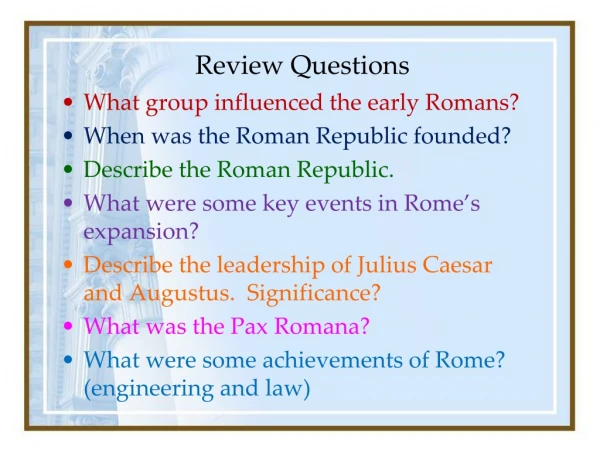
Review Questions • What is the main purpose of a corporation? • What are the advantages of a corporation? • What is pooling? • What is a trust? • What is the Sherman Antitrust Act? • The term Robber Baron was used to criticize the actions of what group of people. • Define Social Darwinism? What was it used to justify in this pool? • What is the main purpose of antitrust laws? • What is vertical integration? What is horizontal integration? • What is Andrew Carnegie known for? • What is John D. Rockefeller known for?
What is the main purpose of Corporations? What are the advantages of corporations? • Patent Laws: The Constitution gives Congress the power to issue patents to inventors. • Corporate business organizations: sell shares in business to raise capital. Limited Liability shareholders. • Corporations could raise significant amounts of capital needed for investment in industrial projects such as railroads.
Corporations • Setup other forms of businesses to limited competition • Pools: competing companies in one field make an agreement to fix prices and divide business. • Trusts: group of corporations combine under a single board that controls the actions of all member corporations-stockholders have no say in the operations
What is the Sherman antitrust act? • Sherman Anti-Trust Act: designed to increase competition and end monopolies or any other business practice that restrain trade or competition
Robber Barons • Made their fortunes by stealing from the public. • Were not regulated by government and did whatever they could to make as much money as possible. • Believed in Social Darwinism. Survival of the fittest/ used to justify predatory practices of big business • Believed in Laissez Faire Economics: no taxation of business or regulation
Vertical Integration Steel mill Shipping facilities Limestone quarry Coal mines Iron mines
Horizontal Integration Independent steel mills Integrated Steel Company Independent steel mills are taken over by one large steel company. Destroys competition