Download
1 / 40
400 likes | 505 Vues
With 26% of children having public social profiles, it's crucial to discuss internet safety. Many kids face online challenges, including bullying, with 12% feeling upset by content they encounter. Despite this, 56% of parents are unaware of their child's online interactions. Children often learn about online safety from parents, teachers, and friends. This assembly outlines essential tips such as keeping passwords private, reporting bullying, and thinking before sharing information. Educating both children and parents can help create a safer online environment.

E N D
26% of children have a public social networking profile such as Facebook.
12% of 9-16 year olds say they have been bothered or upset by something on the internet…
…however, 56% of parents whose child has received nasty or hurtful messages online are not aware of this.
1/8 parents don’t monitor their children’s online activities…while 56% of parents take positive steps such as suggesting to their children how to behave towards others online.
36% of 9-16 year olds claim that they definitely know more about the internet than their parents.
73% of children say their friends have helped or supported their internet use.
44% of children claim to have received some guidance on safe internet use from their friends, and 35% say that they have also provided advice to their friends.
Children say they receive most online safety advice from:1) parents (63%)2) teachers (58%)3) other relatives (47%)4) friends (44%).
87% of all children use the internet at home and most of the time we are unsupervised while we browse the web.
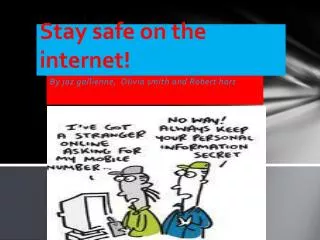
New email! Bob10:Hello. I want to be friends.What’s your phone number?
The internet is just like real life because it is real life.
9) Only give your mobile number or website address to trusted friends and family
5) Check your profile and make sure it doesn’t include any personal information
1) Tell your parent, carer or a teacher if something or someone makes you feel uncomfortable or worried
www.thinkuknow.co.uk www.bbc.co.uk/cbbc
3 Top Tips taken from the thinkuknow website to keep you safe from cyber bullying