Understanding Chlamydia: Prevalence, Symptoms, and Prevention
140 likes | 286 Vues
Chlamydia, caused by the bacterium *Chlamydia trachomatis*, is the most common STD in the US, with around 4 million new cases each year. It can be transmitted through sexual intercourse and can even affect newborns. Many individuals exhibit no symptoms, but when they do, they may experience burning during urination, abdominal pain, or unusual discharge. Early diagnosis through laboratory tests is crucial for effective treatment, typically involving antibiotics like azithromycin or doxycycline. Preventative measures include using condoms and regular check-ups.


Understanding Chlamydia: Prevalence, Symptoms, and Prevention
E N D
Presentation Transcript
The Silent DiseaseChlamydia Done by: Janell Siek Leong Keat Mun Lieu Whai Peng Ng Jia Yi
Content Page • Prevalence • Transmission • Symptoms • Diagnosis • Treatment • Complications • Protections and Prevention • Acknowledgements
Prevalence • Caused by parasitic bacterium, Chlamydia trachomatis • Most common STD in the US • About 4 million new cases reported each year in the US
Transmission • Commonly through vagina, oral, or anal intercourse • Occasionally from hand to mucus membranes of the eye • Found in throats of people having oral sex with infected people • Mother to her unborn baby
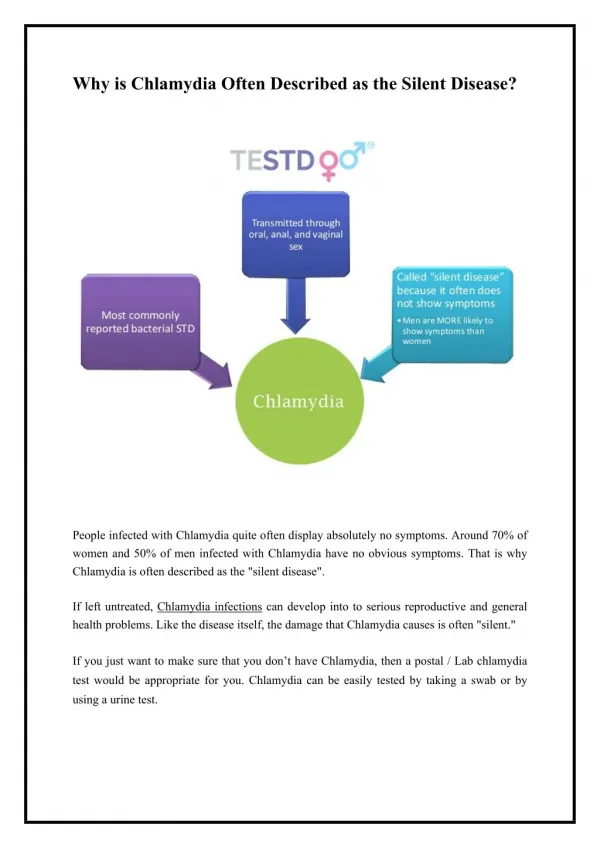
Symptoms • Up to ¾ of women and ¼ of men exhibit no symptoms • Appear 7-21 days after infections • Bladder infection • Frequent, burning urination • Abdominal pain • Nausea & Fever • Painful intercourse
Symptoms Cont’d • Abnormal genital discharge (mucus or pus) • Itching at the genital area • Pain or swelling in the male’s testicles • Lower back pain • “Pink eye”
Diagnosis • Laboratory tests where doctor looks out for the bacteria from a sample of mucus from vagina or penis • Urine test
Treatment • Oral antibiotics • a single dose of azithromycin • a week of doxycycline (twice daily)
Complications • Chronic urinary tract infection • Pelvic Inflammatory Disease (PID) • Infertility • Ectopic pregnancy • Arthritis • Cause “pink eye” and early infant pneumonia, possible blindness and ear infection in newborns
Complications- PID • Serious infection of the woman’s reproductive organs • Occurs without immediate treatment of STDs • Can be treated with antibiotics in early stages • May display no symptoms but damages still occur • Abdominal pain, tenderness, nausea, vomiting, chills, fever and vaginal discharge and bleeding.
Protections • Latex male condoms (after abstinence) • Don’t have multiple sex partners • Sexually active should go regular check-ups • Test each time whenever there’s a change in sex partner
Prevention from spreading • Stop having sex when genital symptoms occur • Notify your sex partner if you are diagnosed with Chlamydia • Abstain from sex till treatment for Chlamydia is completed
Acknowledgments • http://www.cdc.gov/std/Chlamydia/STDFact-Chlamydia.htm#treatment • Women’s health for Dummies • Polar Bear Biology book • Biology Concepts & Connections (5th edition) • Prentice Hall Biology by Miller Levine • Sex by Tamara L. Roleff • Need to know Sexually Transmitted Diseases by Sean Connolly • SexSmart 501 reasons to hold off on sex by Susan Browning Progany