
Impact of Sexed Semen on Holstein Reproduction Factors in the USA: A Study
E N D
Presentation Transcript
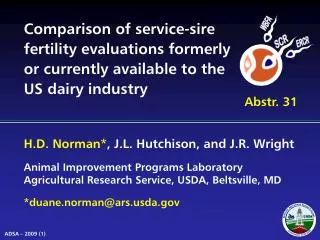
X X X Effect of sexed-semen use on Holstein conception rate, calf gender, dystocia, and stillbirth in the United States Abstr. 4183
Traits • Conception rate • Calf gender • Male, female, single, twins • Dystocia • Births reported as requiring considerable force or extremely difficult • Stillbirth • Born dead or died within 48 hours
Data • Holstein breedings from January 2006 through December 2008:
Dystocia incidence (%) *Different superscripts represent statistical differences within column (P < 0.05)
Stillbirth incidence (%) *Different superscripts represent statistical differences within column (P < 0.05)
Conclusions • Increased use of sexed semen since 2006 when it became commercially available • Primarily used for breeding heifers and first services of cows when conception rates are traditionally higher • Mean conception rate with sexed semen lower than that with conventional semen by about 25% for heifers and 13% for cows
Conclusions (cont.) • 90% heifer calves when using sexed semen • No increase in incidence of dystocia with sexed semen, a reduction for twins • Slight increase in stillbirths for single male calves born to heifers when sexed semen was used