Understanding Cells and Batteries: The Role of Electrochemistry in Modern Technology
Cells and batteries play a crucial role in powering devices and medical equipment like pacemakers. Our bodies utilize small electrical signals to regulate heartbeats, and for those with heart issues, a pacemaker provides necessary electrical stimulation through an electrochemical cell. This cell generates electricity from chemical reactions. There's a distinction between dry and wet cells, with each having unique use cases and properties. Electrochemistry explores these principles, leading to advancements like electrolysis and electroplating that enhance various materials and technologies.

Understanding Cells and Batteries: The Role of Electrochemistry in Modern Technology
E N D
Presentation Transcript
Our bodies use a small electrical signal to control our hearts. • Some people have a problem with their heart not beating properly. • Electricity used to operate a pacemaker comes from an electrochemical cell that supplies a steady current. Pacemaker
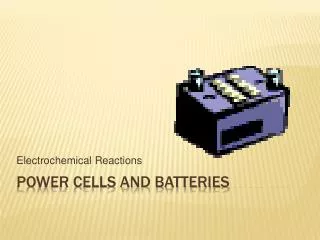
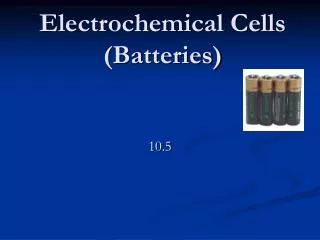
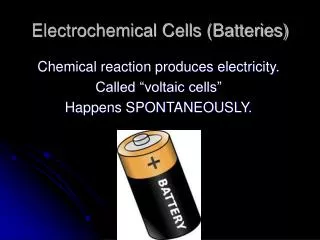
Lithium & Iodine • An electrochemical cell is a package of chemicals designed to produce small amounts of electricity. • The electricity the cell produces comes from chemical reactions. • Other cells, made with other chemicals, are used in things like toys, cars & computers.
Electrolyte • Paste or liquid that conducts electricity because it contains chemicals that form ions. • Ion: an atom or a group of atoms that has become chemically charged.
2 Main types of cells: Dry Cells Wet Cells Uses a liquid electrolyte that is usually an acid (sulfuric acid). Many of the earliest cells were wet cells. Used in vehicles • Chemicals are in a paste; sealed. • Chemicals don’t leak out • Used in flashlights
2 Main types of cells: Dry Cells Wet Cells Cheaper and easier to make Dangerous; liquid electrolyte can spill and is highly corrosive.
Solutions? • Problems? Heavy & Rigid
Plastic • Normally an insulator, but substances can be added to make it act like a metal. • Not yet as powerful as metal-based cells. • Light & Flexible- can be as thin as a credit card.
Secondary Cells • Also called rechargeable cells • Chemical reactions can be reversed by using an external electrical source to run electricity back through the cell. • Reverse reaction must occur efficiently-Nickel Oxide & cadmium- Advertised as Ni-Cad batteries
Not Perfect Even rechargeable cells wear out in time.
Batteries • Connect cells together.
Alessandro Volta made the first usable battery around 1800 • Humphry Davy connected 2000 cells together to form one battery in 1807.
Work of scientists let to a whole new field: Electrochemistry
Electrochemistry • Study of chemical reactions involving electricity.
Electrolysis • Process which splits water into hydrogen and oxygen.
Electroplating • Coating a cheaper metal with a think layer of gold or silver. • Less expensive & stronger. Gold plating
Anodizing • Coating aluminum parts with a layer of aluminum oxide. • Coating is much harder than just aluminum. • Used in products such as screen doors, airplane or car parts, kitchenware, and jewelry.
Electrorefining • Removes impurities from metal (like gold). • Automobile companies also use electrochemistry to bond special paints onto car parts.
Check & Reflect • Page 294, #s 1-8