Exploring the Apiaceae Family: Carrots, Herbs, and Toxic Plants
The Apiaceae family, commonly known as the carrot family, encompasses a diverse collection of over 3,000 species including popular culinary herbs such as parsley, dill, and cilantro, as well as root vegetables like carrots and parsnips. Some members, like poison hemlock and fool's parsley, are highly toxic. The family is characterized by aromatic plants with hollow stems and unique fruits that resemble seeds. Many Apiaceae plants not only serve culinary purposes but are also valued in traditional medicine, highlighting their multifaceted roles in both kitchens and herbal remedies.

Exploring the Apiaceae Family: Carrots, Herbs, and Toxic Plants
E N D
Presentation Transcript
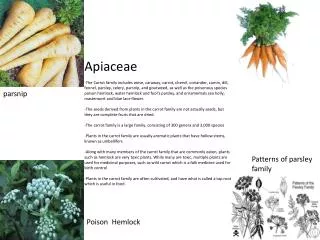
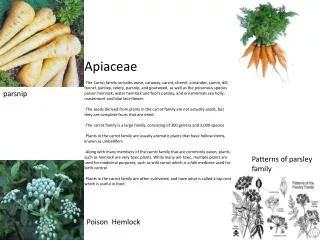
Apiaceae-The Carrot family includes anise, caraway, carrot, chervil, coriander, cumin, dill, fennel, parsley, celery, parsnip, and goutweed, as well as the poisonous species poison hemlock, water hemlock and fool's parsley, and ornamentals sea holly, masterwort and blue lace flower.-The seeds derived from plants in the carrot family are not actually seeds, but they are complete fruits that are dried.-The carrot family is a large family, consisting of 300 genera and 3,000 species-Plants in the carrot family are usually aromatic plants that have hollow stems, known as umbellifers-Along with many members of the carrot family that are commonly eaten, plants such as hemlock are very toxic plants. While many are toxic, multiple plants are used for medicinal purposes, such as wild carrot which is a folk medicine used for birth control-Plants in the carrot family are often cultivated, and have what is called a tap root, which is useful in food. parsnip Patterns of parsley family Poison Hemlock