PERIODICAL CASH FLOW STATEMENT
0 likes | 3 Vues
In todayu2019s business cycle, transparency of cash and liquidity is vital for sustainable growth. Every organization, big or small, must manage cash flows to meet short-term obligations and plan long-term investments. Among financial statements, the cash flow statement is most crucial as it shows the real movement of money, beyond profits. Under Section 2(40) of the Companies Act, 2013, eligible companies are required to prepare it, reflecting its importance. SKMC Global helps businesses prepare accurate cash flow statements, ensuring compliance, financial clarity.


PERIODICAL CASH FLOW STATEMENT
E N D
Presentation Transcript
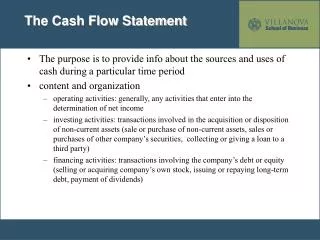
PERIODICAL CASH FLOW STATEMENT A cash flow statement shows the inflow and outflow of cash and cash equivalents during a period. It highlights how a business generates, invests, and finances money—essentially answering, “Where did the money come from, and where did it go?” TYPES OF CASH FLOW STATEMENT Direct Method – Reports actual cash receipts and payments, like customer payments. Indirect Method – Starts with net profit and adjusts for non-cash items and working capital changes. collections and supplier ROLE OF CASH FLOW STATEMENT Working Capital Tracking – Cash flow statements show if a company has enough liquid cash to sustain operations. Investor Sentiment – Strong cash inflows signal long-term stability, attracting investors. Operating Efficiency – Highlights inefficiencies by comparing working capital inflows and outflows. Law Compliance – Ind AS 7 requires listed companies to present cash flows via direct or indirect method. At SKMC Global helps businesses manage compliance, streamline finances, and ensure smooth operations. A periodical cash flow statement is vital as it tracks liquidity, supports decision-making, and ensures financial stability. www.skmcglobal.com +91 989-125-5499 info@skmcglobal.com