logistics aggregator
The e-commerce sector is expected to continue its rapid growth, and logistics will remain a critical differentiator for success. Advances in technology, such as AI-driven courier selection, predictive analytics, and IoT-enabled tracking, will further improve delivery efficiency and visibility. E-commerce logistics aggregators will continue to evolve, offering more sophisticated tools for managing shipping operations, reducing costs, and enhancing the customer experience. By partnering with a robust aggregator platform, businesses can scale seamlessly, optimize operations, and maintain a compet


logistics aggregator
E N D
Presentation Transcript
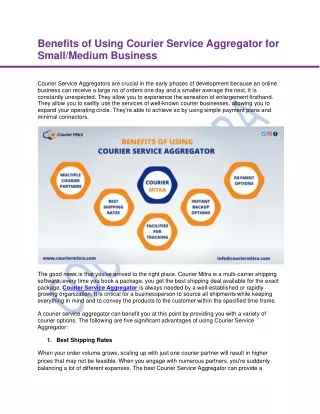
Understanding a Logistics Aggregator In the modern business landscape, managing the supply chain efficiently is crucial for companies of all sizes. A logistics aggregator serves as a central platform that connects businesses with multiple courier and transportation providers. Instead of handling contracts and shipments with individual carriers, businesses can use a single system to manage deliveries, track orders, and optimize logistics operations. A logistics aggregator streamlines the complex network of shipping partners, providing visibility, efficiency, and cost savings. Platforms like logistics aggregator are designed to simplify logistics for businesses by consolidating multiple services under one platform. How a Logistics Aggregator Works A logistics aggregator functions by integrating with various courier and transportation partners through APIs and other data interfaces. When a business processes orders, the aggregator automatically selects the most appropriate courier based on factors like price, delivery time, coverage area, and reliability. Shipments are managed from the point of origin to the final delivery, with tracking updates provided in real time. This centralized approach eliminates the need for multiple accounts and portals, saving time and reducing errors. By consolidating data from multiple sources, businesses gain a clear view of all shipments, enabling better planning, reporting, and operational control. Benefits of Using a Logistics Aggregator One of the primary benefits of a logistics aggregator is operational efficiency. Businesses can manage high volumes of shipments across multiple couriers from a single dashboard, minimizing manual processes and administrative overhead. Aggregator platforms also help optimize delivery routes, reduce transit times, and improve on-time delivery performance.
Cost optimization is another key advantage. By consolidating volumes across many clients, aggregators can negotiate competitive rates with courier services, allowing businesses to save on shipping costs while maintaining service quality. Platforms like ShipDockets provide these features, making it easier for businesses to scale without sacrificing efficiency. Enhancing Customer Experience Through Aggregation A logistics aggregator not only benefits internal operations but also enhances the customer experience. With real-time tracking, businesses can keep their customers informed about the status of their orders from dispatch to delivery. Branded notifications, SMS updates, and emails ensure a professional and transparent communication channel. This visibility reduces customer inquiries about order status, improves satisfaction, and builds trust in the brand. By providing reliable and timely updates, businesses can prevent negative experiences caused by delays or lack of information. Customers feel more confident and engaged when they have clear visibility into their deliveries, which can lead to repeat business and stronger brand loyalty. Data-Driven Insights and Optimization Modern logistics aggregators provide more than just shipment tracking. They offer data- driven insights that allow businesses to optimize their supply chain and make informed decisions. By analyzing metrics like delivery success rates, transit times, and return-to-origin (RTO) incidents, companies can identify patterns, assess courier performance, and adjust their strategies accordingly. Predictive analytics can also help forecast potential delays or issues, enabling businesses to proactively address challenges before they impact customers. This level of insight not only improves efficiency but also enhances decision-making and long- term strategic planning. Key Considerations for Choosing a Logistics Aggregator Selecting the right logistics aggregator is crucial for maximizing operational efficiency and customer satisfaction. Businesses should consider factors such as network coverage, courier partnerships, ease of integration with existing systems, and quality of customer support. A reliable platform should provide seamless tracking, transparent pricing, and automation of key processes such as label generation, COD reconciliation, and returns management. Platforms like logistics aggregator offer these features, making them a preferred choice for companies seeking to streamline their logistics operations while maintaining high standards of service. The Future of Logistics Aggregators As technology advances, the role of logistics aggregators is expected to expand further. Artificial intelligence, machine learning, and real-time analytics will provide more accurate delivery predictions, automated issue resolution, and intelligent courier selection. Integrating IoT devices and GPS tracking will enhance visibility and operational control, allowing
businesses to respond proactively to challenges in the supply chain. Logistics aggregators will continue to play a pivotal role in helping businesses scale efficiently, reduce costs, and provide superior service to customers in an increasingly competitive market. Platforms like logistics aggregator are essential for businesses aiming to optimize their logistics operations, improve customer experience, and gain a competitive edge in today’s dynamic market. By consolidating multiple courier services into a single platform, these solutions offer unmatched efficiency, transparency, and control over the entire shipping process.