Download

1 / 4
40 likes | 167 Vues
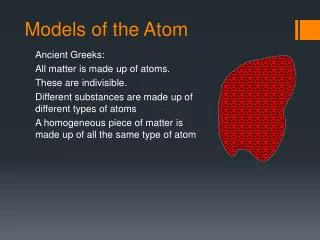
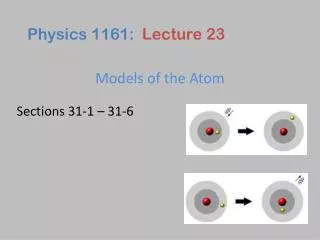
Students often struggle to grasp the evolution of atomic models from the Plum Pudding model to Rutherford's atomic model. This lesson utilizes the PHET simulation of Rutherford Scattering to visually demonstrate the differences between these historical models. By engaging with the simulator, students can explore the behavior of particles and understand how Rutherford's model improved upon J.J. Thompson's Plum Pudding model. This interactive approach aligns with science standards that emphasize the progressive nature of scientific inquiry and the importance of comparing historical models.

E N D
Understanding Models of the Atom Darrell White
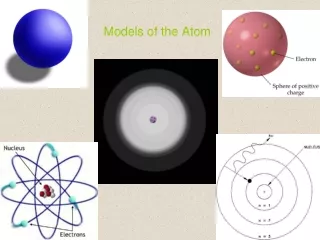
Problem • Students often have difficulty understanding historical models of the atom. • Plum pudding model vs. Rutherford Model
Solution • PHET simulation of Rutherford Scattering • Simulator allows students to view what occurred with Rutherfords model and the previous Plum Pudding model presented by J.J. Thompson. • http://phet.colorado.edu/en/simulation/rutherford-scattering
Standards: • CLE 3221.Inq.1 Recognize that science is a progressive endeavor that reevaluates and extends what is already accepted. • CLE 3221.1.1 Compare and contrast historical models of the atom