Download
1 / 11
120 likes | 256 Vues
Knowledge sharing is the process of exchanging experiences, insights, and skills among individuals or groups. It encompasses both tacit knowledge, which is personal and context-specific, and explicit knowledge, which can be easily documented and shared. By fostering an environment of collaboration, organizations can enhance problem-solving, prevent duplication of effort, and promote innovation. Methods such as storytelling, peer assists, and digital tools like wikis facilitate this exchange. Knowledge sharing not only benefits individuals through learning but also strengthens communities by increasing the reach of successful ideas and cultivating trust and collaboration.

E N D
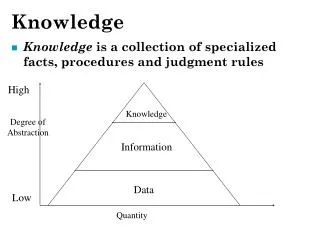
Data, information and knowledge Data “1855TG313” Information “Thai Airways flight 313 leaves New York at 18:55” Knowledge “…That’s not a good flight; often busy and delayed.”
Nature of knowledge Quite literally, what people know Knowledge is experience, insights,skills, concepts, feelings,ideas, ways of thinking or working Highly contextual Intangible, difficult to measure
Tacit vs Explicit Knowledge • Only a small portion of what we know is codifiable or “explicit” • The vast majority of knowledge is “tacit” or uncodifiable Iceberg Metaphor taken from SigmaConnect http://www.sigmaconnect.com
One example of a KM cycle Activity Apply Create, discover Experience/ Lessons Learnt Practices and Processes Knowledge Assets Distill, validate, share, capture Adopt, adapt, share
Why share knowledge? At the project level: • Opportunity to learn through interactions with peers • Increases work effectiveness, e.g. through problem-solving • Learning from experiences can help prevent from reinventing the wheel • New ideas and solutions can lead to more innovations, more out-of-the box thinking
Why share knowledge? Benefits to the community can include: • Increases the reach of successful ideas and approaches • Provides recognition to the community • Draws out the diversity of expertise within a community • Other?
KS Success Factors • Commonality of Purpose: To what extent are you facing similar obstacles with others? • Usefulness: To what extent does the sharing actually give you things you need? • Trust: How safe do you feel sharing what you know?
Examples of KS Methods After Action Review World Café Communities of practice Storytelling Peer Assist Knowledge Fairs Chat show Open Space
Examples of KS Tools Tagging Blogs Photo sharing (e.g Flickr) Social bookmarking Wikis Digital video YouTube Collaborative websites
In groups… • What aspects of this presentation, if any, need further clarification? • Identify and write 1-3 questions on cards provided.