Picture this. You’re parked in a beautiful, remote spot, maybe by a serene lake or on a scenic mountain. You want to stream a movie, check emails, or join a video call, but your internet connection is spotty or non-existent. That’s frustrating.
For many RV travelers, staying connected is one of the biggest challenges. The traditional internet isn’t available everywhere. That’s why RV Satellite Internet has become a game-changer. However, installing a satellite connection and using it effectively can feel overwhelming.
This guide will help you get the most out of Satellite Internet for RVs and stay connected without sacrificing your adventure. Whether you’re a full-time RVer or a weekend traveler, knowing how to find the best internet for RV travelers is essential.
What Is RV Satellite Internet?
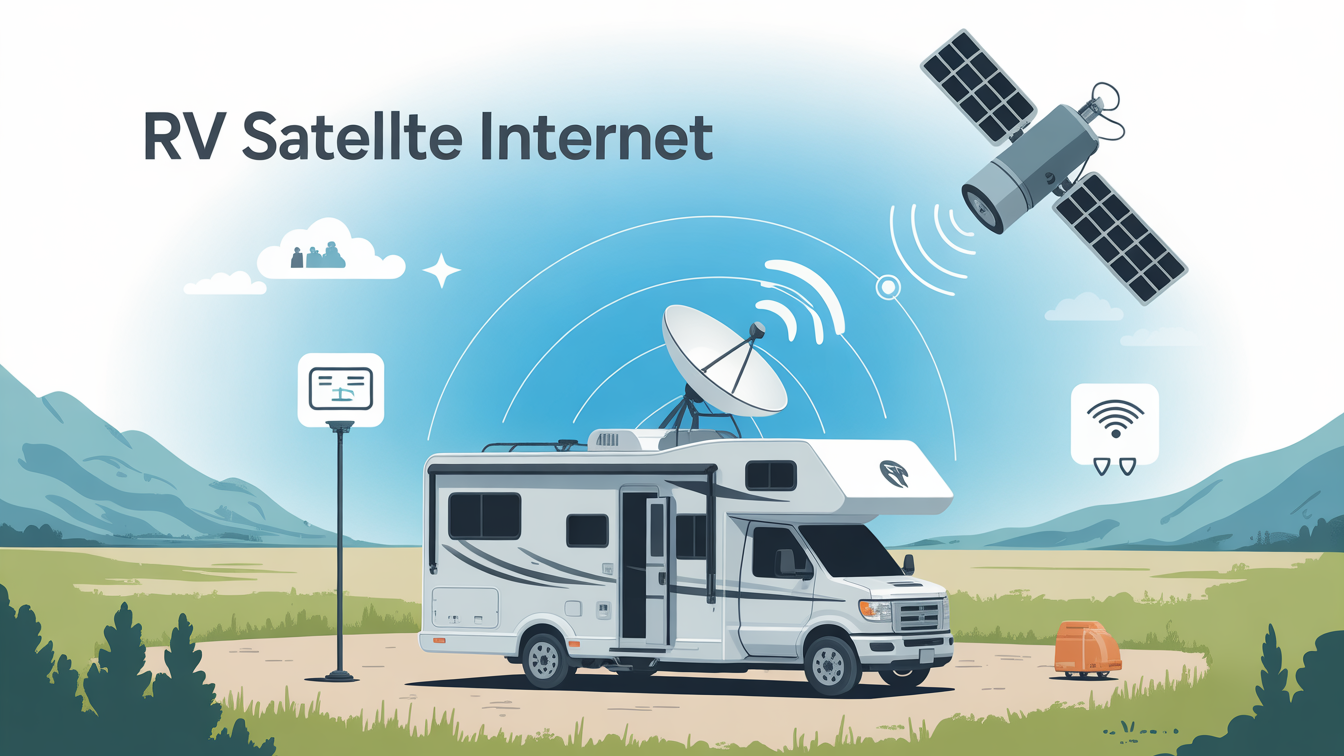
RV Satellite Internet is a type of connectivity designed for people on the go. Unlike traditional cable or fiber internet, which depends on fixed infrastructure, satellite internet sends signals to satellites orbiting Earth. This setup enables users to access the internet from almost any location.
Key points:
- Works in remote areas where cellular networks fail
- Requires a satellite dish, modem, and subscription plan
- Can be portable or fixed to your RV roof
For RVers, this means you can stream, work remotely, or stay connected even in places where there’s no Wi-Fi hotspot in sight.
Why RV Satellite Internet Is Ideal for Travelers
You might wonder: “Why not just rely on mobile hotspots or campground Wi-Fi?”
Here’s why satellite is often better for RVers:
- Coverage Anywhere – Mobile hotspots depend on cell towers, which are sparse in rural or mountainous areas. Satellite doesn’t.
- Reliable Speeds for Streaming and Work – Modern RV satellite plans can support video calls, streaming services, and light gaming.
- Independence – You’re not tied to campgrounds or coffee shops for connectivity.
- Scalable Options – Some providers offer plans specifically for full-time RVers with flexible data packages.
If you frequently travel to remote locations, satellite internet for RVs keeps you connected.
Choosing the Right Satellite Internet for Your RV
Picking the right system is crucial. Here’s what to consider:
1. Type of Satellite System
- Geostationary (GEO) – Older, larger coverage area, slightly higher latency
- Low Earth Orbit (LEO) – Newer, faster speeds, lower latency, ideal for streaming and video calls
LEO satellites like Starlink are becoming increasingly popular among RVers for their speed and mobility.
2. Plan and Data Requirements
Consider how you use the internet:
- Email & browsing → minimal data
- Streaming or video calls → high data usage.
- Multiple users → higher bandwidth requirements
Choosing the right plan ensures you avoid throttling or extra charges.
3. Hardware Setup
Most RV satellite systems require:
- Satellite dish (portable or fixed)
- Modem/router
- Power supply (check your RV’s energy capacity)
Some newer systems, like Starlink for RVs, offer easy “plug and play” setups, making installation less intimidating.
4. Portability vs Fixed Installation
Portable dishes – Can be moved and repositioned for better signal; great for short trips or seasonal use.
Roof-mounted/fixed – Provides consistent connectivity without setup, but requires more installation effort.
Your choice depends on how often you move your RV and where you typically park.
Tips for Using RV Satellite Internet Effectively
Here are practical strategies to maximize your experience:
1. Position Your Satellite Correctly
Trees, mountains, or nearby buildings can block signals. Always aim for a clear line of sight to the sky for the best connection. Portable dishes are great for finding the best spot.
2. Monitor Bandwidth Usage
Streaming, downloads, and video calls use a lot of data. Keep an eye on your usage to prevent slow speeds or extra charges. Some providers have apps that track data in real time.
3. Optimize Network Settings
- Use Wi-Fi extenders inside your RV for better coverage.
- Limit background updates on devices.
- Schedule large downloads for off-peak hours.
These small steps can dramatically improve your experience.
4. Combine with Cellular Backup
For even more reliability, think about a hybrid setup. Use satellite as your main connection and cellular hotspots as backups. This way, you’re rarely offline, even in challenging locations.
5. Regular Maintenance
- Keep the dish clean and free of debris.
- Ensure firmware on modems and routers is up to date.
- Check cables and connections regularly.
A well-maintained system reduces interruptions and improves signal quality.
Advantages of Satellite Internet for RV Travelers
- Freedom to travel without losing connectivity
- Consistent work-from-anywhere capability
- Access to online entertainment in remote spots
- Enhanced safety with emergency connectivity
For RVers who rely on the internet, satellite internet opens the door to both productivity and leisure on the road.
Common Myths About RV Satellite Internet
Myth 1: “Satellite is always slow.”
Reality: Modern LEO systems offer speeds comparable to home broadband.
Myth 2: “It only works in deserts.”
Reality: Anywhere with a clear sky works, forests, mountains, lakes, you name it.
Myth 3: “It’s too expensive for casual travelers.”
Reality: Flexible plans exist, and costs are dropping with new providers.
Understanding these myths helps you make smarter decisions about RV satellite internet.
Conclusion
Traveling in an RV doesn’t mean you have to give up connectivity. With the right setup, usage strategies, and an understanding of how satellite internet for RVs works, you can enjoy internet access wherever you go.
Whether you’re streaming, working remotely, or staying in touch with family and friends, RV Satellite Internet makes sure that the freedom of the road doesn’t come with connectivity issues.
Remember to choose the right hardware, keep an eye on usage, and improve your setup. This way, your internet for RV travelers will be smooth, reliable, and stress-free.
Frequently Asked Questions (FAQs)
1. How fast is RV satellite internet?
Speeds vary by provider and satellite type. Modern LEO satellites offer 50–250 Mbps, enough for streaming, calls, and light gaming.
2. Do I need a fixed dish on my RV?
Not necessarily. Portable dishes offer flexibility and can deliver strong signals in various locations. Fixed dishes provide convenience but sacrifice mobility.
3. Can I use satellite internet while driving?
Typically, satellite internet works best when the vehicle is stationary. Some advanced systems can offer limited connectivity while moving, but performance may decrease.
4. Is satellite internet for RVs expensive?
Costs vary by provider and plan. There are flexible packages for part-time travelers and full-time RVers, making it affordable for different budgets.
5. How do I avoid data overages on RV satellite internet?
Monitor app usage, schedule large downloads for off-peak hours, and choose plans that match your data needs.
6. Can I combine satellite with cellular internet for better coverage?
Yes. Many RVers use satellite as their primary connection and cellular hotspots as backup for uninterrupted service.