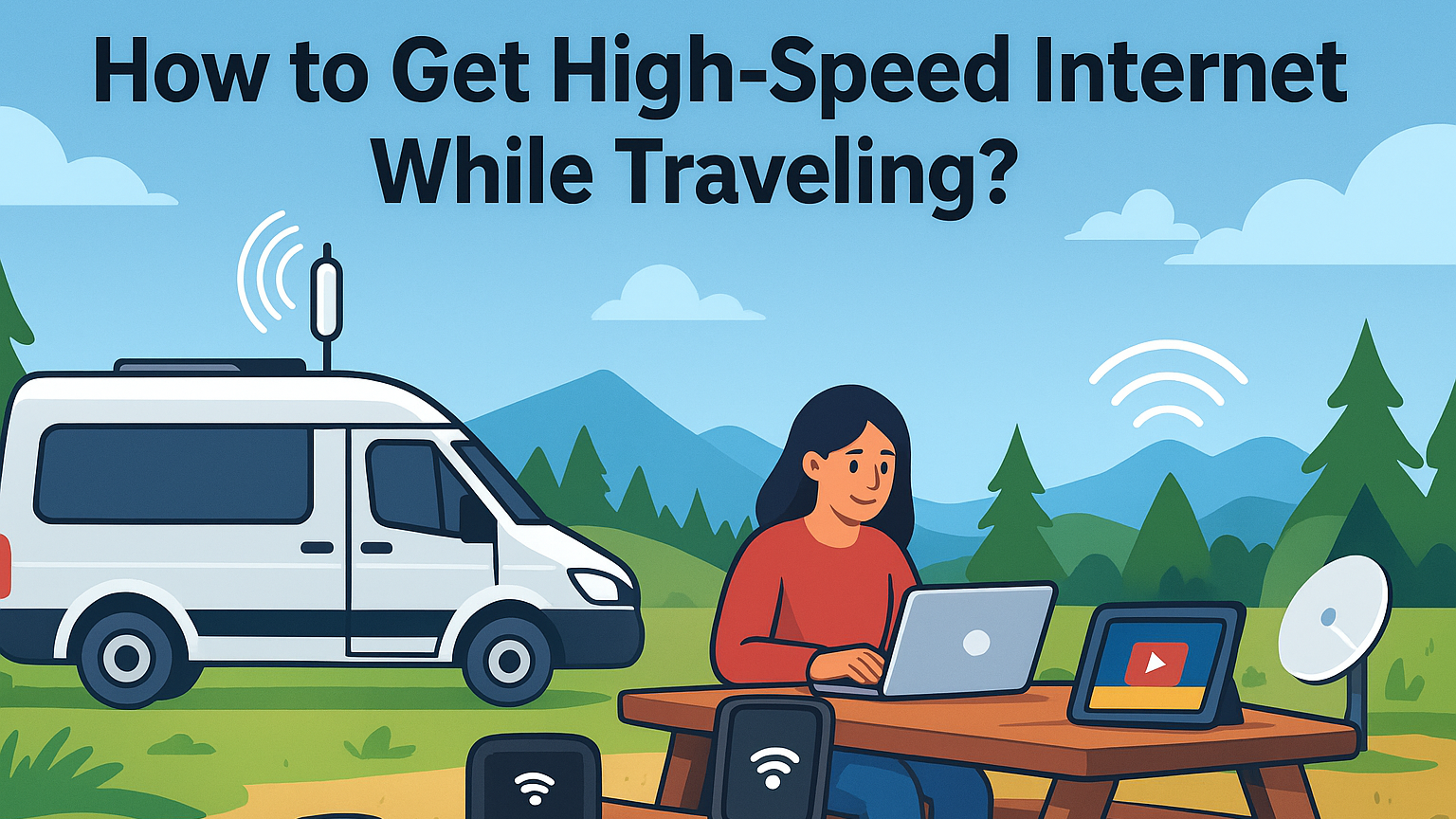
Ever tried streaming a movie, uploading work files, or navigating a new city, only to lose your internet connection right when you need it most? It’s one of the most frustrating parts of traveling. Whether you’re a remote worker, RV traveler, digital nomad, or just on vacation with family, staying online is essential. The real challenge is finding high-speed internet while traveling without constant buffering, slow speeds, or dead zones.
The good news is that you now have more reliable ways than ever to access high-speed internet on the road. Options like mobile hotspots, RV-specific internet solutions, satellite internet, and portable routers mean your travel days don’t have to be offline days.
Let’s look at the best internet options while traveling, what works in cities and remote areas, and how to choose the best way to get the internet based on your travel style.
Why Internet Access Is So Important for Travelers Today
The days of using the internet just for emails are long gone. Now travelers rely on stable connectivity for:
- Remote work
- Video conferencing
- Navigation and maps
- Booking accommodations
- Streaming entertainment
- Social media updates
- Safety and communication
When you’re on the road whether in an RV, van, or rental car your connection relies heavily on the tools you use. That’s why knowing the best internet for traveling is important before hitting the road.
The Best High-Speed Internet Options for Travelers
Below are the most effective, reliable, and travel-friendly internet choices for staying connected anywhere.
1. Mobile Hotspots (Phone Hotspot or Dedicated Device)
Mobile hotspots remain one of the best internet options while traveling, especially if you need a simple, flexible way to get online.
Why It Works
Mobile hotspots use 4G LTE or 5G networks, giving you fast speeds nearly anywhere there’s cellular coverage.
Pros
- Easy setup
- Highly portable
- Supports multiple devices
- Works in most populated areas
Cons
- Coverage varies by carrier
- Can slow down after data caps
- Phone hotspots drain battery
Best For: Travelers who move frequently between cities and small towns, or those needing a quick way to get high-speed internet on the road.
2. RV Internet Providers (Cellular-Based RV Internet)
RVers and full-time travelers often require something stronger than a basic hotspot. RV-specific cellular providers, like UbiFi, meet this need. These services use major networks and combine them with high-gain antennas and mobile routers designed for travel.
Why It’s Effective
This setup is ideal when you want reliable connectivity across long distances without dealing with satellite equipment.
Pros
- Stronger signal capture
- Lower latency compared to satellite
- Works while driving or parked
- Perfect for campers and RVs
Ideal For: Anyone wanting to get Wi-Fi in a camper or RV without struggling with weak hotspot connections.
3. Satellite Internet
If your travels take you off-grid into forests, deserts, mountains, or rural highways satellite internet becomes the most reliable option.
Pros
- Works virtually anywhere
- Ideal for remote work in rural areas
- Doesn’t rely on cell towers
Cons
- Requires setup
- More expensive
- Needs a clear sky view
- Not always ideal for gaming
Best For: Boondocking, remote camping, and rural travel where cellular networks are weak.
4. Public Wi-Fi (Hotels, Campgrounds, Cafés, Airports)
Public Wi-Fi can be convenient, especially if you only need basic browsing. But it shouldn’t be your primary internet source.
Pros
- Free or low cost
- Good for quick tasks
Cons
- Slow and inconsistent
- Security risks
- Often not suitable for heavy usage
Always use a VPN for security when connecting to public networks.
5. Portable Travel Routers
A compact travel router can help stabilize your connection if you're relying on hotel or Airbnb Wi-Fi.
Pros
- Strengthens weak Wi-Fi signals
- Creates a private network for your devices
- Great for groups or families
Cons
- Not useful in areas with no existing Wi-Fi
Best For: Hotel stays, Airbnb travelers, or remote workers hopping between co-working spaces.
Choosing the Best Internet Option Based on Your Travel Style
Different travel situations call for different internet setups. Here’s a quick breakdown to help you select the best fit based on your travel style and location:
Road Trip Across States: A mobile hotspot or dedicated hotspot is usually the easiest and most flexible way to stay connected.
RV or Van Life: Cellular-based RV internet services, like UbiFi, or satellite internet provide more stable connectivity while on the move or parked.
Remote Camping: Satellite internet is ideal for off-grid locations where cellular signals are weak or unavailable.
International Travel: Using local SIM cards or global hotspot devices ensures reliable internet in different countries.
Hotel/Airbnb Travel: A travel router combined with a mobile hotspot can boost weak Wi-Fi signals and create a secure network for multiple devices.
Cross-Country Travel: Choose providers that use the best networks for cross-country travel, such as Verizon or AT&T, to ensure wide coverage and minimal dead zones.
Your ideal setup depends on three main factors:
Coverage: Where are you traveling? Urban, rural, or off-grid?
Usage: Do you need basic browsing or full-time remote work speeds?
Budget: Cellular options are cheaper; satellite is more expensive but offers coverage almost everywhere.
Tips to Boost Your Internet Speed While Traveling
Even the best devices can struggle in certain spots. Here’s how to maximize your speed:
Use an external antenna: Boosts cellular strength for hotspots or RV routers.
Place your hotspot near a window: Better signal, especially in RVs or campers.
Download content beforehand: Maps, Netflix episodes, playlists, and documents.
Switch carriers when needed: Some travelers carry plans from multiple networks.
Limit high-bandwidth usage: Turn off HD streaming and auto-updates when traveling.
How RV Travelers Stay Connected
If you're traveling in a camper or RV, your setup may include:
- A cellular router
- An external antenna
- A backup hotspot
- Optional satellite for remote areas
Many RVers rely on services like UbiFi because they use cellular networks instead of satellites, making them more reliable when driving or moving between towns. This is one of the best ways to access Wi-Fi in a camper without setting up a dish.
Conclusion
Choosing the best internet options while traveling doesn’t have to be overwhelming. Whether you rely on a mobile hotspot, RV-specific internet, public Wi-Fi, a travel router, or satellite internet, you can easily get high-speed internet while on the move no matter where you go.
The key is matching your travel style to the right technology. A road trip may just require a hotspot, while full-time RV travelers might need a cellular router or satellite for consistent coverage. If you aim for cross-country travel, using the best networks helps you stay connected throughout your journey.
With the right setup, you can work, stream, navigate, and communicate without interruptions, making your travel experience more enjoyable and stress-free.
FAQs On Get High-Speed Internet While Traveling
1. What is the best way to get internet while traveling?
The best method depends on where you’re going and how you plan to use it. For most travelers, a mobile hotspot is quick and easy. RV cellular internet or satellite is best for longer trips or remote areas.
2. How can I get high-speed internet on the road?
You can use a mobile hotspot to stay connected in most towns and cities. For RV travelers, a cellular-based internet provider ensures stable speeds. In very remote areas, satellite internet provides coverage when cell signals are weak.
3. What’s the best internet for traveling in an RV?
Cellular RV internet services, like UbiFi, are made to work while in motion or parked. They capture stronger signals and provide lower latency than satellites. For off-grid or rural locations, Starlink or similar satellite options are best.
4. How do I get Wi-Fi in a camper?
A cellular router can give you stable Wi-Fi throughout your camper. You can also use a mobile hotspot from your phone or a dedicated device. For remote camping, satellite internet ensures you stay connected.
5. What are the best networks for cross-country travel?
For long road trips, choose networks with wide national coverage. Verizon and AT&T are often the most reliable. Using a provider with multiple carrier support can also help avoid dead zones.