Feeling Off-Grid… But Still Need to Be Online?
You finally escape the city, park your RV under open skies, and set up camp near a lake. Then reality hits. There’s no signal, no Wi-Fi, and maps won’t load. Work emails get stuck, and even checking the weather feels impossible.
If you’ve ever asked, “Is there a reliable way to stay connected while camping?” you’re not alone. Remote workers, digital nomads, families, and casual weekend campers all share the same issue: how to get dependable internet far from cell towers.
That’s where satellite-based connectivity comes into play. Let’s break down how it works, what you should realistically expect, and if it’s the right solution for your camping style.
What Is Satellite Internet (In Simple Terms)?
Satellite internet connects you to the web using satellites orbiting the Earth instead of ground-based cables or cellular towers.
Here’s the basic flow:
- Your device connects to a modem/router at your campsite
- The signal travels from your dish to a satellite in space
- The satellite relays the data to a ground station
- The process reverses to send information back to you
Because the connection comes from space, it works almost anywhere with a clear view of the sky, including deserts, forests, mountains, and remote campgrounds.
Why Campers Are Turning to Satellite-Based Internet
Camping today looks very different from it did a decade ago. People aren’t just roasting marshmallows, they’re:
- Working remotely from RVs
- Navigating unfamiliar terrain
- Streaming entertainment at night
- Staying connected for emergencies
- Managing smart devices and GPS systems
Traditional options like campground Wi-Fi and mobile hotspots often fail in rural areas. Satellite connectivity fills that gap by providing coverage where other technologies can't reach.
Types of Satellite Internet You’ll Encounter
Not all satellite systems are built the same. Understanding the difference helps set the right expectations.
1. Geostationary Satellites (GEO)
These orbit far from Earth and cover massive areas.
- Pros: Wide availability
- Cons: Higher latency, slower response times
Best for: Email, browsing, basic streaming
2. Low Earth Orbit Satellites (LEO)
These orbit much closer to Earth and move constantly.
- Pros: Faster speeds, lower latency
- Cons: Requires a clear sky view, more equipment setup
Best for: Video calls, remote work, real-time apps
Equipment You’ll Need at a Campsite
Getting connected isn’t complicated, but it does require a few key components:
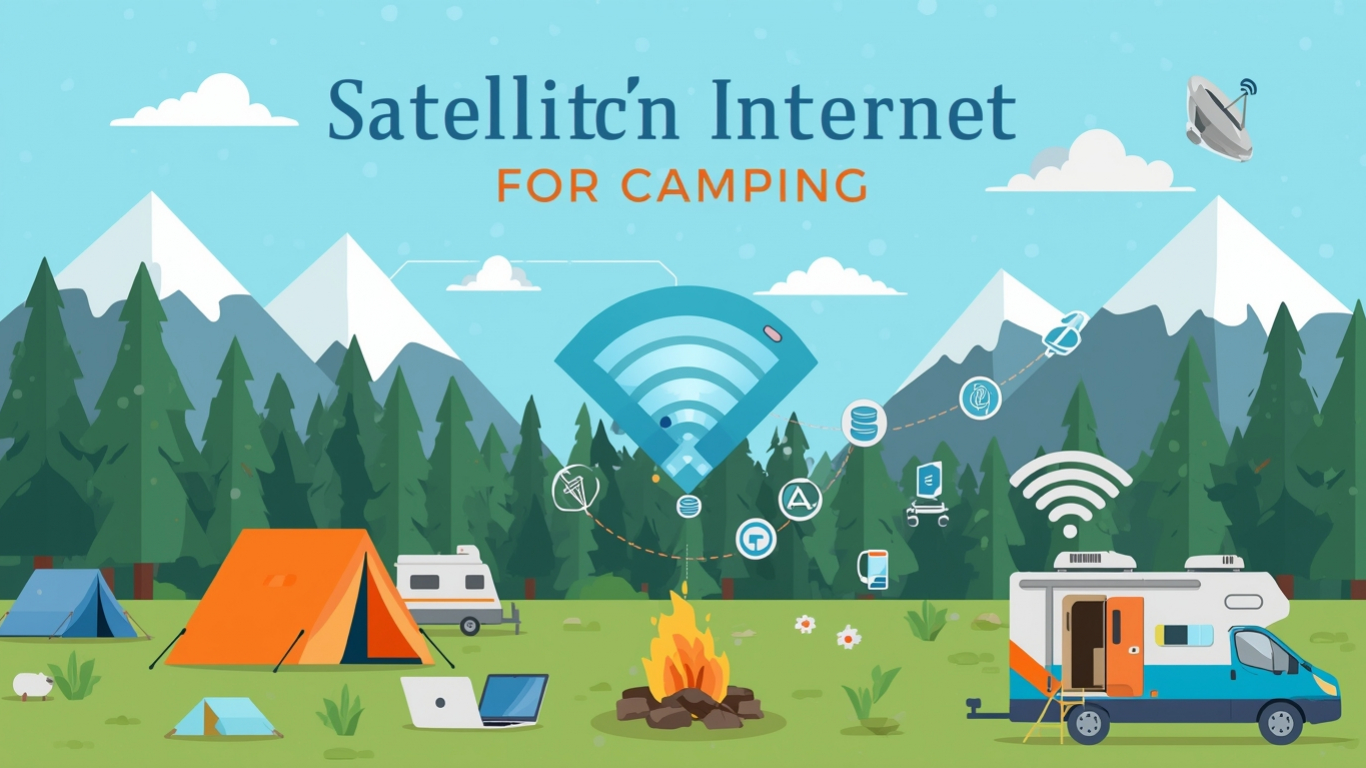
- Satellite dish or flat-panel antenna – Captures signals from orbit.
- Modem/router – Distributes internet to your devices
- Power source – RV hookups, generators, or solar setups
- Mount or tripod – Keeps the dish stable and aligned
Many modern systems are portable and designed specifically for RVers and campers, making setup far easier than it used to be.
Realistic Performance Expectations While Camping
Let’s be honest, this isn’t city fiber internet. But it is reliable. You can generally expect:
- Speeds suitable for browsing, email, streaming, and video calls
- Stable connections even far from towns
- Slight slowdowns during heavy network congestion
- Temporary interruptions during severe weather
For most campers, the trade-off is worth it: consistent access beats unreliable alternatives.
Where Campers Get Serious
This is when many campers realize that satellite internet for camping isn't about luxury; it's about independence.
It lets you choose campsites based on scenery, not signal strength. You’re no longer tied to crowded parks just because they advertise Wi-Fi. You can venture deeper into nature without losing touch with work, safety, or navigation.
That freedom is why more RV owners and long-term campers are adopting this technology as an essential part of their setup.
Weather, Trees, and Other Real-World Factors
While satellite connectivity is powerful, it does have limitations. Things that can affect performance:
- Dense tree cover blocks the sky.
- Heavy rain or snow
- Improper dish alignment
- Obstructions like cliffs or buildings
Choosing open campsites and taking a few minutes to optimize dish placement makes a noticeable difference.
Is Satellite Internet Right for Every Camper?
It depends on how you camp.
Great fit if you:
- Camp in remote or rural locations
- Work online while traveling.
- Need reliable connectivity for safety.
- Stay at one location for days or weeks.
Maybe not ideal if you:
- Only camp near cities
- Rely entirely on cellular coverage.
- Camp occasionally for short weekends
For full-time RVers and off-grid adventurers, it’s often a game-changer.
Cost Considerations You Should Know
Satellite internet typically costs more than basic mobile data, but you’re paying for coverage, not speed alone. Costs may include:
- Equipment purchase or rental
- Monthly service plans
- Optional mounting accessories
Many campers see it as an investment in flexibility rather than just another bill.
Final Thoughts: What to Expect Before You Commit
Satellite-based connectivity has changed what you can do while camping. It won’t replace high-speed internet in cities, but it will keep you connected when other options fail.
If you camp in remote areas, stay for a long time, or have online duties, this technology provides something valuable: the freedom to stay connected.
Frequently Asked Questions (FAQs)
1. Can I stream movies while camping with satellite internet?
Yes, most modern systems support streaming, though quality may vary during peak usage times.
2. Does satellite internet work in national parks?
It can, as long as you have a clear view of the sky and follow park regulations.
3. Is it difficult to set up at a campsite?
Most systems are designed for portability and can be set up in under 30 minutes.
4. Does the weather affect satellite internet?
Heavy rain or snow can temporarily impact performance, but outages are usually short.
5. Can I use satellite internet while driving an RV?
Some systems support in-motion use, but many are designed for stationary setups.
6. Is satellite internet better than a mobile hotspot for camping?
In remote areas with weak cell coverage, satellite options are often far more reliable.