Ever tried uploading a large file, joining a video meeting, or sending important work, only to see your connection slow down while your download speed remains fast? If so, you’ve experienced the main limitation of traditional broadband: uneven upload and download speeds.
This is exactly where the Symmetrical Internet steps in.
More people work remotely today. They livestream, game online, host Zoom sessions, sync files to the cloud, and run digital businesses from home. As a result, the old “download-heavy” internet model no longer works. So, what’s the deal with symmetrical internet speeds, and why is everyone discussing equal upload and download speeds? Let’s break it down.
What Is a Symmetrical Internet? A Quick Refresher
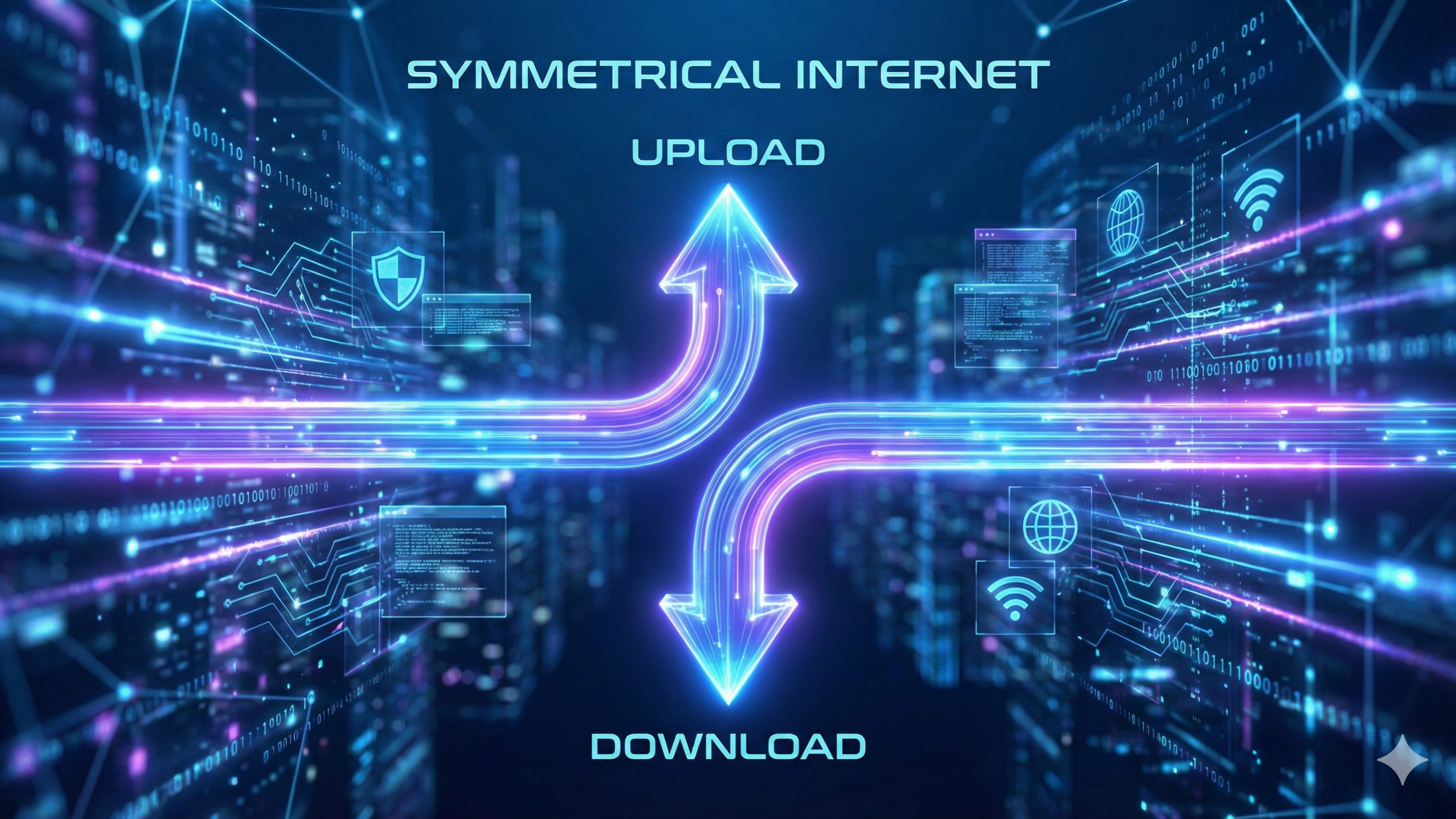
Symmetrical Internet means your upload speed and download speed are identical.
For example:
- 500 Mbps download / 500 Mbps upload
- 1 Gbps download / 1 Gbps upload
This is different from asymmetrical internet, where you might see:
- 300 Mbps download / 10 Mbps upload
- 100 Mbps download / 5 Mbps upload
Most cable, DSL, and wireless home connections are asymmetrical. In contrast, most fiber internet providers offer symmetrical speeds.
Why Most Internet Connections Aren’t Symmetrical
Traditional internet networks were built during a time when:
- People downloaded more than they uploaded
- Streaming was one-way
- Meetings weren’t on Zoom
- Cloud backups weren’t mainstream
- Content creation wasn’t universal
In today’s digital world, we upload as much as sometimes more than we download. That’s why symmetrical speeds are becoming necessary.
Why Equal Upload & Download Speeds Matter
Let’s look at the real-world impact.
1. Smoother & Clearer Video Calls
Zoom, Teams, Google Meet, Skype they all rely heavily on upload speed, not just download.
Slow uploads cause:
- Blurry video
- Audio lag
- Freezing
- Dropped calls
With equal upload and download speeds, your camera feed remains smooth, clear, and stable even when multiple people use the same network.
2. Huge Advantage for Creators & Remote Workers
Whether you're:
- Uploading YouTube videos
- Sending large files to clients
- Syncing RAW photos to the cloud
- Running a home studio
…fast uploads matter a lot.
A 3 GB video might take:
- 1 minute on symmetrical fiber
- 30–45 minutes on typical cable internet
If your income relies on content creation or online collaboration, symmetrical internet is a significant improvement.
3. Faster Cloud Backup, Syncing & Storage
Today, everything is cloud-based:
- Google Drive
- Dropbox
- iCloud
- OneDrive
- Amazon Photos
Your files, photos, and device backups upload continuously in the background. With balanced speeds, large files sync quickly instead of slowing down your network all day.
4. Real Boost for Online Gaming
Gamers often focus on download speed, but the reality is that upload speed impacts input lag, response time, and multiplayer server performance.
With symmetrical internet, you’ll experience:
- Lower ping
- Smoother gameplay
- Faster game streaming
- Efficient voice chat
Competitive gamers instantly feel the difference.
5. Stable Smart Home Performance
Smart homes now have:
- Cameras
- Doorbells
- Sensors
- Smart security systems
These devices upload data constantly. With slow upload speeds, they lag or may stop working. Equal upload and download speeds help your smart home run smoothly, especially when streaming multiple camera feeds.
6. Perfect for Businesses & Home Offices
Businesses upload:
- Documents
- CRM data
- Website content
- Emails
- POS transactions
- Remote backups
If you work from home and rely on cloud software, a symmetrical internet keeps everything fast, responsive, and reliable.
7. Better for Zoom Webinars, Livestreaming & Virtual Events
If you:
- Host webinars
- Livestream gameplay
- Teach classes online
- Broadcast on Facebook, Instagram, TikTok, or Twitch
You need fast upload speeds for delivering HD video without buffering. Symmetrical Internet ensures your stream remains stable, even during peak hours.
8. Future-Proof Connectivity
The world is shifting toward:
- Cloud everything
- Remote work
- AR/VR meetings
- 4K & 8K livestreaming
- Large-scale data syncing
- Home businesses
- Creator-driven economy
As upload needs increase, symmetrical speeds aren’t just useful, they're becoming necessary.
Upload Speed vs Download Speed: Why Balance Matters
Download speed controls how quickly you receive data, like streaming Netflix, loading websites, and downloading files.
Upload speed controls how quickly you send data, such as during video calls, uploading videos, gaming, and cloud backups.
Most people underestimate how important good upload speeds are. Symmetrical internet restores balance and improves everyday tasks we often take for granted.
Is Symmetrical Internet Always Better?
Yes, but with a few notes:
It’s better for:
- Remote workers
- Digital creators
- Streamers
- Gamers
- Smart home users
- Large households
- Businesses
- Cloud-heavy users
It’s not necessary for:
- Light users
- Basic browsing
- Simple streaming
- Seniors who just watch YouTube or Facebook videos
If you rarely upload anything, you might not need it. However, for most modern users, symmetrical speeds provide a noticeably better experience.
How Does Symmetrical Internet Work?
Symmetrical speeds are usually provided through fiber-optic internet.
Fiber uses light to transmit data, which makes:
- Faster uploads
- More stable connections
- Lower latency
- Higher capacity
Cable and DSL networks aren’t built for high-speed uploads, so they can’t offer true symmetrical internet.
Final Thoughts: Why Symmetrical Internet Actually Matters
The internet has changed. We’re not just consumers; we’re creators, collaborators, and real-time communicators. This shift means upload speeds matter more than ever.
Symmetrical Internet gives you:
- Better video calls
- Smoother gaming
- Faster backups
- Stronger smart home performance
- Instant cloud syncing
- Lag-free livestreaming
If your work, business, or lifestyle depends on the internet, symmetrical speeds aren’t a luxury; they're an upgrade that pays off every day.
FAQs About Symmetrical Internet
1. What is Symmetrical Internet?
Symmetrical Internet means your upload and download speeds are exactly the same. This is most common with fiber networks because they efficiently support two-way data flow. It ensures a balanced internet experience for both sending and receiving data.
2. Is symmetrical internet faster?
Yes, especially for activities that rely on upload performance. Tasks like video calls, online gaming, livestreaming, and cloud backups run much smoother. Because upload and download speeds match, you experience consistent, stable performance.
3. Do I need equal upload and download speeds?
Yes, if you work from home, upload content, or use multiple connected devices. Equal speeds help prevent lag, buffering, and slow file transfers during heavy usage. For creators, remote workers, families, and smart homes, symmetrical speeds make a significant difference.
4. Why do cable providers offer low upload speeds?
Cable networks were built mainly for downloading, like streaming TV and browsing. Their infrastructure isn’t designed for high-volume outbound data like fiber networks are. This is why upload speeds on cable internet are often much slower.
5. Is symmetrical internet available everywhere?
Not yet. It's mainly available in areas with fiber-optic infrastructure. Traditional cable, DSL, and satellite providers usually cannot deliver equal speeds. Availability keeps expanding as fiber networks grow across cities and towns.